- Little Boulder Blue, Blow Your (Matter) Horn
- Matterhorn in the Sands of Time
- Ascent into Fame
- Horns Near the ‘Horn
- It Matters Not, Except If It’s The Matterhorn
The Matterhorn, from the German “matte”, “meadow” (at least in Swiss dialect) and “horn”, “peak” (at least in Swiss dialect) is recognized worldwide as a Swiss icon, based on appearance alone. It isn’t even the tallest of the Alps (France’s Mount Blanc is about 1,000 feet taller than the Matterhorn).
It’s visually unique against the rest of the Alps, but what’s below that surface recognition?
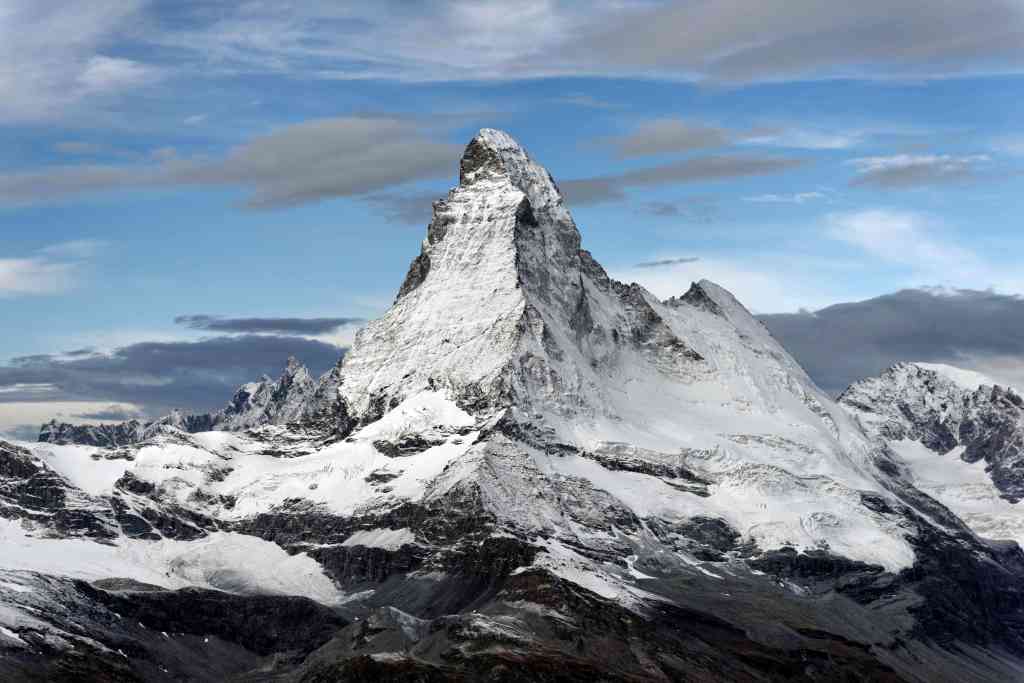
The Matterhorn’s picturesque angle is from the Swiss side, or viewed from the north; the Italian side, or viewed from the south, isn’t as recognized – courtesy of TripSavvy
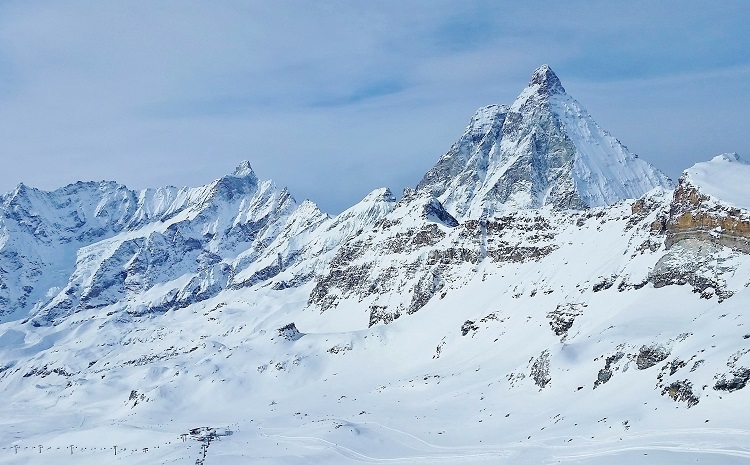
Matterhorn from Italy, south side – courtesy of MelbTravel
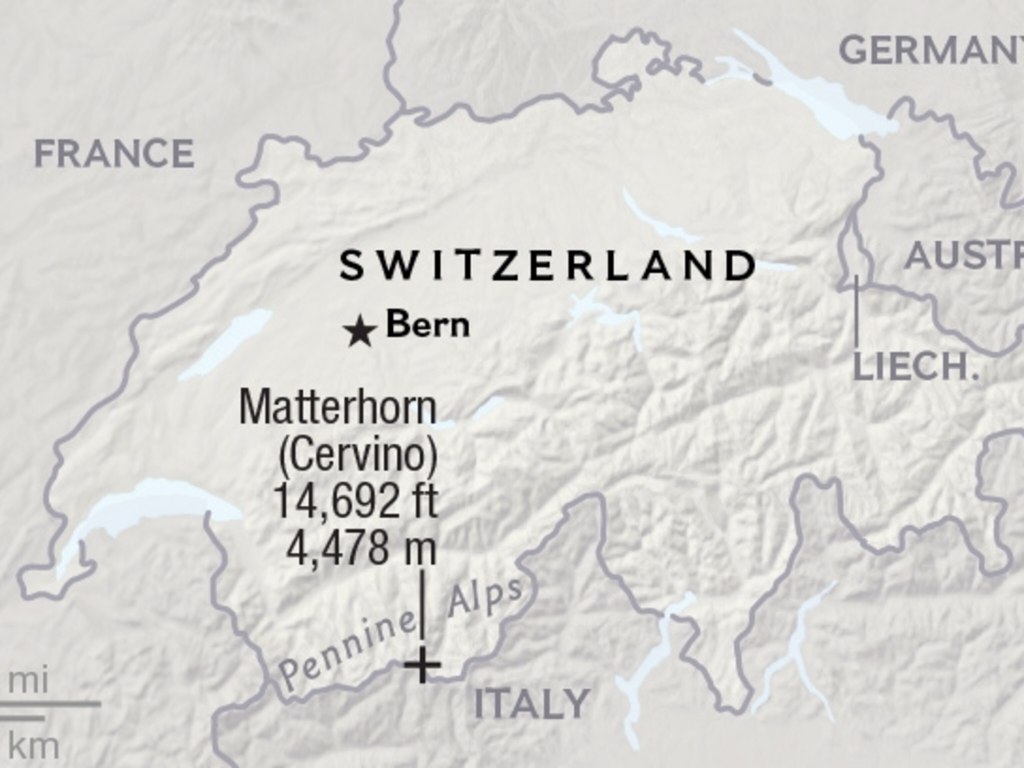
Courtesy of National Geographic
Little Boulder Blue, Blow Your (Matter) Horn
The Matterhorn was carved by the collision of the African and Eurasian tectonic plates.
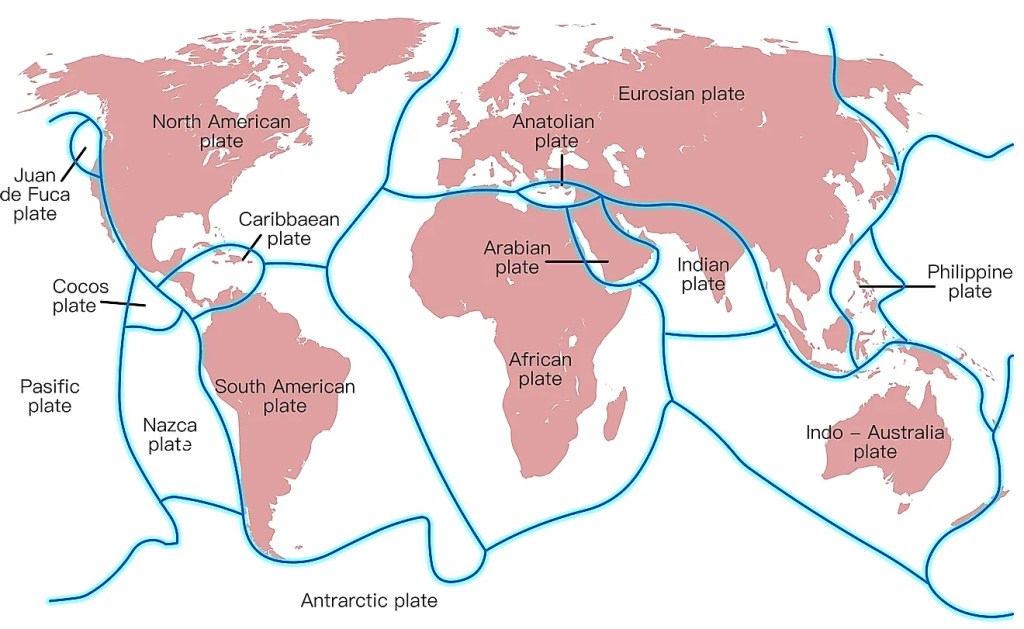
Tectonic plates – courtesy of World Atlas
The Matterhorn was originally a rounded mountain, similar to many of the other Alpine peaks, when the range was, 50-100 million years ago, lifted by tectonic activity, its pyramid shape formed later. Glaciers melted, resulting in water pouring through cracks and crevices; water’s freezing, expansion, and melting cycle repeated until the mountain’s sides fell off.
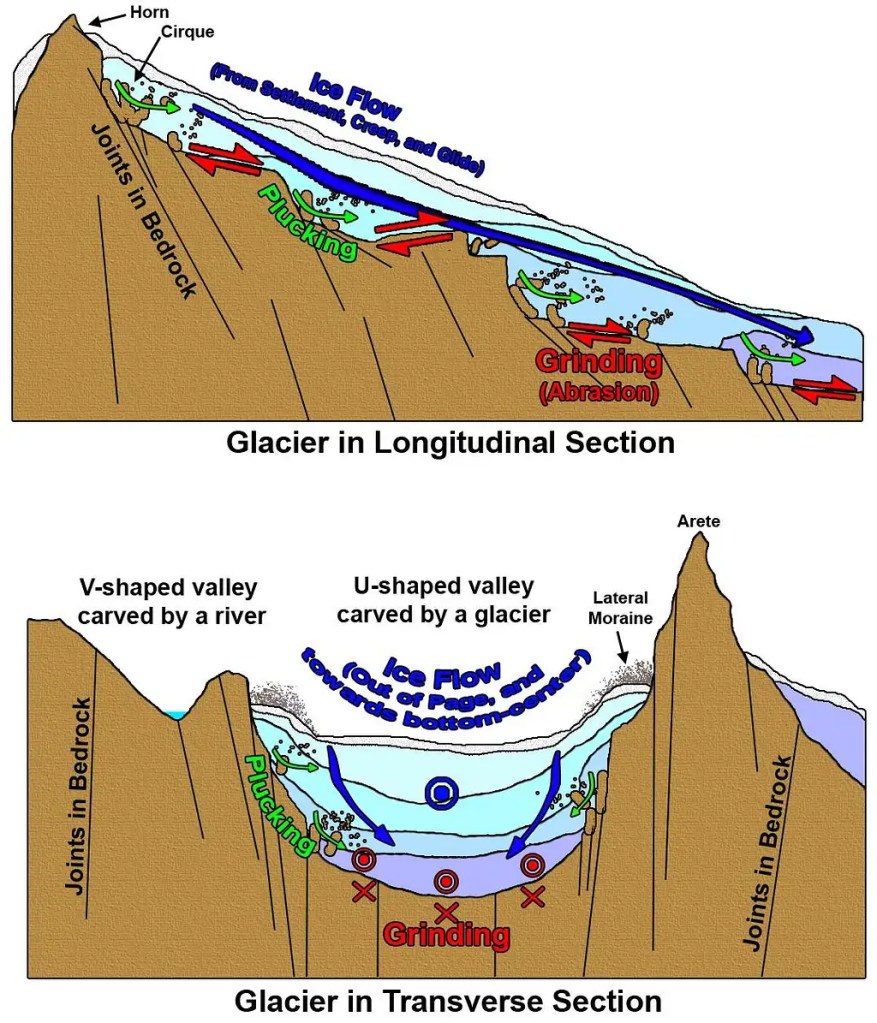
Courtesy of SummitPost
Matterhorn in the Sands of Time
The Matterhorn has been seen by people after people since it’s formation. The Ancient Romans called the peak “Silvanus Mons”, or “wooded mountain”. An odd name for a bare mountain, but the climate was milder then, meaning most mountains in the Aosta Valley, including the Matterhorn, were forested.
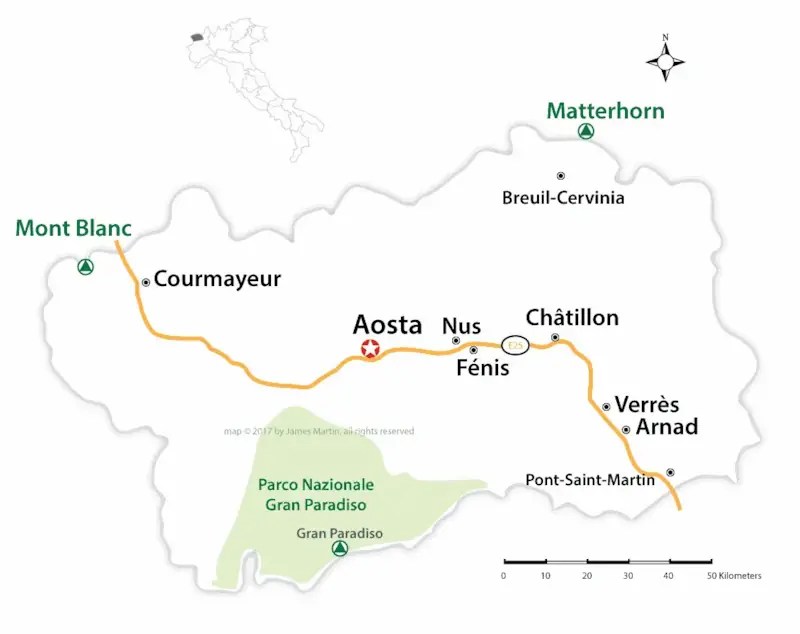
Valle D’Aosta within Italy; the state speaks, in addition to official national language Italian, French; also spoken is Valdôtain, a dialect of Franco-Provençal – courtesy of Wandering Italy
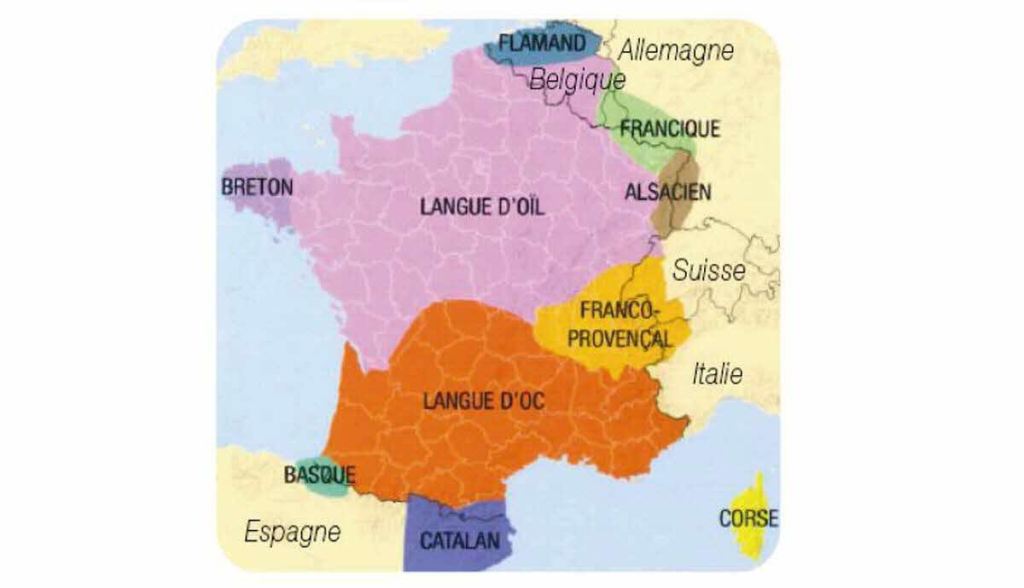
Dialects and languages within France and Belgium; Franco-Provençal; as with other regional dialects, Franco-Provençal’s first and second language speakers are shrinking; this reflects a worldwide move towards standardization of the French language; opposite that, local Germanic dialects in Switzerland are thriving even though a standardized version is used in professional and formal settings – courtesy of Le Dauphine Libere
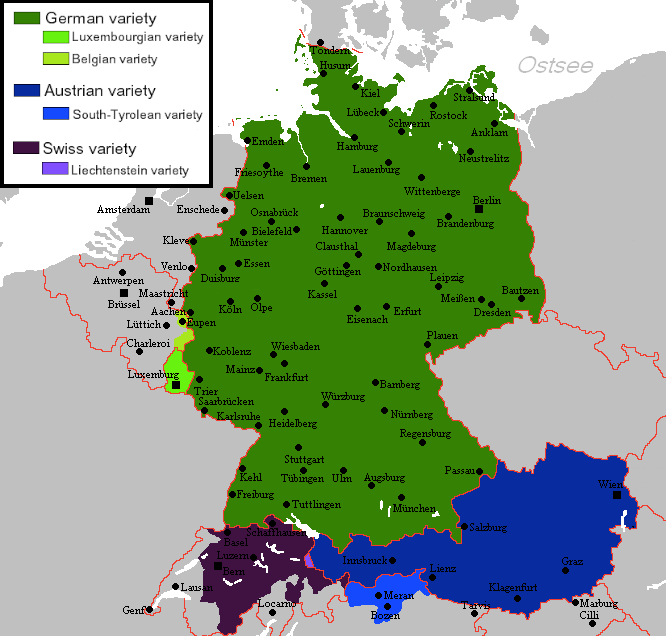
Standard German assortment by country or region – courtesy of Wikimedia Commons
After the fall of the Roman Empire, the Alps’ climate went colder, and more glaciers solidified into being. Matterhorn and other mountains were wooded no more, lest they were on the lower slopes. Latin fell out of favor in former Roman territories, replaced by localized forms, predecessors to modern French, Italian, etc. In the Italian lingual realm, the Matterhorn’s name went: Silvanus -> Selvin -> Servin -> Cervino. The name Cervino is from the latter 18th century A.D.; Horace-Bénédict de Saussure, a cartographer from the Kingdom of Sardinia, misspelled the mountain’s name. His blunder was inspired by his confusion at how “Servin” and “Cervin” are pronounced the same in French.
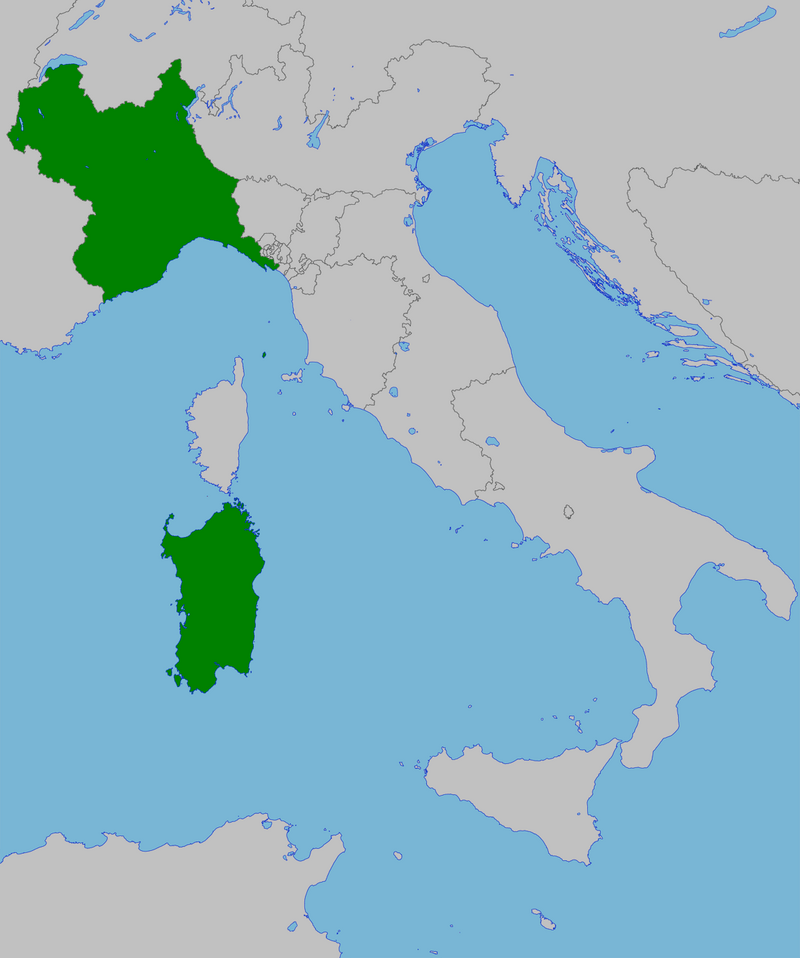
Kingdom of Sardinia, home of Horace-Bénédict de Saussure; the kingdom, via that, is responsible for Italians’ spelling and pronunciation of the Matterhorn – courtesy of Wikidata
The ancestors of the modern German-speaking Swiss, even those who live on the northern side of the Matterhorn, were the tribal alliance of the Alemanni. First appearing in history’s annals by way of Roman text in 213 A.D., the alliance caused havoc on the Roman frontier. In 260 A.D., they occupied Agri Decumates, and in the 5th century A.D. colonized what are today Alsace and northern Switzerland. Their descendants later spread into what are today the Swiss alps and the western Austrian state of Vorarlberg (and the micronation of Liechtenstein). The Alemanni’s exploits were so infamous in Latin-speaking regions, and regions its successors were spoken, they contributed to the naming of Germany as a cultural sphere and country in France, “Allemagne”, and Spain, “Alemania”.
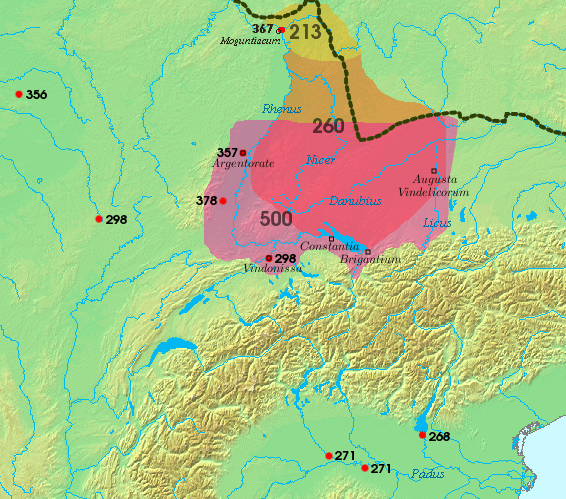
The Alemanni, as can be discerned from Roman sources, originated in a part of Germania along the central Rhine, in an area later populated by the Franks (who gave their name to France, in older days Gaul), around the modern states of Rhineland-Palatinate, Hesse, and Baden-Wurttemberg; the Alemanni’s significant years of colonization of Roman territories is marked with the numbers in the yellow, orange, pink, and pinkish-red areas – courtesy of Wikimedia Commons
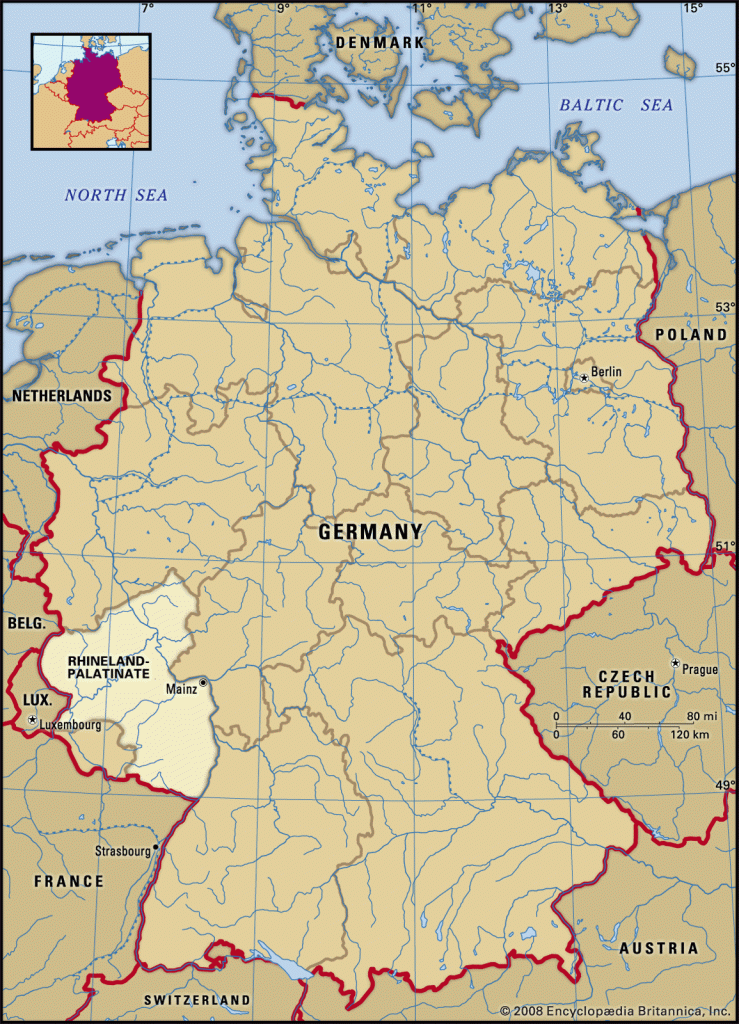
Rhineland-Palatinate in relation to the rest of Germany; it, Hesse to the east, and Baden-Wurttemberg to the southeast were the first known locations of the Alemanni, who traveled a fair ways south in their conquests – courtesy of Encyclopedia Britannica
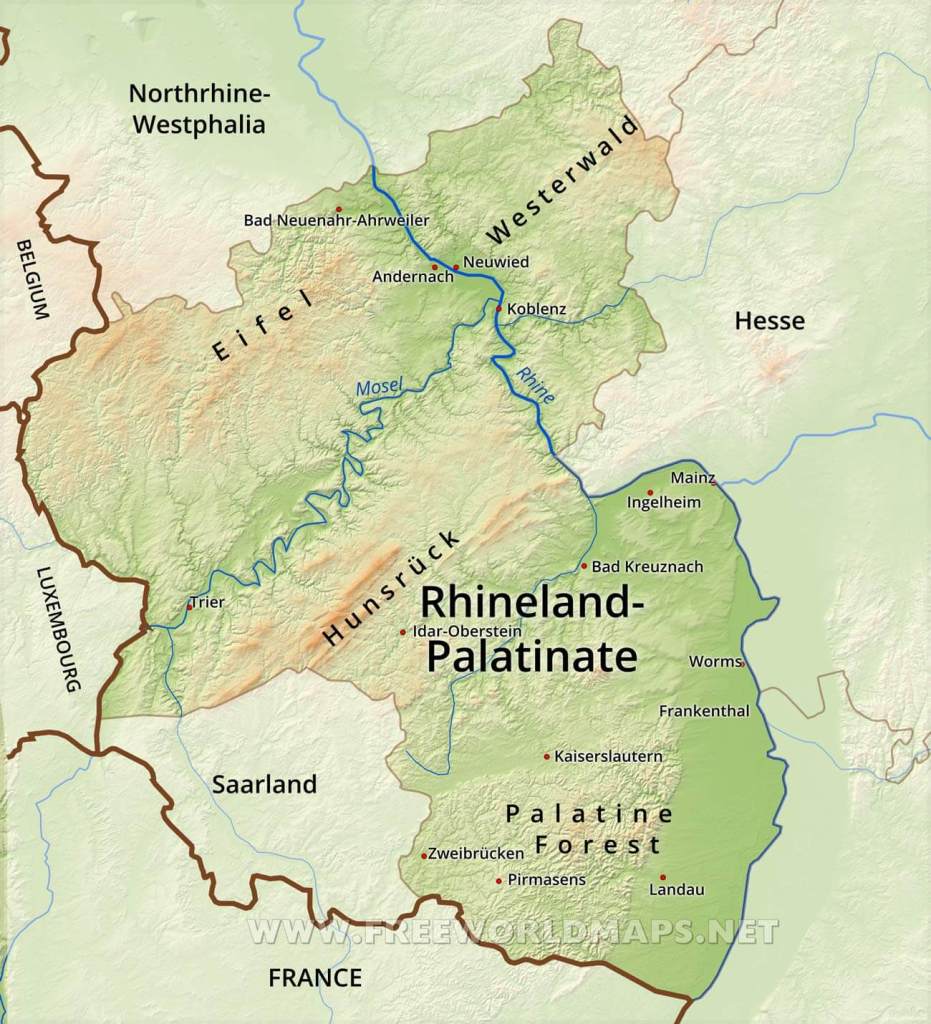
The matrilineal line of our family hails from Rhineland-Palatinate’s Idar-Oberstein; her name is of Plattdeutsch, or Low German, extraction, meaning her family began further north and moved southward at some point in their history – courtesy of Free World Maps
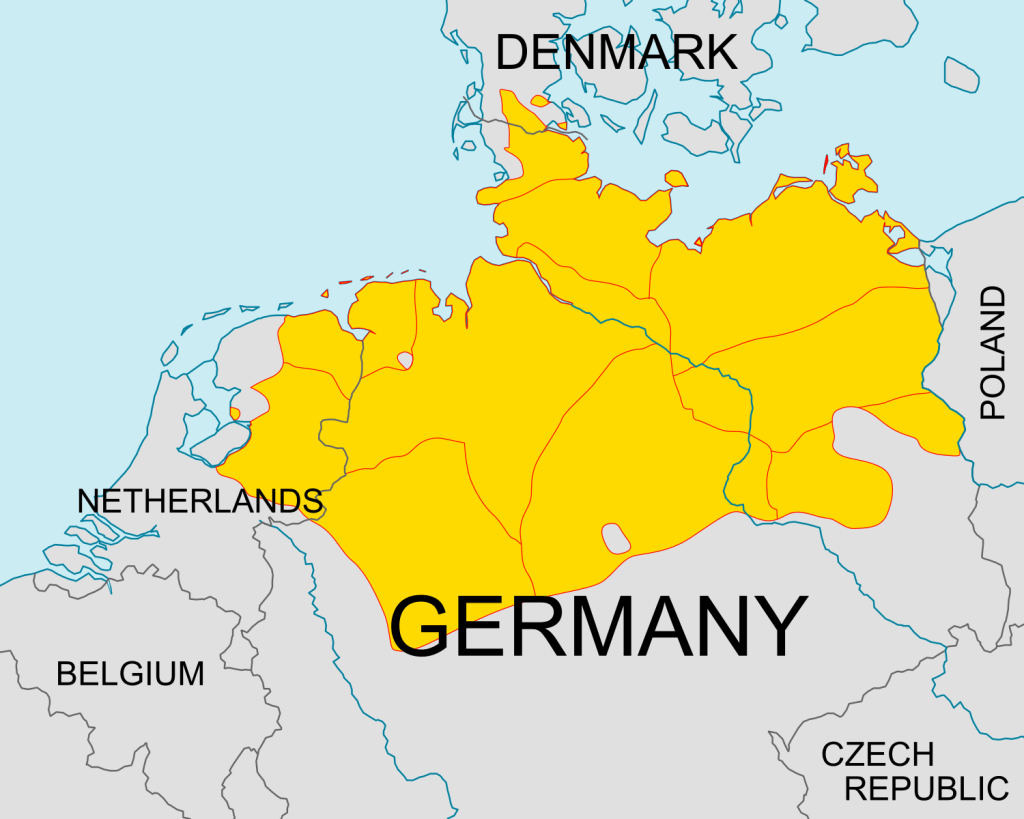
Plattdeutsch, or Low German, dialects; we’ve never found out for sure, but our matrilineage’s move south may’ve been influenced by religious persecution; during the Protestant Reformation, northern German states were receptive to Lutheranism, newfound hostility to Roman Catholicism blooming; as our matrilineage has been Catholic as far back as we’ve found documented, it isn’t a stretch to conclude their faith was no longer welcome, leaving them no choice but to move to the more staunchly Catholic southern German states – courtesy of Wikiwand
Ascent into Fame
The Matterhorn is a deadly peak. Four ridges, four walls, thin ledges, and so on add up to at many points pulling one’s body straight up. It’s a crumbling gneiss with a steep incline angle. Perfect balance is a must, preparation for a handhold or foothold to give way also. The first successful recorded ascent of the Matterhorn was the first successful Everest ascent of its age.
In the 1800s, Jean-Antoine Carrel, a hunter from a French-speaking town at the base of the mountain’s Italian side, and Edward Whymper, an English artist and wood engraver, wanted to climb to the top of the Matterhorn. The duo were never partners, though Whymper tried to make them so. While Whymper made several unsuccessful attempts on his own, Carrel was pettily possessive of the mountain (not wanting anyone else to “encroach on his territory”). In July 1865, Whymper tried to get Carrel to climb with him, but he refused. As Whymper soon found out, Carrel secretly assembled a team for a climb. Whymper hastily assembled his own, which began its ascent from the village of Zermatt on the Swiss side.
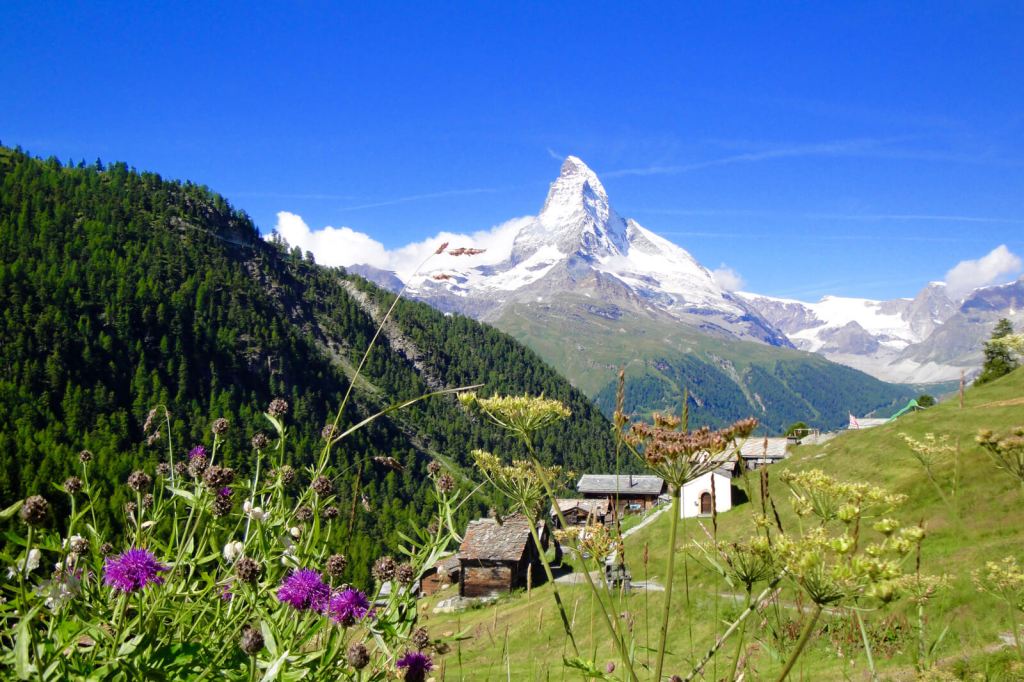
Matterhorn from Zermatt – courtesy of Newly Swissed
Whymper and crew reached 14,000 feet, but by then snow filled crevices and an ice layer coated the rocks. They reached one of the two summits, the Swiss, at 14,690 feet; Whymper wanted to seal his crew’s accomplishment by reaching the Italian summit at 14,686 feet. He and French mountaineer Michel Croz went to the Italian summit, there spotting Carrel’s team 600 feet below. Carrel and crew were discouraged enough by Whymper and Croz above that they turned around.
Whymper and crew were at the top of the Matterhorn for an hour afterwards. They tied ropes to each other to begin their descent. Soon, least experienced team member Douglas Hadow slipped and took Croz with him. Charles Hudson and Lord Francis Douglas were soon pulled off the slope. Whymper, and Peter Taugwalder and Peter Taugwalder Jr., held onto the mountain, banking on their combined weight being able to catch their fellows, but the combined weight of the four who fell caused the rope holding them to snap, sealing their fates.
Whymper, Taugwalder, and Taugwalder Jr. froze in shock for over thirty minutes. They later made their way back to Zermatt, where it was shortly thereafter rumored Whymper and Taugwalder Sr. cut the rope on purpose. Both were exonerated after an investigation, but locals remained suspicious. As for the first successful recorded ascent of the Matterhorn, it wasn’t as acclaimed (as a bittersweet accomplishment) at the time. Mountaineering was derided as useless by many European newspapers, and Queen Victoria considered outlawing mountain climbing for Britain and its citizens. Some folks, however, were in awe at the ascent, in particular mountain climbers themselves. Since then, the stigma associated with mountain climbing has worn off, and ascending the Matterhorn continues to be a popular option.
Whymper’s accounts of his ascent skyrocketed interest in Switzerland, gradually transforming the country from what was a land of impoverished villages into a tourism juggernaut.
Horns Near the ‘Horn
Plant and animal species near the Matterhorn are consistent with those across the Alps.
4,500 plant species take root in the range, 8% endemic to it. The harsh conditions promote strives for change and adaptation in the valleys and snowcapped peaks (if we had time machines, we’d see what things were like in the milder climate of the Roman Empire). Plants above the forest line have varied growth forms to combat the wind, snow, and rain at those altitudes. Some below the line grow as flat cushions, rosettes, or carpets to deal with the same. Some plants have large root systems which anchor them and store water and nutrients, ex. the net-leaved willow has roots several meters long.
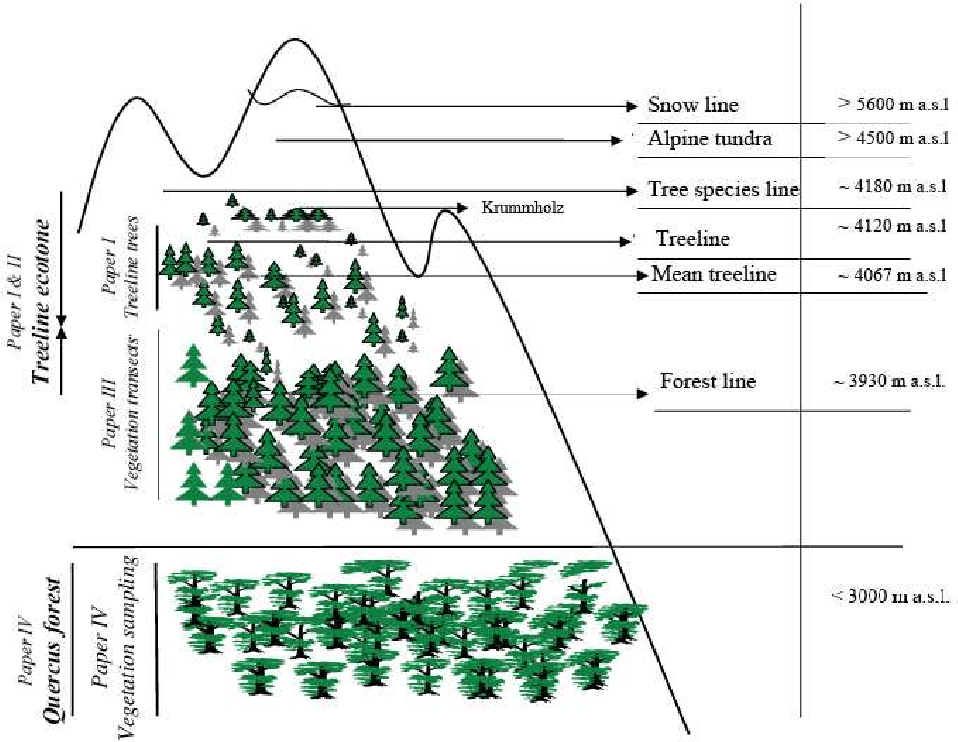
Courtesy of Semantic Scholar
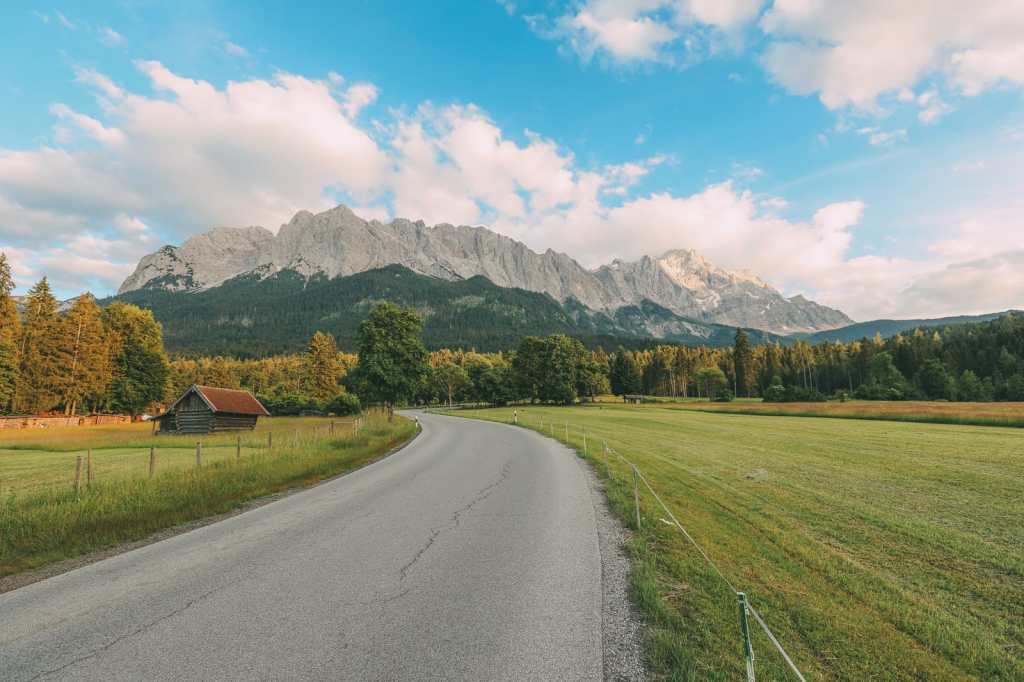
View of the Zugspitze, on the border of Germany (state of Bavaria) and Austria and the highest mountain in Germany; here, the lightening tree coverage across the Alps’ rising elevations is observable – courtesy of Hand Luggage Only
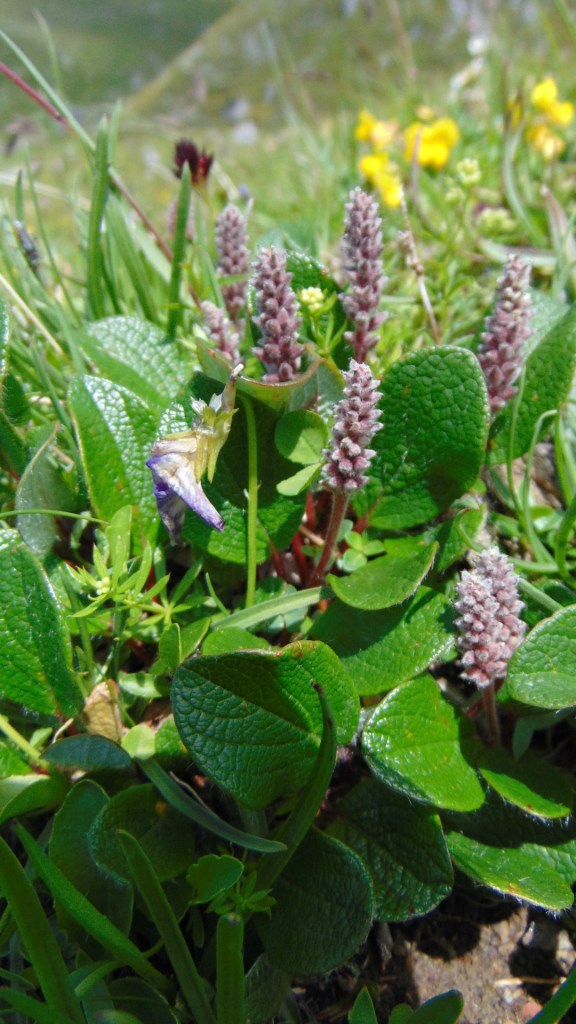
Net-leaved willow – courtesy of iNaturalist Canada
Animals have changed to live in the Alpine conditions as well. Alpine salamanders are the only European amphibians who birth fully developed live young (above 1,400 meters, their gestation period can last up to 3 years). Birds and mammals’ feathers and pelts are thicker, their feet adapted for snowy surfaces. Stoats and ptarmigans change their brown coats to white in winter to avoid being seen by predators. Animals such as the Alpine marmot hibernate in the coldest months. Alpine chamois and rock partridges migrate over long distances or descend to lower altitudes in that same time frame. Alpine ibexes climb steep inclines to where snow slides off and food is still available.
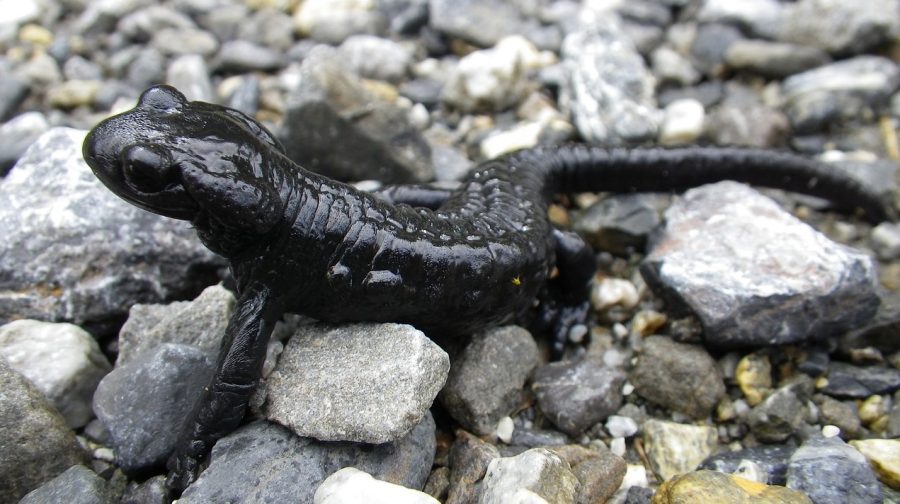
Alpine salamander – courtesy of Critter Science
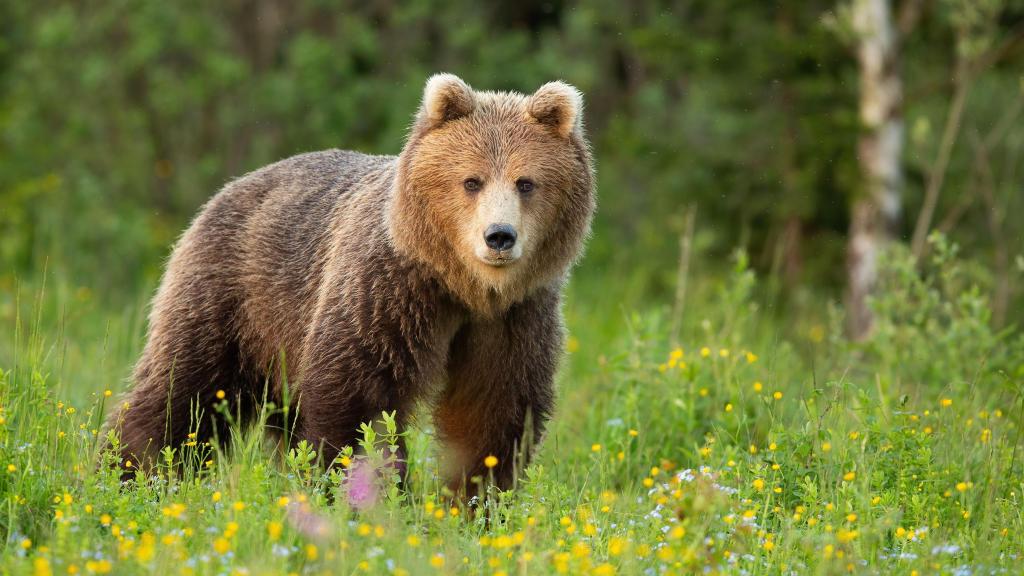
Bear in the Alps; bears in Europe have been declining in populations for a long time, but in some areas they’re slowly recovering – courtesy of The Times
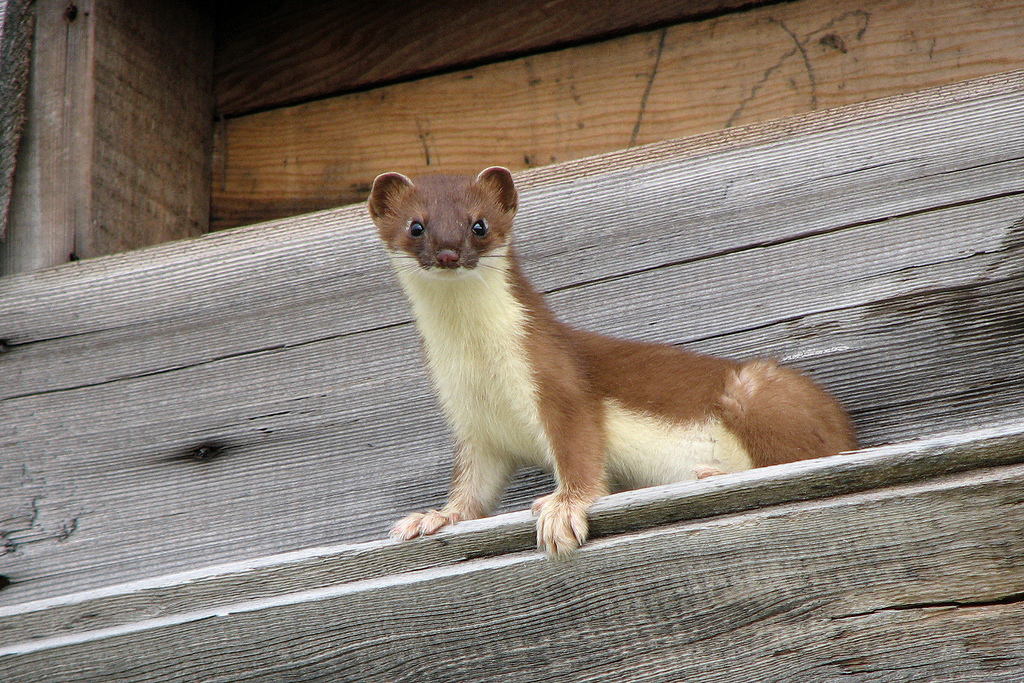
Eurasian stoat – courtesy of iNaturalist
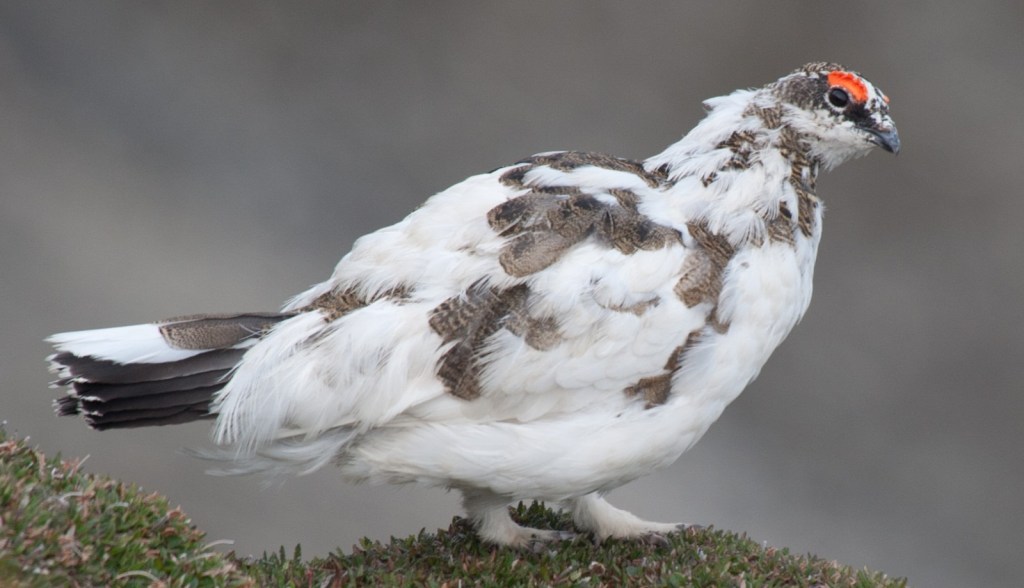
Ptarmigan – courtesy of Oceanwide Expeditions
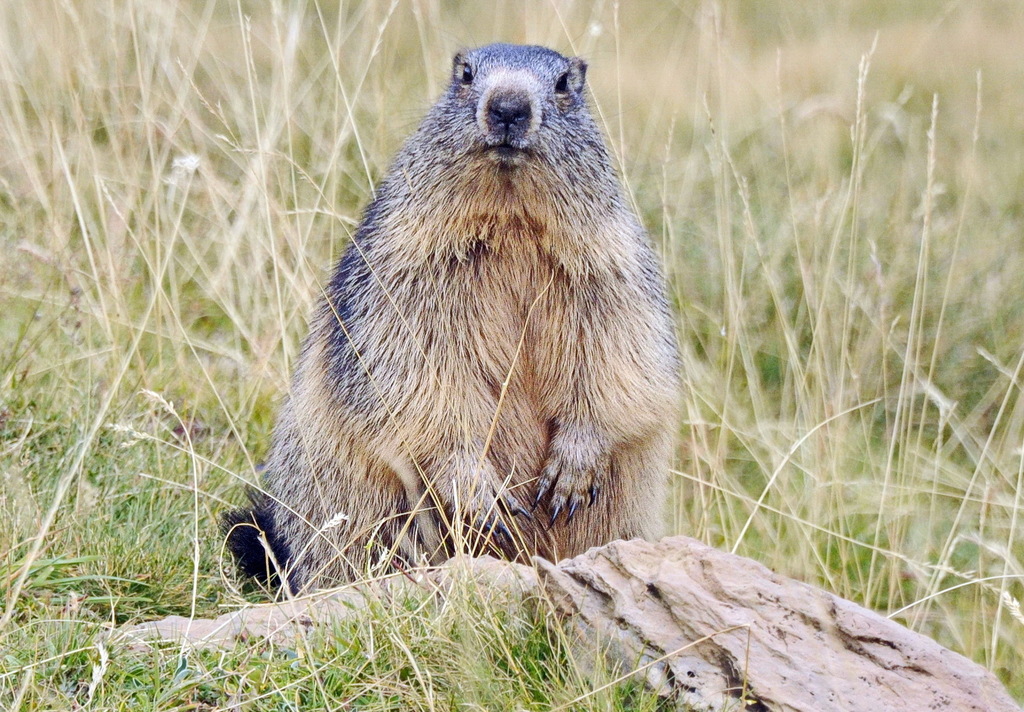
Alpine marmot – courtesy of iNaturalist
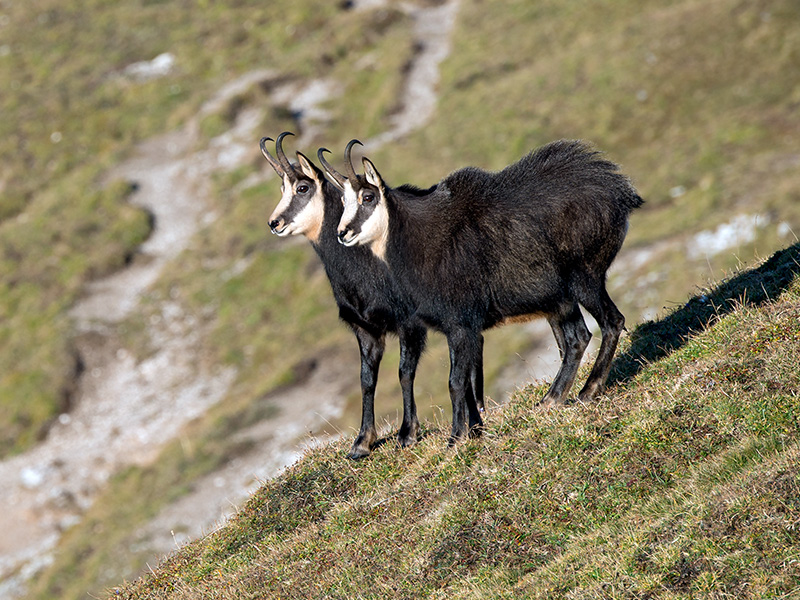
Alpine chamois – courtesy of Naturpark Otztal
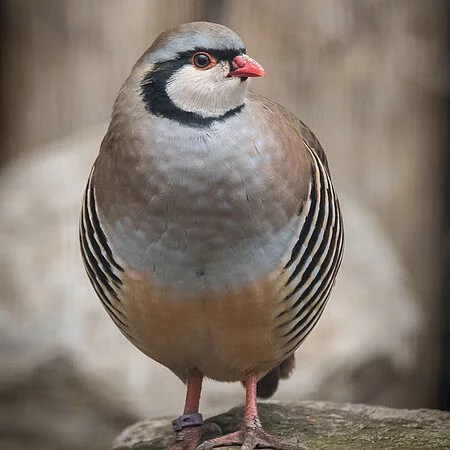
Rock partridge – courtesy of Tierpark Hellabrunn
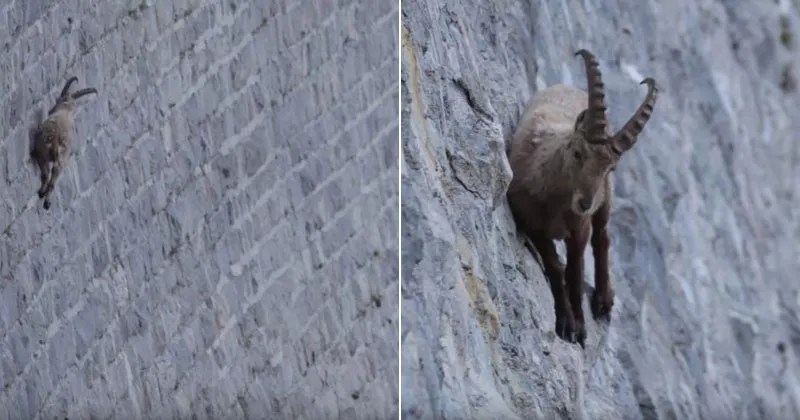
Alpine Ibexes’ evolution allows them to scale steep mountainsides and walls, as here – courtesy of TwistedSifter
It Matters Not, Except If It’s The Matterhorn
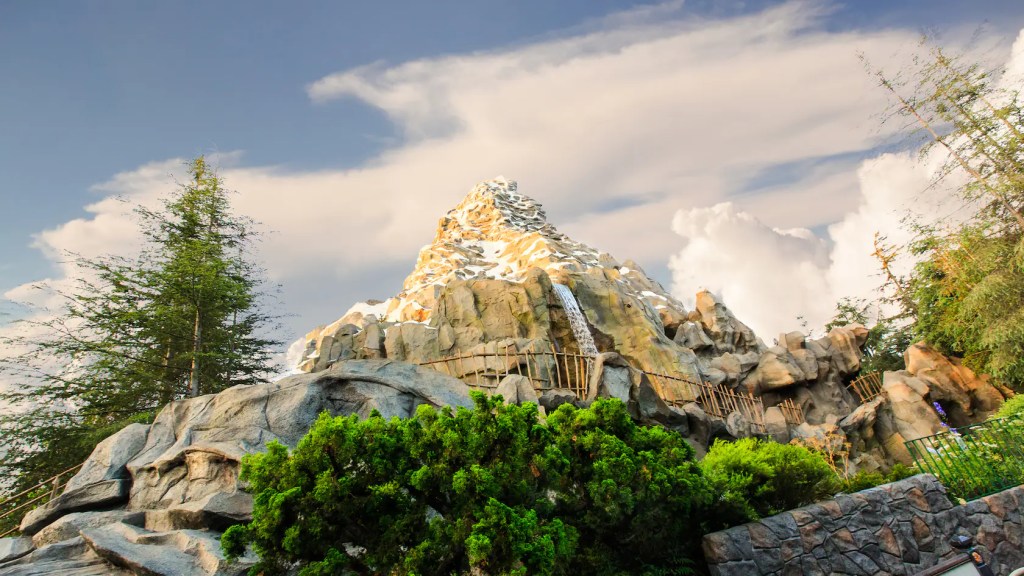
The Matterhorn is famous enough to have been replicated as a bobsled coaster by Walt Disney in California’s Disneyland – courtesy of The Parks Academy
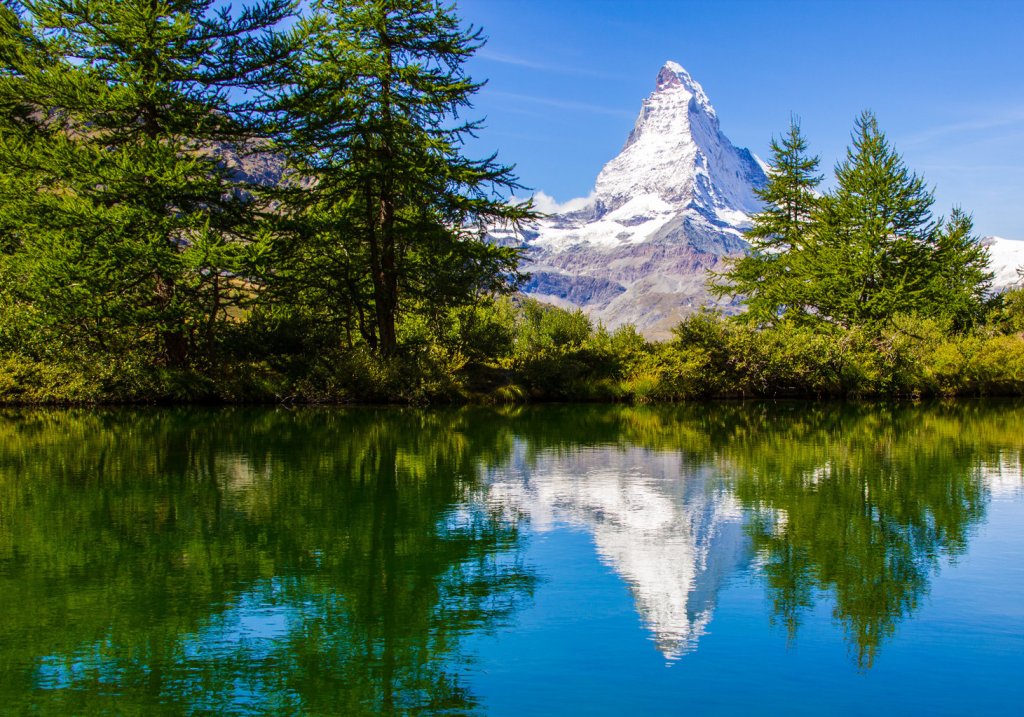
Courtesy of Routes Tips
References:
- Huguet, Francis. “The Matterhorn, an emblematic mountain in Switzerland, the time scales of a geomorphosite”. ScienceDirect. Volume 11. Issue 4. Pages 624-633. December 2023. https://www.sciencedirect.com/science/article/pii/S2577444123000667
- Van Velzen, Simone. “How the Matterhorn got its iconic shape”. Alpenwild. 16 October 2018. https://alpshiking.swisshikingvacations.com/how-the-matterhorn-got-its-iconic-shape/
- Jenkins, Mark. “How the pursuit of one European peak gave rise to modern mountaineering”. National Geographic. 1 August 2019. https://www.nationalgeographic.com/travel/article/150714-matterhorn-switzerland-mountaineering-climbing-adventure-world
- “The Silent Giant – The Matterhorn”. Simone Zoccante. 2018. https://www.simonezoccante.com/project/the-silent-giant-the-matterhorn/
- “Alemanni”. Encyclopedia Britannica. https://www.britannica.com/topic/Alemanni
- “Nature’s Treasure Trove”. WWF. https://wwf.panda.org/discover/knowledge_hub/where_we_work/alps/area/species2/
 Onward Trip