“Humanity is mad! It must be mad to do what it is doing. What a massacre. What scenes of horror and carnage! I cannot find words to translate my impressions. Hell cannot be so terrible. Men are mad!”
–Joubaire-written in his diary May 23, killed by German artillery shell May 24.
The Basics:
Address/Parking: 55100, Douaumont, Meuse, Grand EST
The parking lot is located around the back of the building.
Tickets: purchased at the site. Current price is (2025) 7 euro – includes Ossuary, Tower, and Movie
Rules:
- A correct outfit is required
- Men please remove hats.
- It’s absolutely forbidden to eat, drink and smoke.
- Don’t shout
- Don’t run.
- Photographs and movies are not allowed.
- The use of mobile phones is forbidden.
Overview of Verdun Battle:
The Battle of Verdun : occurred between February 21 to December 18, 1916- a total of 300 days and 300 nights of relentless battles with incessant surges of artillery and shells. Over 300,000 men from both the French and German sides lost their lives. Many of these men disappeared or can not be identified. The armistice that ended the Great War was signed on November 11, 1918, in the clearing of Rethondes, in the forest of Compiegne.
How To Tour:
THE MOVIE: The Ossuary includes a cinema featuring a 20-minute short film is about the Battle of Verdun and the development of the monument from its creation until now. Apart from the screening, sometimes conferences and symposiums are held in the ossuary. The cinema was entirely refurbished in 2015 with high tech audio-visual equipment and now seats 140 people. Movie- Verdun-the men of mud
Duration : 20 minutes Screenings : every half-hour Simultaneous interpretation into German, English
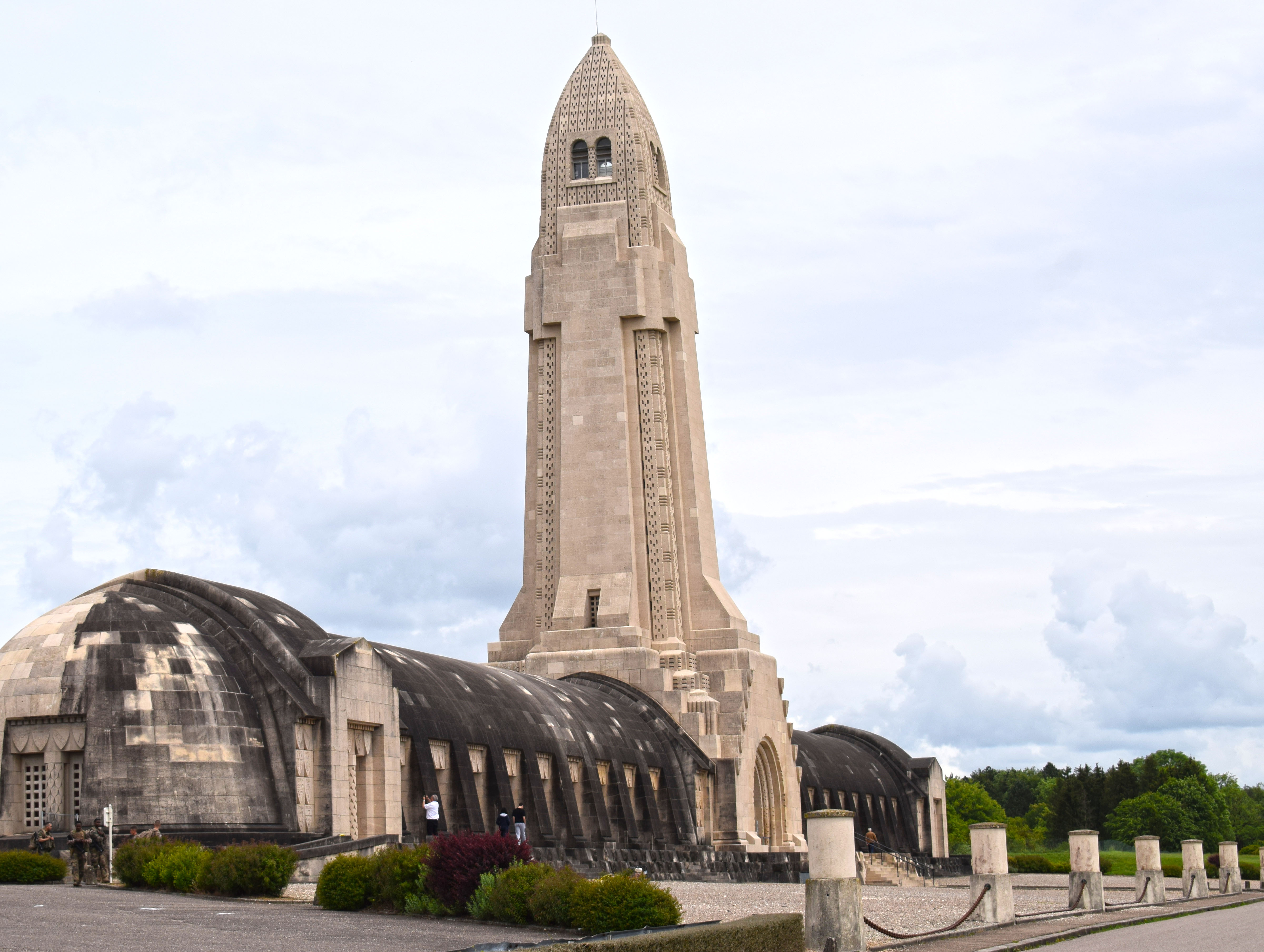
THE TOWER: 46 m (151 ft), At the top (204 steps)
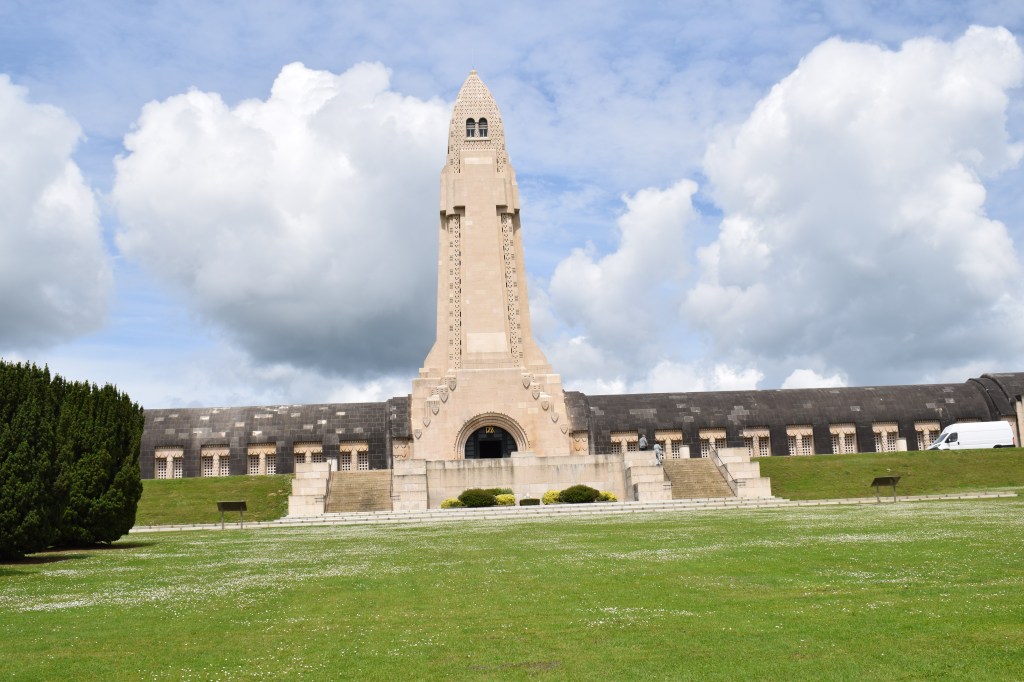
The tower was a gift from the Americans. It soars 46 meters and offers stunning views onto the battleground. It is frequently referred to as the “lantern of the dead”. Halfway up the tower, window displays show equipment and small scenes highlighting soldiers of each camp. The top of the tower hosts lookout stations, and rotating tables along with two monument symbols: the Beacon and the Bell. At night, the beacon lights can be seen for miles bathing the battlefield in red and white. The 2042 kg bronze bell, named Louise Anne Charlotte (in French- the Bourdon de la Victoire) was donated by American Mrs. Thorburn Van Buren. Cast in Orléans, it was celebrated by a procession in each city bringing it closer to Douaumont. Baptised in 1929 by the founder of the Ossuary, Monsigny Ginisty, its role was to ring three times, and during large ceremonies, to honor those who gave their lives in battle. Finally, the tower also serves as a lantern for the dead.
THE CHAPEL:
The chapel of Roman-Byzantine style is one of the first parts of the Ossuary to have been built along with the tower. This place, abundant with symbols, was a gift from French, Belgian, Swiss, Canadian and American Catholics. In fact, this is the resting place of ossuary founder Monsignor GINISTY and Canon NOEL- both strived for the soldiers buried in the monument wishing to accompany them to their sacred resting place. Another noteworthy fact concerns the chapel altar on which the names of a hundred members of the clergy slain on the battlefield can be seen on a golden plate. The stained glass windows are also a main element of the chapel. Created by the artist Georges DESVALLIERS and donated by the soldiers’ families, they depict historical-religious scenes melding the battling soldiers’ destiny with the heavenly welcome awaiting them. Last but not least, you can take a look at the chapel statues sculpted by Elie Jean VEZIEN, especially the magnificent work of Pieta on the main altar.
THE CLOISTER:-137 meter long Ossuary makes up the central part of the monument.
Inside the cloister, 22 alcoves house the tombs that represent the 46 sectors of the battle of Verdun. In these tombs lie 130 000 unidentified soldiers gathered from the battlefield after the Armistice. Around 4000 inscriptions cover the walls and the arches of the cloister. A hundred headstones engraved in hommage to a regiment, a memorial or patriotic association. In addition to thousands of headstones bearing the names of French and German soldiers gone missing in battle on the battlefields of Verdun. At each end of the cloister, stands an enormous recipient, inside which burns the flame of remembrance of famous dates and ceremonies.
This vast monument includes a transverse gallery 137 meters long known as the cloister. The 18 bays each contain two sarcophagi made of pink granite from Perros-Guirec in Brittany.
On each side, the gallery ends with an apse containing five tombs.
THE CEMETERY
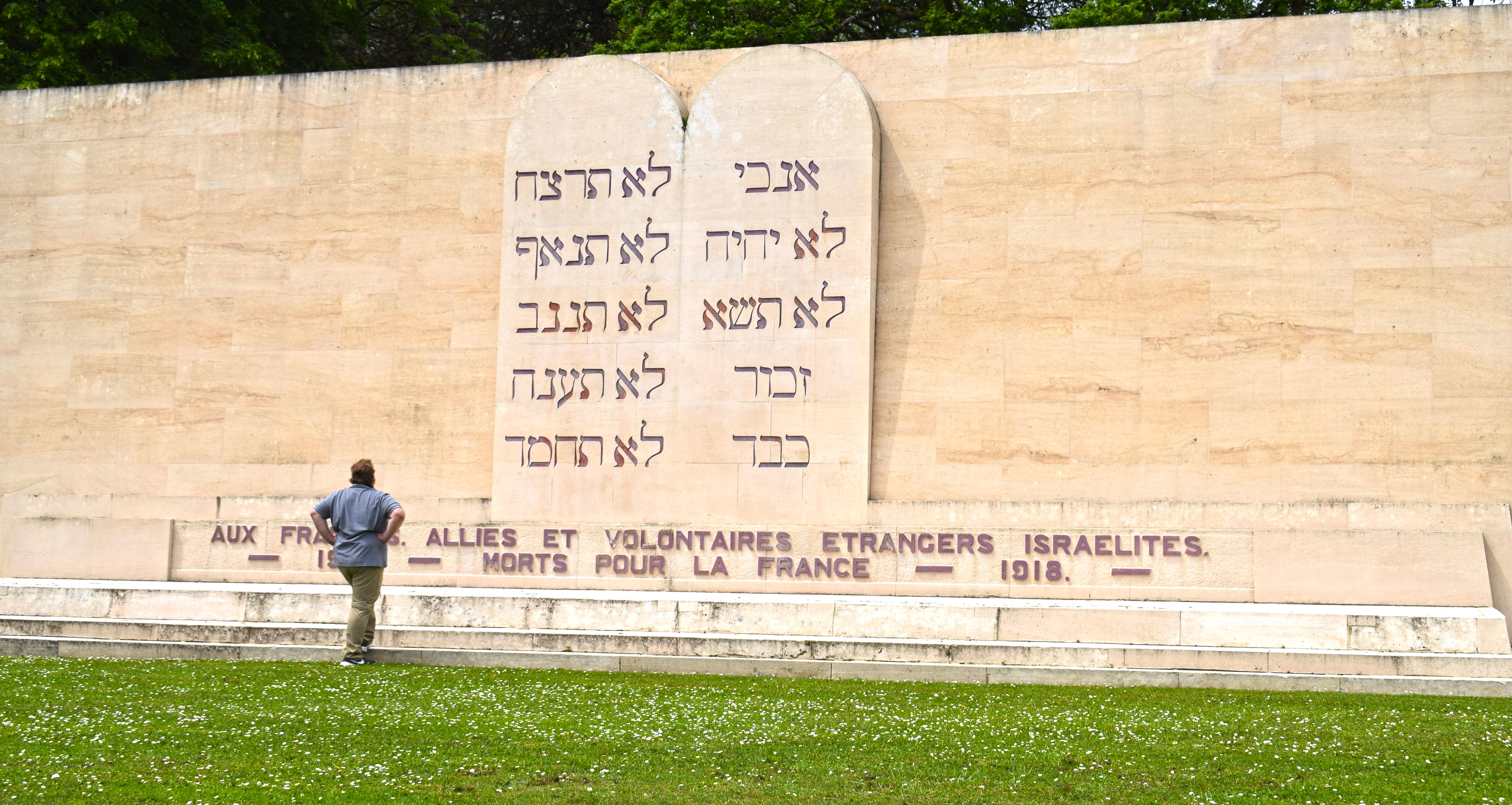
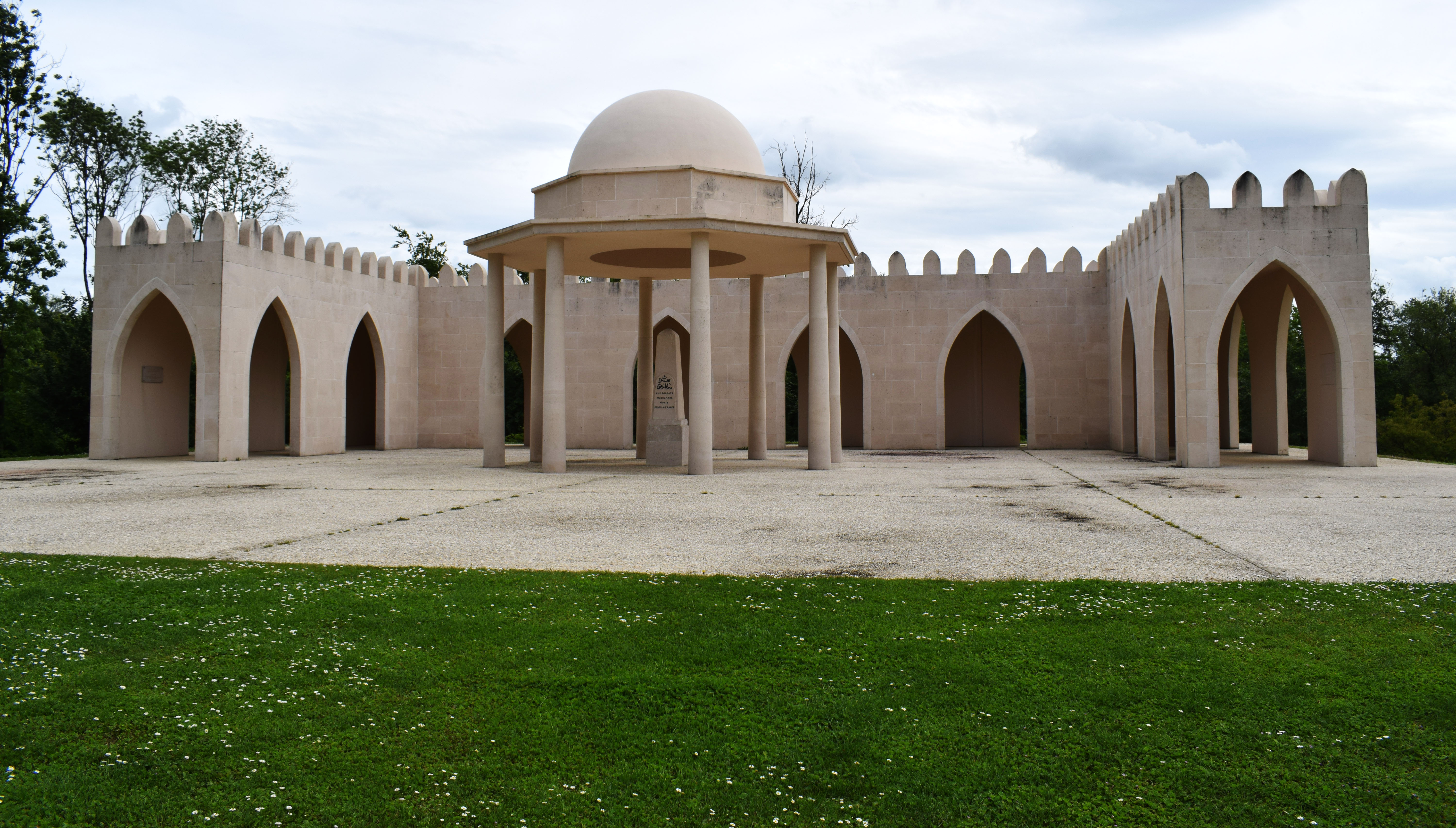
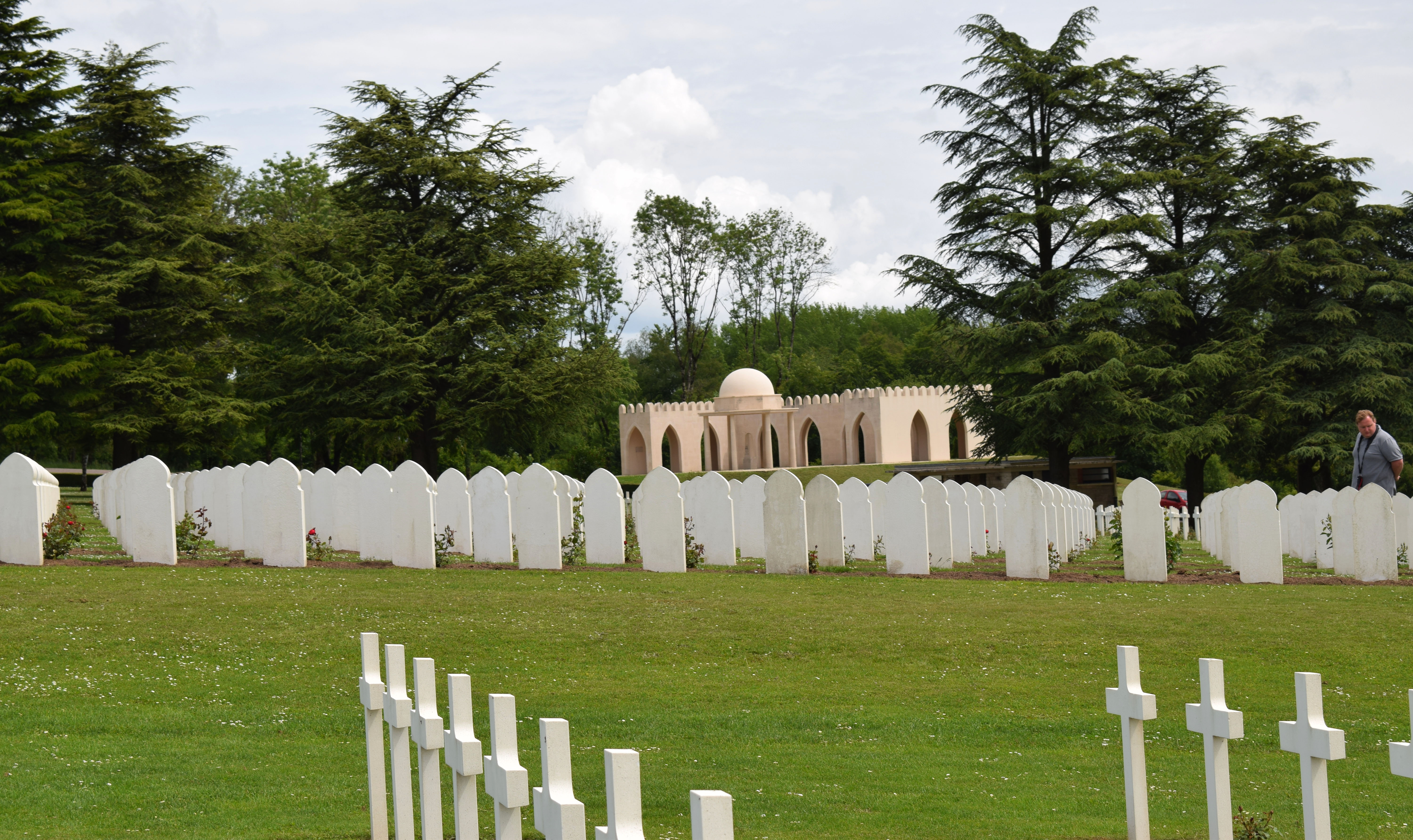
The military cemetery contains 16,142 graves of French soldiers, mostly Catholics, including six from the Second World War. The individual graves are aligned in rows that reconstitute the alignment of an army The vast majority of the graves are Christian. They take the form of a white Latin cross. A red rosebush precedes each grave and brings a touch of bright colour and contrast with the white of the cross. a square of 592 headstones of Muslim soldiers. The star and the crescent can be recognized above the inscription “ci-gît” (here lies) in Arabic. the Muslim memorial is located to the east of the cemetery. It takes the form of a 25-meter long white stone ambulatory, in Islamic style, with a kubba. To the west of the cemetery is the monument dedicated to soldiers of the Jewish faith. Built in 1938, it is decorated with the Tables of the Law engraved with Hebrew letters.




REVIEW:
This site is profoundly moving. From the outside of the ossuary, one can see the thousands of bones from unidentified soldiers. The interior ossuary is lit with reds and golds. Its solemnity is felt through the hallowed corridors, the engraved writing, and the tombs. The tower provides an eagle’s eye view over the shell marked landscape. Take the time to wander through the tombstones-read their names, contemplate their stories and imagine the hell these men experienced. It is a somber experience that brings the horrors of war to reality.
 Onward Trip