- Romans Roam The Woods, Or Try To
- Bugbears of the Romans
- Fairy Tales of the Forest (Say That Many Times Fast)
- Black Forest Flora and Fauna (Say That Many Times Fast V2.0)
- Bound Through the Black Forest, We Did – We Hope You Shall Too
The Schwarzwald, translated as Black Forest (from German “schwarz”, black, and “wald”, forest), is a Triassic and Jurassic geology mountain range in Baden-Wurttemberg, southwestern Germany.
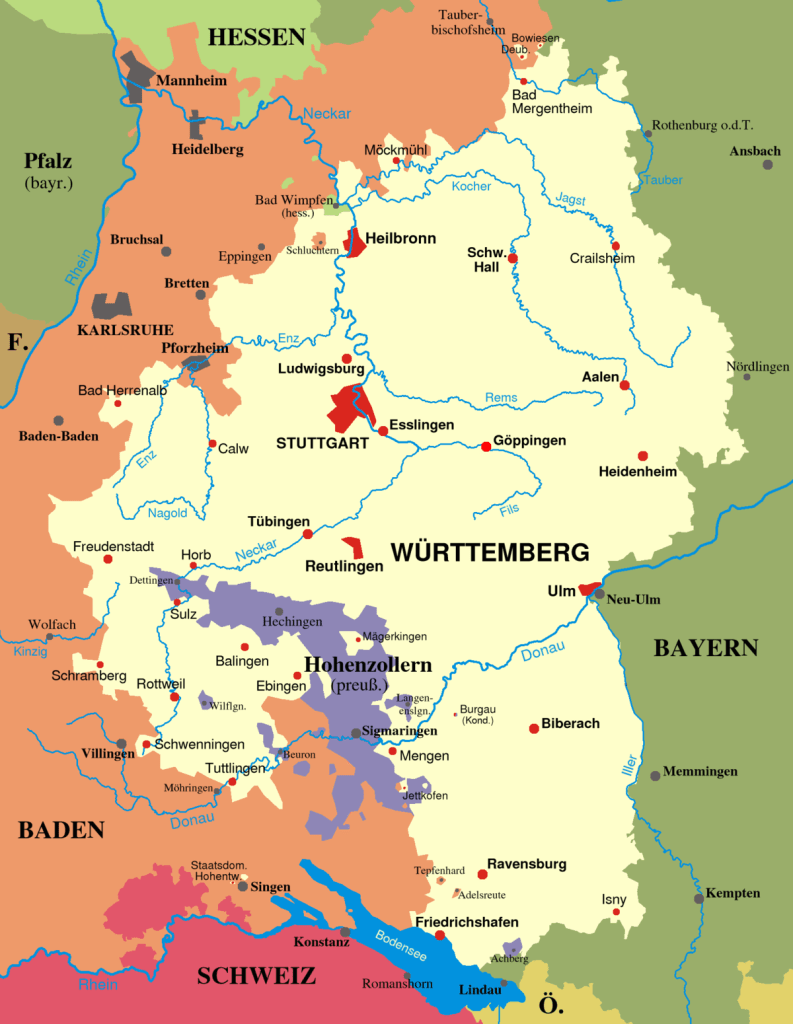
Baden-Wurttemberg is a combo of extinct lands, the independent principalities Baden and Wurttemberg (Baden associated with the Schwarzwald more before the combination), and a Prussian enclave sired by House Hohenzollern; the three territories were Baden-Wurttemberg after World War II, an effort to distance the new Germany from its classic boundaries, which were associated with the era leading to National Socialism – courtesy of Wikimedia Commons

Schwarzwald in the state and in relation to the rest of Germany; Rick Steves and other sources mention that, for a mountain chain famously “Deutsch” in global pop culture, the Black Forest was isolated from the German mainstream until about the 18th century – isolated enough that it was observed (in contrast to other German landmarks) to be a “peasants’ kingdom”; the rugged land and relative lack of resources (aside from lumber and minerals) meant the many monarchs of Germany weren’t in a hurry to gain it; it’s a reason why few castles, ruined or intact, are in the Black Forest – courtesy of Wikimedia Commons
Romans Roam The Woods, Or Try To
The Schwarzwald is located not far from the Rhine, which Romans regarded as the border between their territory (conquered Gaul) and the lands of Germania Magna. Gaius Julius Caesar, after his ascent to power, wanted to legitimize his ascension with foreign policy success. His campaign was first against the Celtic Helvetii (whose name transformed into Helvetica, a.k.a. another name for Switzerland), then a 58 B.C.E. battle in the Schwarzwald fringe against the Germanic Suevi. Roman settlements weren’t built in the mountain range until the first century A.D. Roads and thermal baths cropped up in what is now Baden-Baden and other areas. Roman military forts were constructed as well. The Romans, however, mostly stayed out of the Schwarzwald since its forests were intimidating and near-impenetrable.
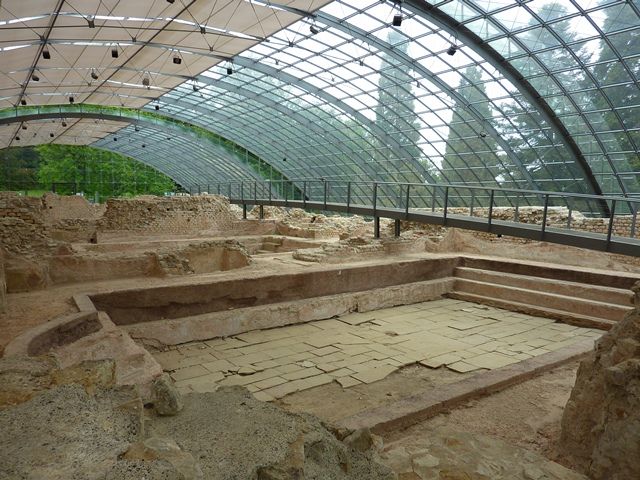
Ruins of a Roman bath in Badenweiler – courtesy of Outdooractive
Bugbears of the Romans
The Romans’ initial mentioning of the mountain range was in the 4th century A.D. as Marciana Silva, or “border forest” from the Germanic “marka”. The Germanic tribe causing Romans trouble then were the Marcomanni, who belonged to the Suebi (who later gave their name to Swabia), who were in turn connected to the Alemanni (a confederation of tribes which traveled south from the central Rhine). Alemannic tribes settled the Schwarzwald more thoroughly than the Romans did. Even then, some sections of the range weren’t settled permanently/semi-permanently until the 10th century A.D. due to the terrain being so uneven.
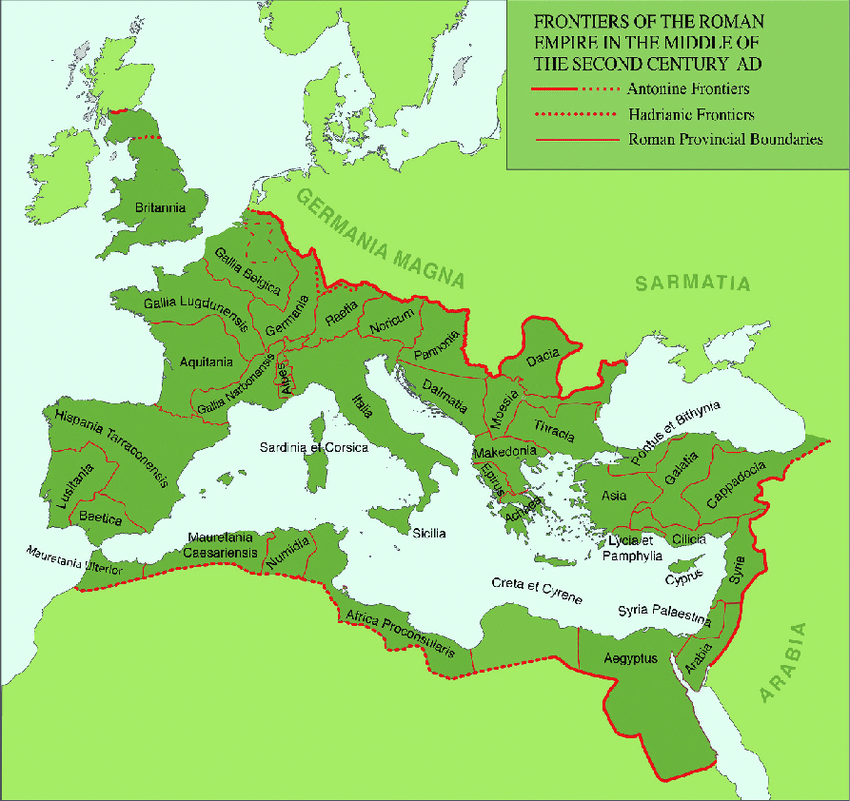
Roman Empire’s borders; the area east of the province of Germania (not Germania Magna) and north of the province of Raetia is where the Black Forest is – courtesy of ResearchGate
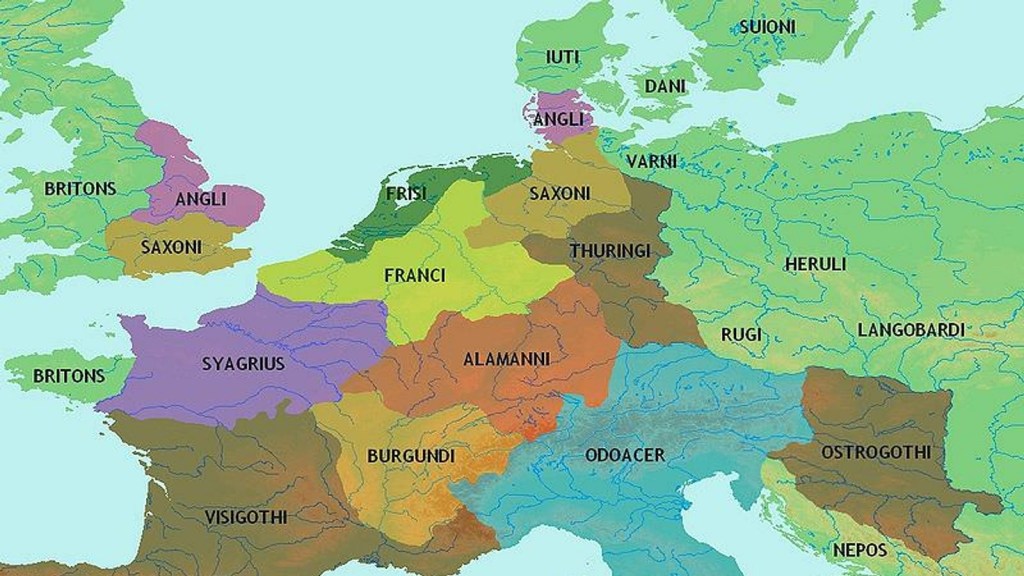
Germanic tribal territories – courtesy of World History Encyclopedia
Today, the Black Forest is one of the best-known tourist regions in Germany, attracting locally and abroad with its recreational activities and historic sites.
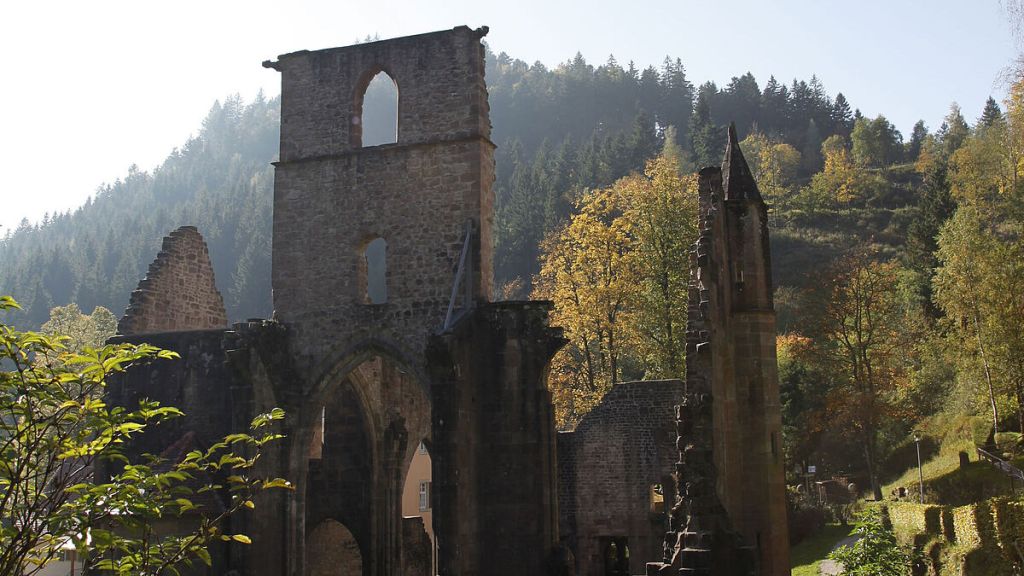
Allerheiligen (All Saints), the ruins of a Schwarzwald monastery; in its operational life, it was rumored to be cursed given its incarnations’ reputation for burning down; by the 1800s, repairs ended, and since then the site has been a curiosity for travelers and tourists – courtesy of Renchtal Tourismus
Fairy Tales of the Forest (Say That Many Times Fast)
The Black Forest’s thick woods and historical inaccessibility to outsiders meant legends aplenty cropped up (some of them the basis of fairy tales recorded by the Brothers Grimm). Tales include a headless horseman riding a steed (the author of The Legend of Sleepy Hollow based his story on a German legend); a forest king who captures women and brings them to his underwater lair to live among nymphs; and dwarves and werewolves who appear after dark.

One of the Grimm Brothers’ recorded stories, Hansel and Gretel, took place in a dark forest inspired by the Schwarzwald; illustration by Arthur Rackham – courtesy of WBUR
Black Forest Flora and Fauna (Say That Many Times Fast V2.0)
The Schwarzwald began as a mixed forest until settlers moved in and replaced much of it with more commercially viable stock, i.e. coniferous overabundance. By the 19th century, the range was almost deforested, what existed a monoculture (one tree type dominating, not good for woodland health due to lack of tree diversity leading to soil issues and lack of animal diversity). In the 1990s, the Black Forest was damaged by storms, most infamously 1999’s Hurricane Lothar; Lothar’s effects are seen today, and a path named after it is an adventure and a learning experience.
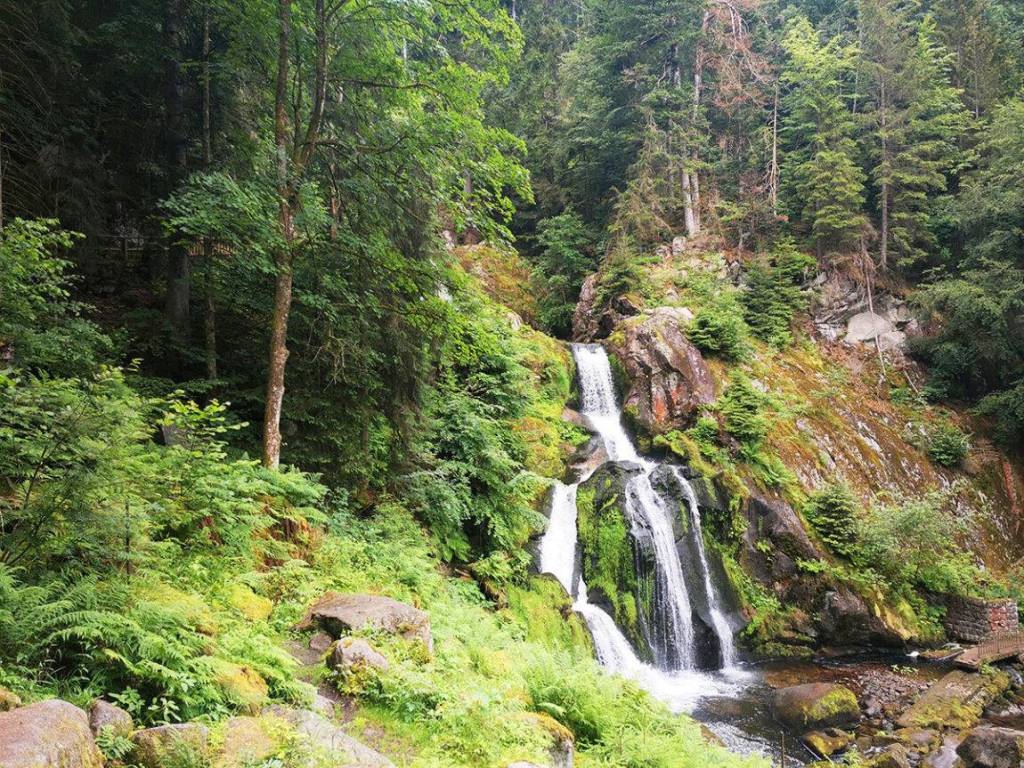
Triberg Waterfalls, promoted as the highest in Germany when the title is held by one in Bavaria; Triberg Waterfalls’ flora are more diverse than the land surrounding it, and an educational sign along the paths there says this is what the Black Forest would be like without monoculture – courtesy of The Train Diaries
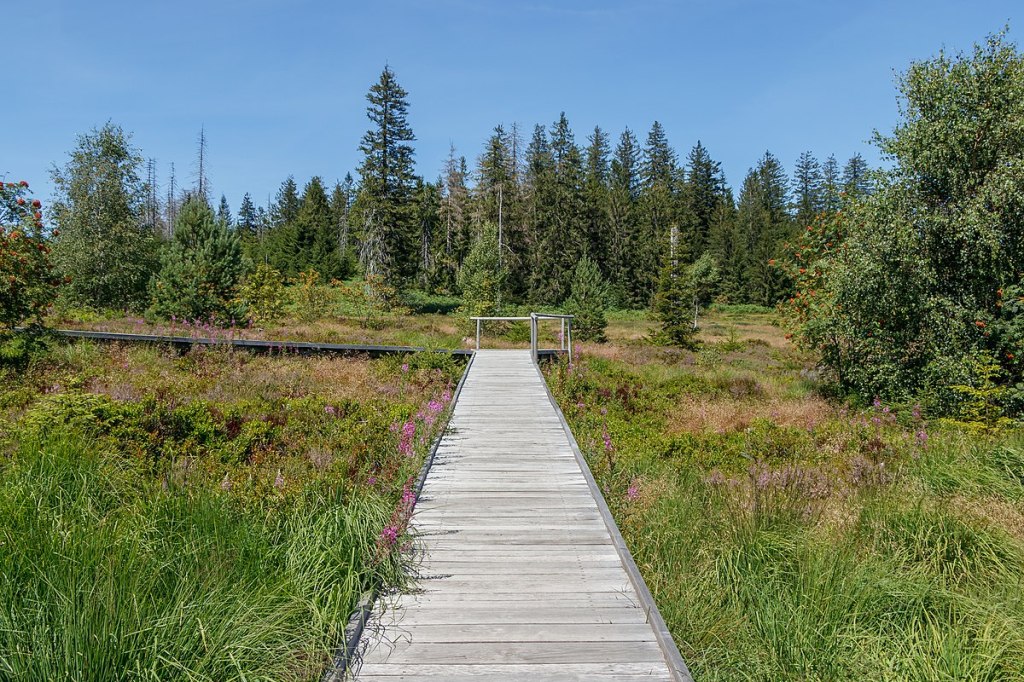
Lothar Path, where Hurricane Lothar raged through at the end of the 1990s – courtesy of Wikimedia Commons
Animals species in the mountain range encompass Black Forest cattle, Lumbricus Badensis, the Black Forest horse, and the Western capercaillie.

Black Forest cattle – courtesy of European Forum on Nature Conservation and Pastoralism

Lumbricus Badensis – courtesy of iNaturalist UK
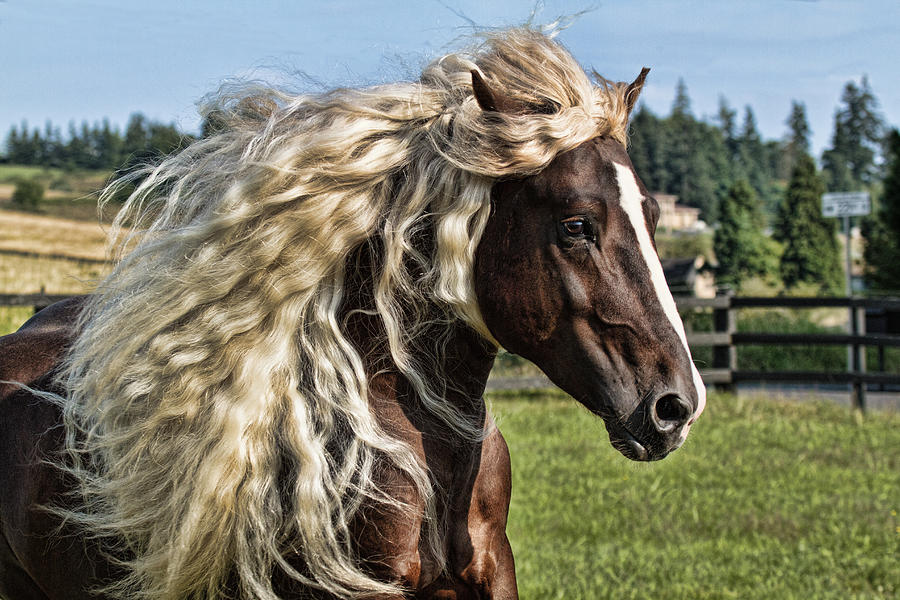
Black Forest horse – courtesy of Globetrotting

Western capercaillie – courtesy of eBird
Bound Through the Black Forest, We Did – We Hope You Shall Too
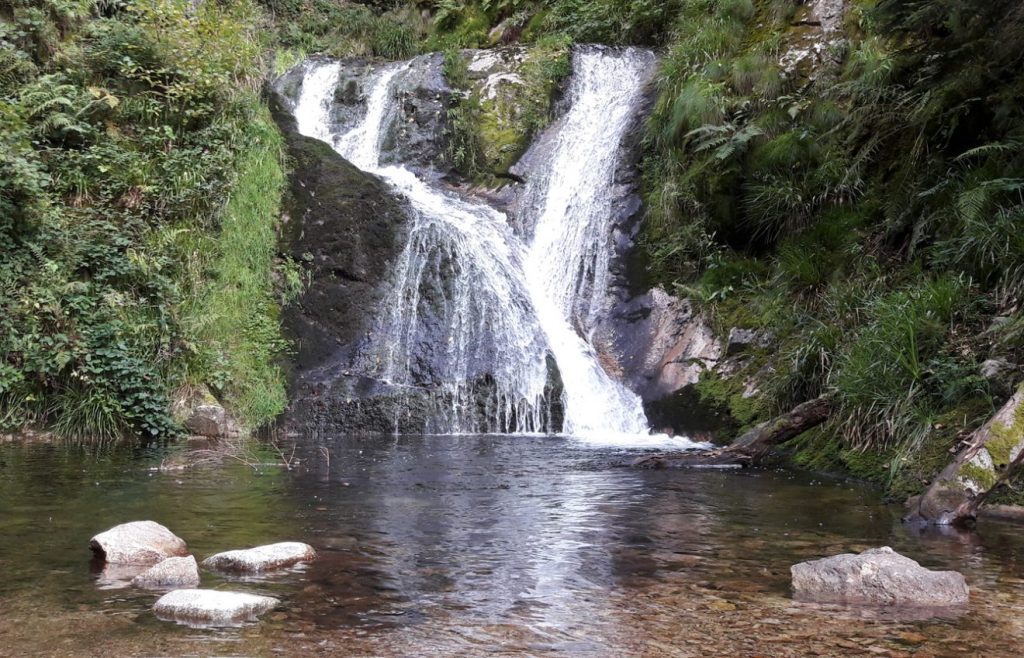
Allerheiligen Waterfalls, which pass the monastery ruins – courtesy of Nationalpark Schwarzwald Magazin

Town of Hornberg – courtesy of Locationscout

Summit of Feldberg, highest mountain in the Schwarzwald – courtesy of Bergfex
References:
- “In the footsteps of the Romans”. Schwarzwaldportal. https://www.schwarzwaldportal.com/en/in-the-footsteps-of-the-romans.html
- “History of the Black Forest”. Schwarzwaldportal. https://www.schwarzwaldportal.com/en/history.html
- “The Black Forest”. The Little House of Horrors. 14 June 2014. https://thelittlehouseofhorrors.com/the-black-forest/
 Onward Trip