
“Paris was born, as we know, on this old Île de la Cité “– Victor Hugo
The Basics:
Hours of Operation: From January 1st to December 31st -9:30 a.m. – 6 p.m. Last access to the monument at 5:30 p.m. Histopads must be turned in at 4:15.
Closed on May 1 and December 25
Admission: https://tickets.monuments-nationaux.fr/fr-FR/familles?site=2035140822090400170 You MUST have a TICKET and a TIMED ENTRY- you have 30 min to enter once your timed entry begins.
| Individual rate | 13 € |
| Combined ticket Conciergerie / Sainte-Chapelle (available only on the Sainte-Chapelle website | 20 € Note: The two sites are next to each other. |
| Free Under 18 years old 18-25 years old (nationals of European Union countries and regular non-European residents on French territory) Disabled person and their companion |
How To Get Here: 2 Boulevard du Palais, 75001 Paris, France Note: Notre Dame de Paris, Sainte Chappelle and La Conciergerie as well as views of the Seine are all within short walking distances.(5-15 min)
Neighborhood: Ile de la Cité Nearest Metro Stop: Cité (line 4)
Other nearby metro stations: Châtelet (lines 1, 7, 11, and 14), and Saint-Michel (lines B and C)
By bus / By Vélib: Lines 21, 24, 27, 38, 58, 81, 85, 96 are nearby
Why Visit:
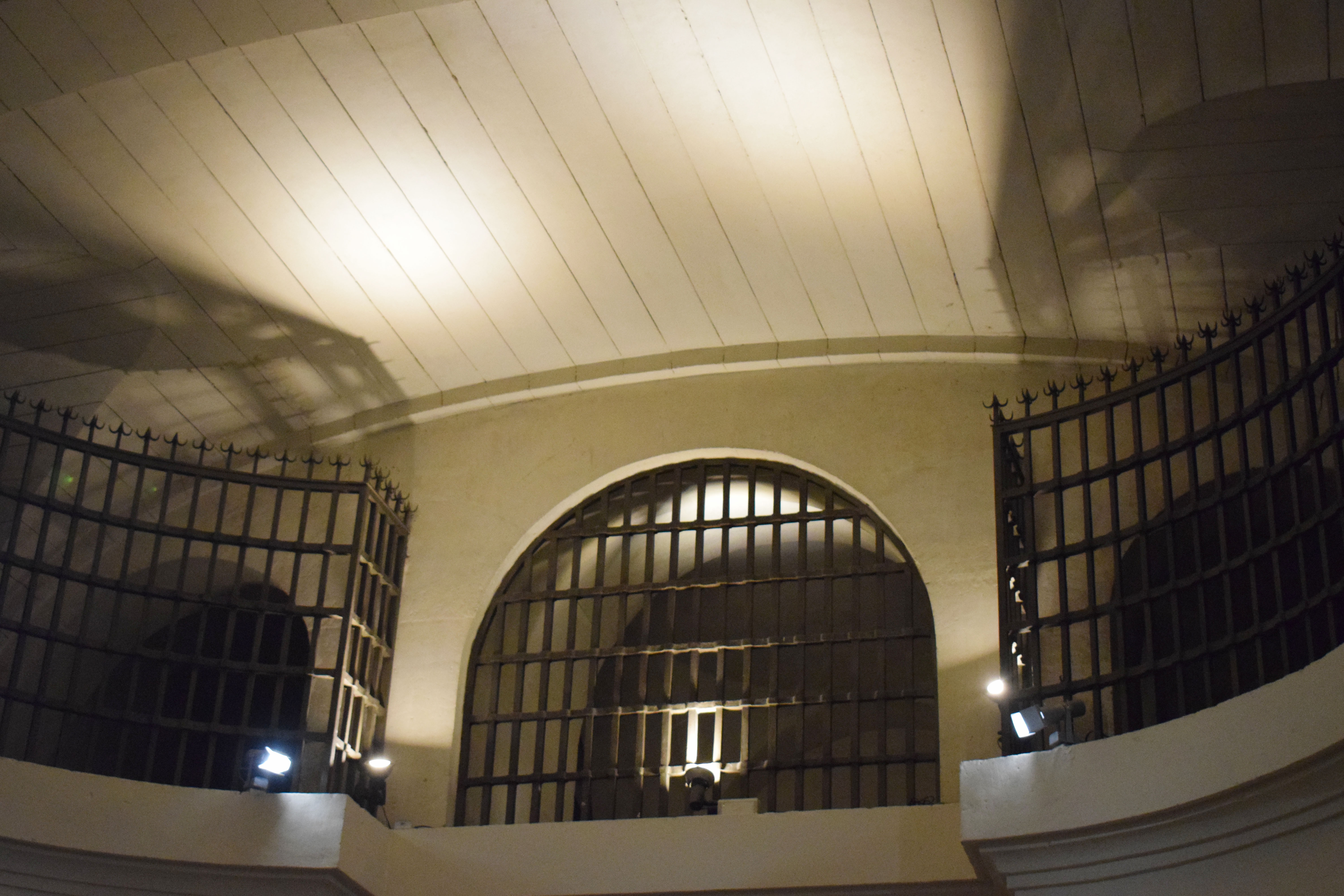
La Conciergerie, along with Sainte Chappelle, were originally part of the Royal Palace, Palais de la Cite. Over time it became a courthouse and eventually a prison. During the Revolution, 2,780 prisoners were held, including Marie Antoinette.
Plan of the Palace and the Conciergerie in 1380 and 1754.
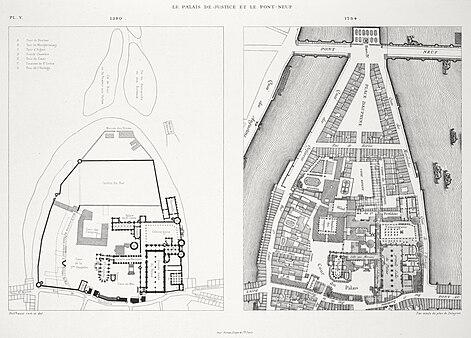
Map Courtesy of Wikipedia
King Phillip II had a strong influence on the architecture. He designed the turreted facade that faces the Seine River, the Great Hall which was used for royal ceremonies and court sessions. He oversaw the movement of the royal archives and appointed a caretaker (concierge) to maintain the building- it is how its name was ultimately derived. During the Crusades, prior to his departure to participate, King Phillip II delegated his authority to the Curia Regis to dispense judgement in the King’s Hall. The hall was decorated with wooden statues of past kings along with tables. A original piece of a table hangs on the wall.
Charles V made substantial changes by installing prison cells in the lower sections. These cells held both criminal and political prisoners. A prisoner’s wealth, status and association determined their treatment. The wealthy/influential could purchase, for 27 livres (12 sous)/monthly, a private cell with a bed, desk, reading and writing materials. Prisoners of moderate means could afford the pistoles, rooms with crude beds and a small table. The poorest resided in oubliettes which were at the bottom level, dark, damp and vermin- infested. These unsanitary conditions often led to plague and rampant infectious disease making survival difficult.
The prison played a horrific role during the French Revolution. Militants killed 1,300 prisoners (priests, and wealthy who were determined to be anti-revolution) within 4 days Part of the executed prisoners were women- their executions took place in the women’s courtyard on September 2-3, 1792. In 1793, the Law of Suspects was enacted. This declared that anyone considered a counter-revolutionary or an enemy of the republic was guilty of treason and therefore sentenced to death. The Tribunal consisted of five judges and twelve selected jurors. Trials were public and speedy, and drew large crowds. There was no opportunity to appeal a verdict. Executions increased from eleven per month prior to the Suspects Act to one hundred and twenty-four per month post enactment.
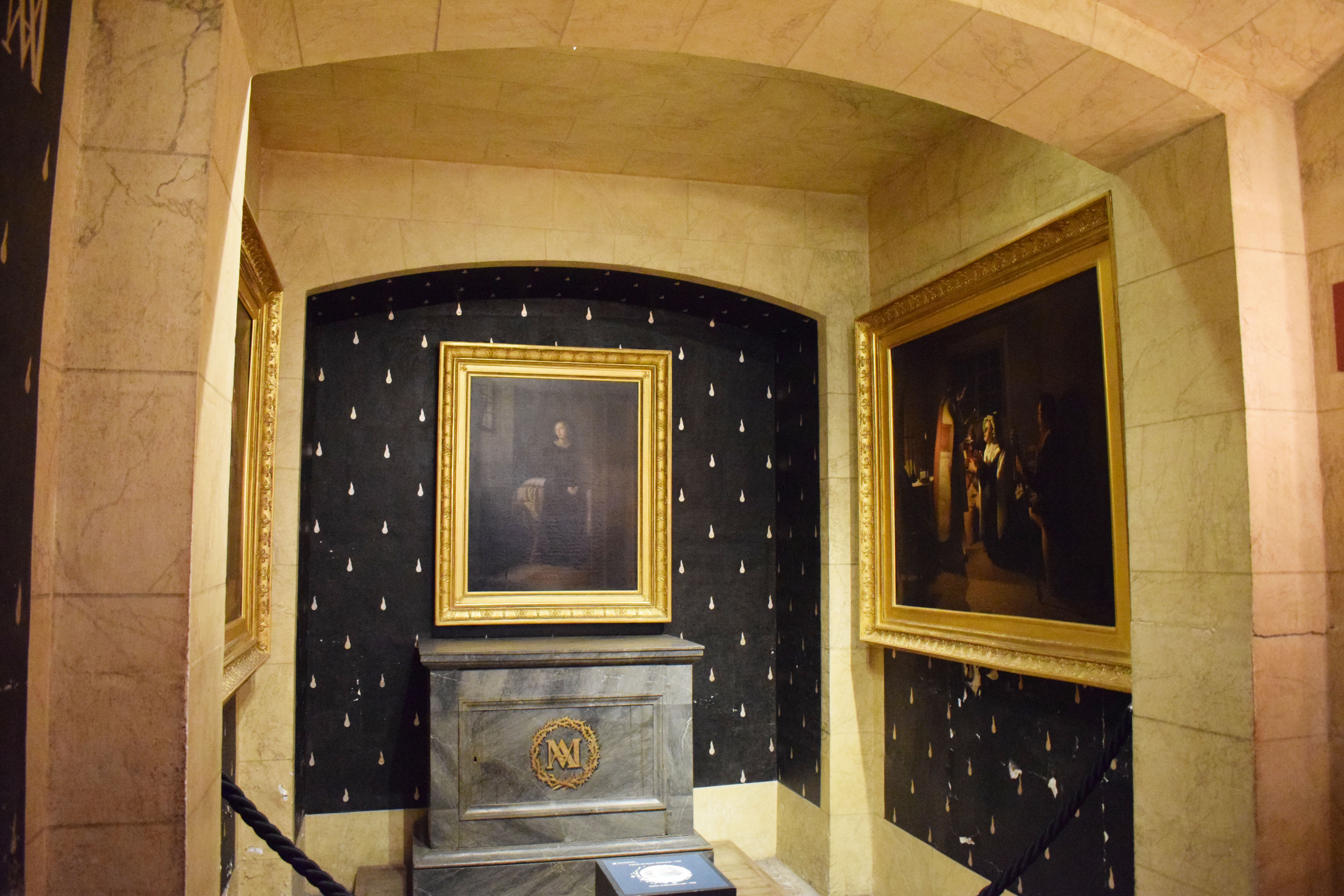
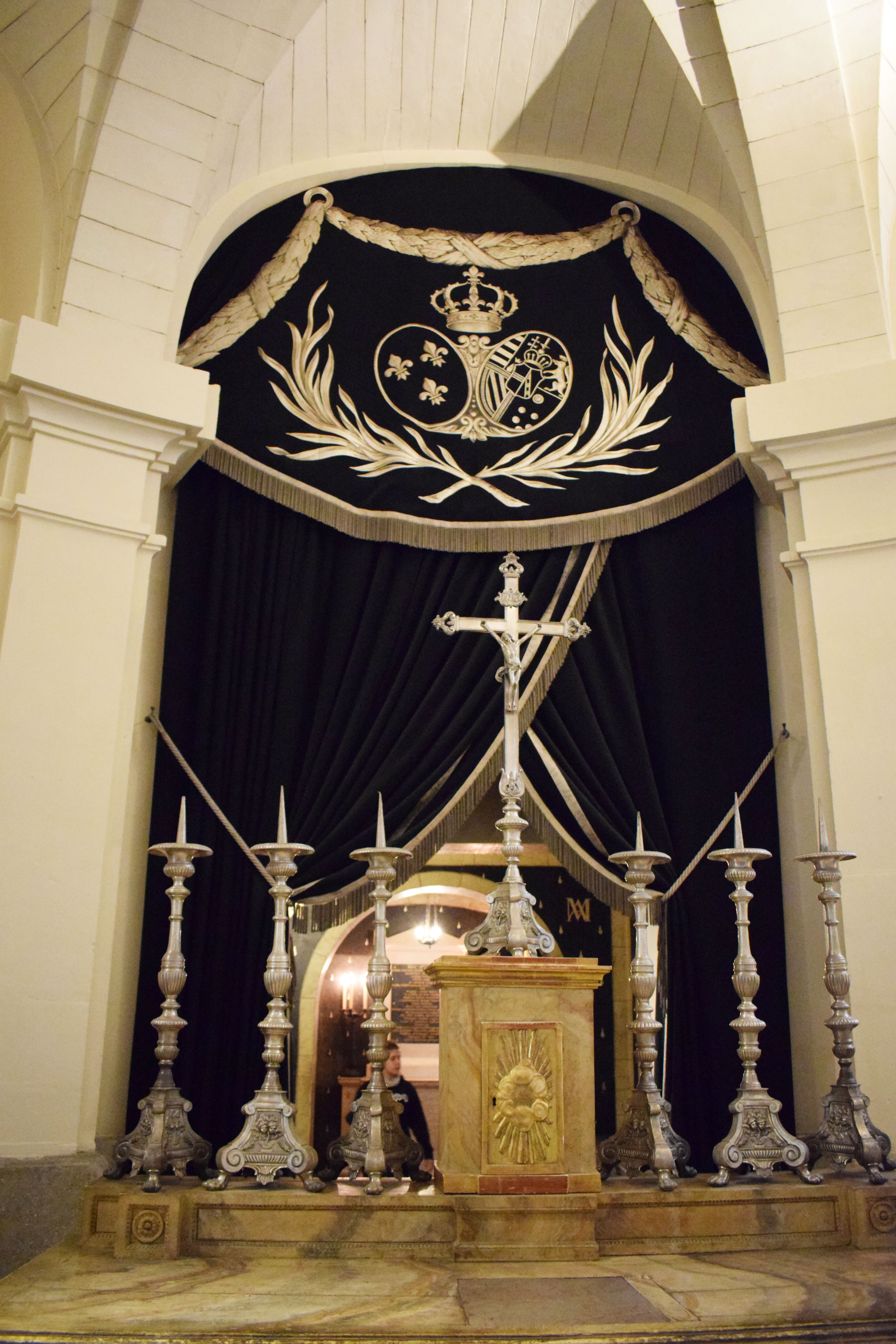
Queen Marie Antoinette was imprisoned in the Temple Prison and transferred to the Conciergerie on the night of August 2, 1793 into a single bed cell overlooking the women’s courtyard. She was placed under constant guard, and denied reading/writing instruments after plots to free her were discovered. She was eventually transferred to another cell. Her interrogation on October 12, 1793 led to 3 criminal charges: collusion with Austria, excessive spending, and opposition to the Revolution. Her trial began October 14 with a fourth charge: incest with her son, added. She was assigned two court appointed lawyers who were given no time to prepare for her defense. After two days of hearings with 41 witnesses, Marie Antoinette was found guilty and condemned to death. Soon after her trial’s end on October 16, she was taken by cart to the guillotine located in the Place de la Revolution (today called: Place de la Concorde) and beheaded.
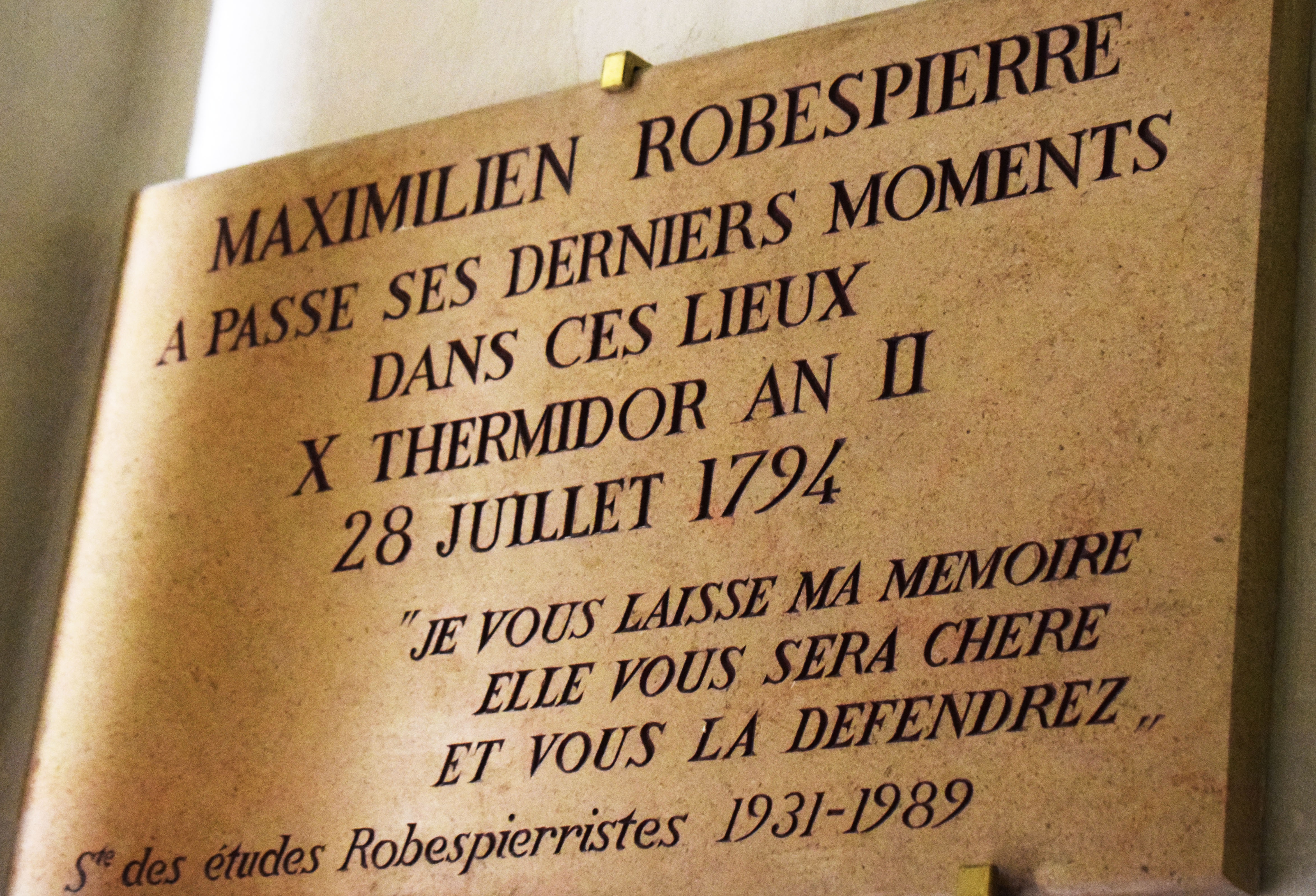
By spring of 1794, moderate revolutionary leaders were being trialed by the judiciary panel. It was declared on June 10, 1794 broadened the definition of suspect and declared that trials no longer required witnesses- this significantly increased the processing pace while widening the victim’s net. On July 27,1794, the judiciary council called for the arrest of Robespierre. Robespierre, upon learning the news attempted suicide unsuccessfully. He was apprehended and incarcerated in Marie Antoinette’s former cell. It is estimated that 38 people per day were executed. The court was eventually abolished after 780 days, and 2,780 executions.
Things Not To Miss:
North Facade- 4 medieval towers, along the Quai de l’Horloge between the Court of Cassation and the
Boulevard du Palais , are the most prominent exterior remains of the Conciergerie.
Bonbec Tower: circular tower with conical slate roof at the western end of the complex. It is the oldest tower and built by Louis IX. It was originally 1 story shorter than the other towers until Napoleon II authorized it to be brought up and level with the remaining towers.
Caesar Tower- built in honor of Caesar and Roman emperors. It flanks the North Gate on the Left while the Silver Tower, hosted part of the treasury, is located on the Right.
Clock Tower , at the corner of Boulevard du Palais and Quai de l’Horloge. It was completed by
John II of France , and finished in 1350. It is the tallest tower in the Conciergerie, five stories high, with battlements and a lantern tower at the top; it served as both a watchtower and a clock tower. It was the first public clock in Paris.
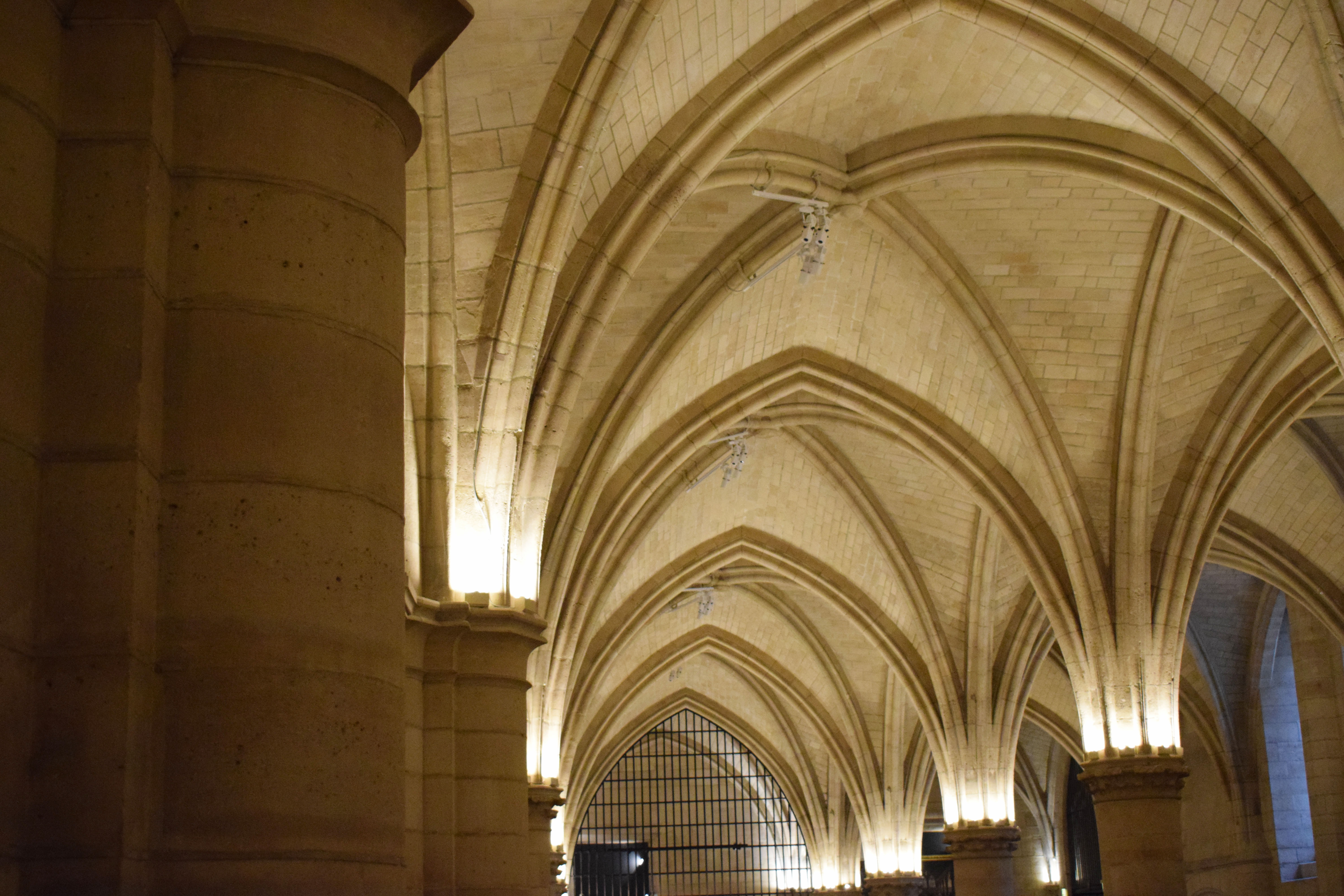
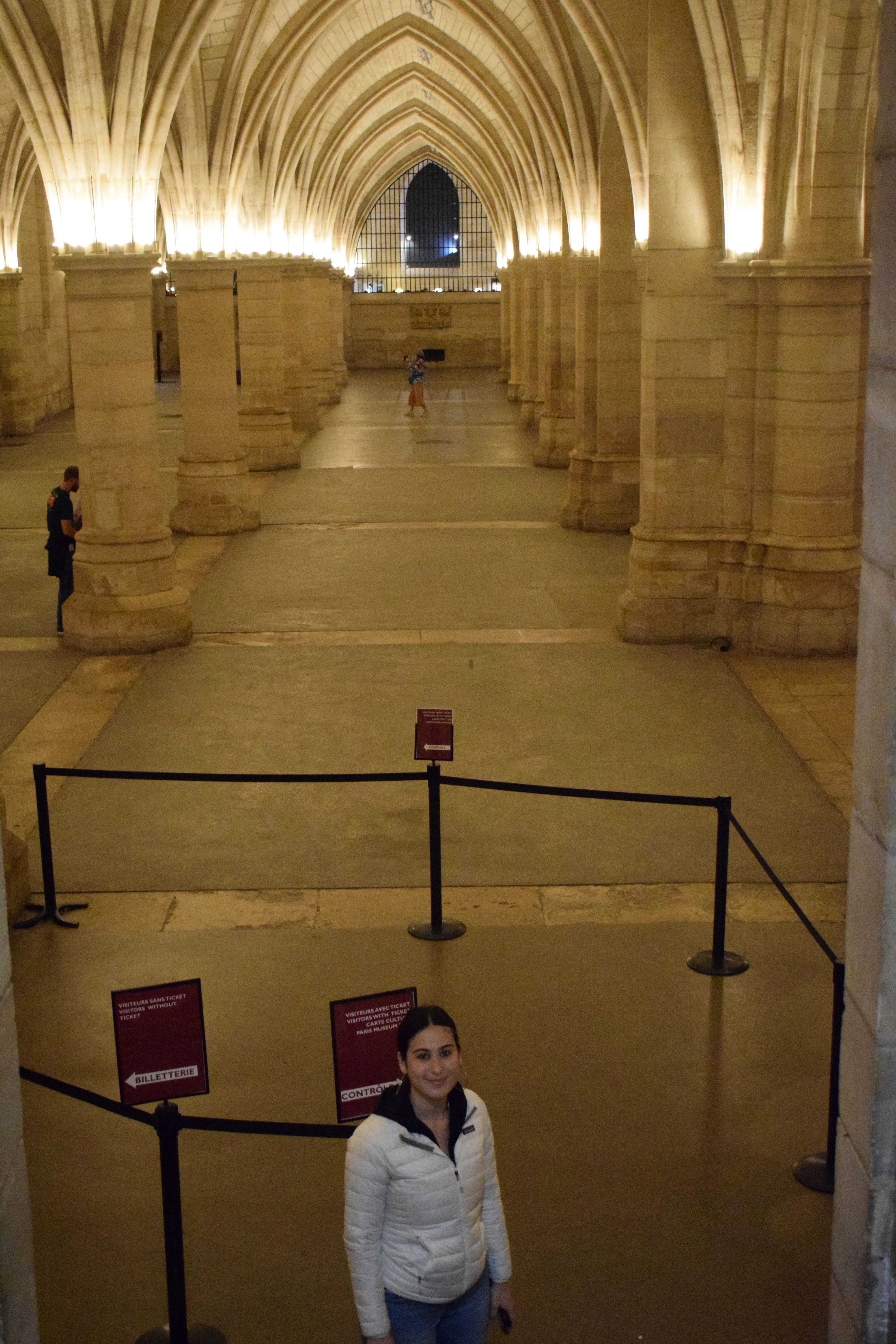
The Salle des Gens d’Armes (Men-at-Arms Hall) Its great size, originally 68 meters (233 ft) long, now 61.2 meters (200 ft), 28 meters (92 ft) wide and 8.7 meters (29 ft) high to the vault, makes it the largest non-religious Gothic hall in Europe . It served as a dining room and gathering place for the armed guards and servants attached to the palace, who numbered between one thousand and two thousand people.
The Salle des Gardes (Guard’s Room)-It was first occupied by the Royal Guard, then was used as an antechamber to the Parliament, which was located just above. It is smaller than the Salle des Hommes-art-Armes, 21.8 meters long, 11.7 meters wide and 8.3 meters high. The ribbed vault, supported by three massive pillars, divides it into two naves. When King Charles V moved in, the room was converted to dungeons for destitute prisoners, called pailleux or straw sleepers , who were fed only bread and water and slept on the floor. It was generally overcrowded, with prisoners sometimes forced to sleep in shifts.
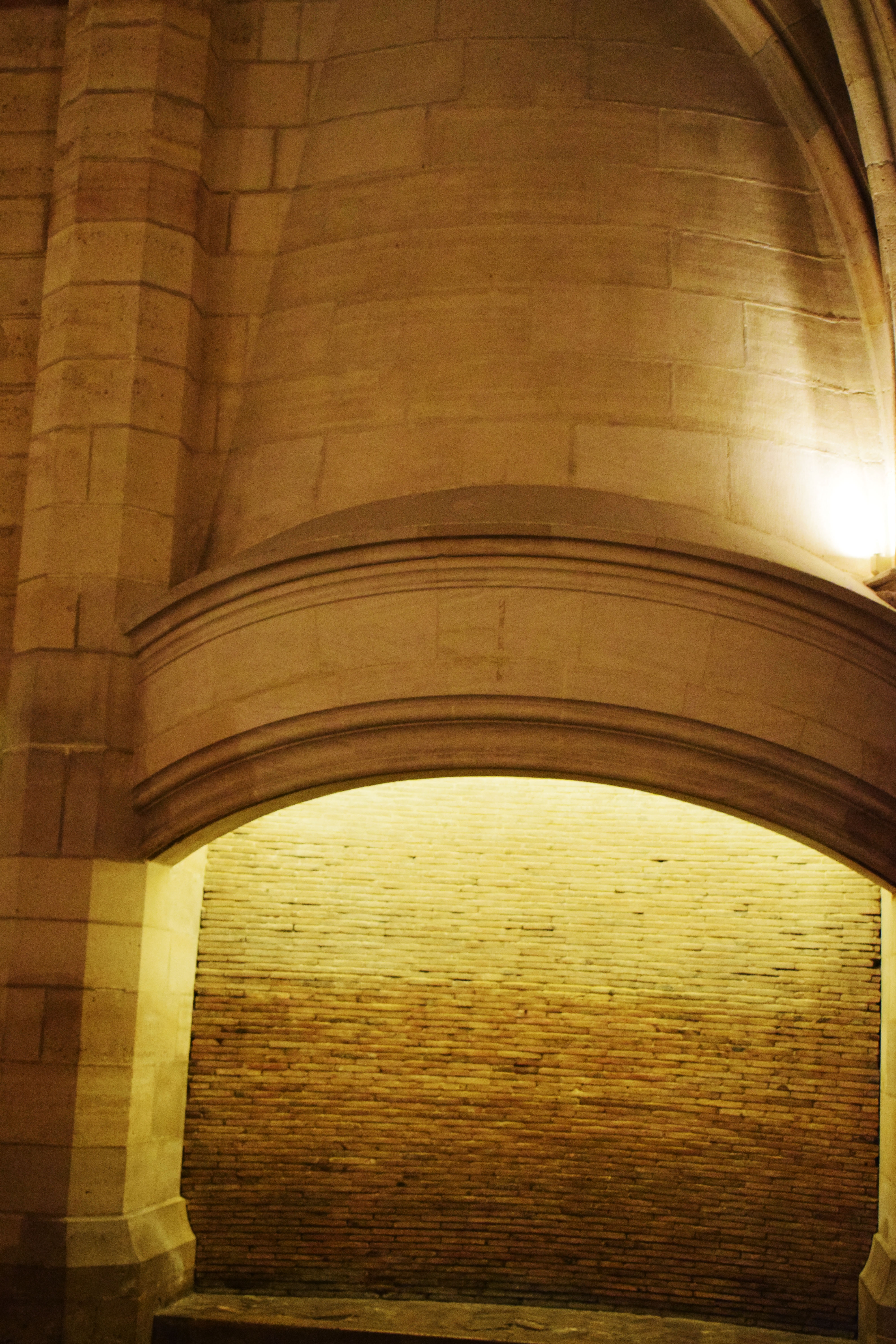
The Kitchen Pavilion– was set slightly apart from the rest of the building to reduce the risk of fire. It was originally set on two levels, with food for the royal family and guests prepared on the upper level, and for the staff on the lower level. When the king was in residence, meals were prepared in a large hearth on the upper floor, or prepared in the lower kitchen and brought upstairs by an external ramp, now gone. The kitchen originally had eight large windows, but all but two were bricked up after it became a prison. Sometimes, both the upper and lower kitchens were used for an event, such as the Three Kings Banquet on 6 January 1378, hosted by Charles V to welcome his uncle, the Holy Roman Emperor
Charles IV , and his cousin Wenceslas , King of the Romans . The upstairs and downstairs kitchens worked together to prepare a three-course banquet with ten dishes in each course, served in the Great Hall to royal guests and eight hundred German and French knights
The Revolutionary Prison– In 1989, three rooms were recreated to represent the prison’s administrative function. The first is the cell-like office of the clerk who received incoming prisoners, entered their names in a large book and took their belongings. The prisoners were then taken to their cells along the prisoner corridor, which ran the entire length of the building. The third recreated room is the dressing room, where prisoners were taken on the day of their execution. They undressed and put on a special collarless tunic, and their hair was cut to make it easier for the guillotine blade to pass through their necks
Hall of Names has walls covered with the names of over four thousand people who were tried and sentenced to death by the Revolutionary Tribunal. Most of the prisoners came from the middle or lower class, although twenty percent belonged to the old nobility and clergy. Between the spring of 1793 and 1794, almost half of the prisoners tried by the Tribunal left prison alive, but this number dropped to only twenty percent between the spring of 1793 and 1794, the period of the Terror.
Women’s Court where Marie Antoinette and other prisoners were allowed to exercise, has changed little since the time of the Revolution. The arcades, the garden, the stone table, and the fountain where prisoners could wash their clothes date from that period

Review:
La Conciergerie is an important piece of French history and should not be missed. The complex is large but can be adequately covered in about 60-90 minutes. The large halls are extremely impressive. The reproduced cell of Marie Antoinette gives insight regarding the luxury the wealthy were able to install while the other jail complexes highlight the plight of the poor. The women’s courtyard with its stories of executed women is especially meaningful. It is a place steeped in man’s cruelty.
A note on the timed ticket- a true pain in the -well you can fill in the blank. I hate schedules on vacation- normally I outline my day and off I go, but I hate having to be at a place, at a specific time- it just adds on a layer of stress while removing the spontaneity of exploration within the institution or along the way. It dictates when (or even if) you can take a break and how long that break can be. Remember dining- even just a sit down meal for lunch runs a lot longer than here in the US.- so factor that into your timed ticket planning. Unless we had a 9:00 ticket, we were always late. Fortunately, the admissions people didn’t mind, but I wouldn’t count on that always being the case. We traveled in late May/early June. It would be much easier if they did morning, afternoon or evening blocks. When you arrive- there will be several lines- one will be for non-ticket holders- in busy seasons- do not count on tickets being available. One will be for the current time slot (ex. 9:00) and the next line will be for 9:30 slot. Don’t try and cheat the line- the guards check the tickets and you will be redirected. The screening process for handbags etc. adds to the time it takes to enter. This isn’t a huge factor at the La Conciergerie- but at the Louvre it is quite lengthy.
 Onward Trip