King Louis IVX, who reigned Europe’s largest army at the time, recognized soldiers’ role in securing France’s glory. He built, at Paris’ outer zone, Hotel des Invalides to provide for the soldiers. It was a hospital, barracks, monastery, and factory, run by military and religious systems. Its first housed soldiers arrived by 1674, and by 1715, when King Louis IVX’s reign ended, 4,000 soldiers were there.
The Logistics:
Open: Every day (minus January 1, May 1, and December 25) from 10:00 A.M. to 6:00 P.M.
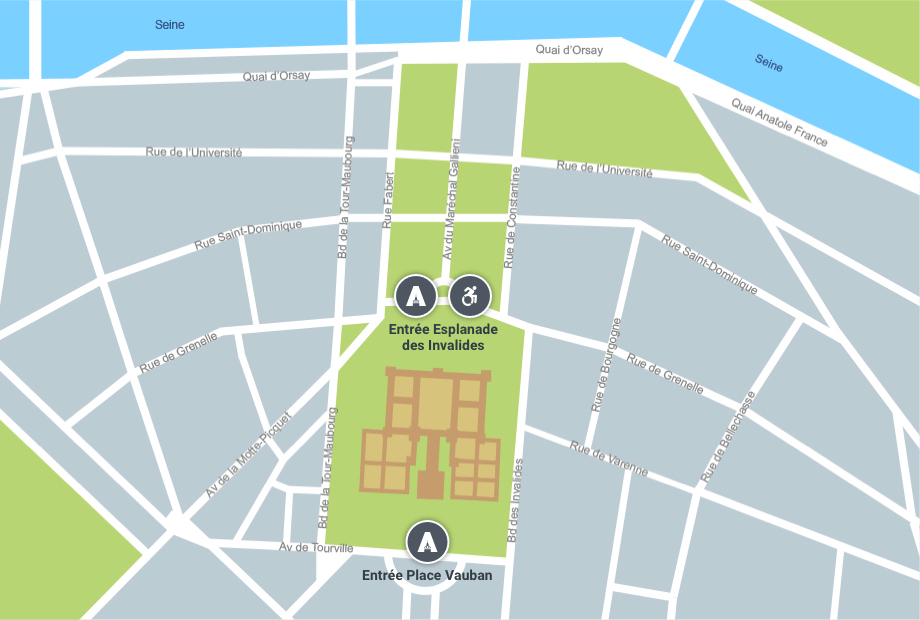
Entrance: Museum Accessed via 129 Rue de Grenelle (from 10:00 A.M. to 6:00 P.M.) or via Place Vauban (only from 2:00 P.M. to 6:00 P.M.).
Tickets: Prepurchase online or buy onsite.
How To Get Here:
Metro/RER stations
Line 8 Balard – Créteil: “La Tour Maubourg” station, Avenue de la Motte-Piquet Line 8 Balard – Créteil: “Invalides” station, Rue de l’Université
Line 13: “Varennes” station, Boulevard des Invalides
RER C: “Invalides” station, Rue de l’Université
Bus
Line 28: “La Tour Maubourg” stop, Avenue de la Motte-Piquet Line 8 Balard – Créteil: “Invalides” stop, Rue de l’Université
Line 69: “Varennes” stop, Boulevard des Invalides
Line 82: “Invalides” stop, University Street
Line 92: “Invalides” stop, University Street
Line 63: “Invalides” stop, University Street
Line 83: “Invalides” stop, University Street
Line 93: “Invalides” stop, University Street
Entrance:
The entrance, the oldest structure, is a decorative facade emphasizing military and royal history. It’s 640 feet (195m) long and 72 feet (22 m) tall.
1. Cour d’honneur 2. Cour d’Angoulème 3. Cour d’Austerlitz 4. Cour de la Victoire 5. Cour de la Valeur 6. Cour de Mars 7. Cour de Toulon 8. Cour de Nismes 9. Cour de Metz
10. Cour de l’Infirmerie 11. Cour d’Oran 12. Cour de la Paix13. Cour d’Arles 14. Cour d’Alger 15. Cour Saint-Louis 16. Cour Saint-Joseph 17. Cour Saint-Jacques
The Royal Entrance:
Inspired by ancient triumphal arches, the center pavilion features King Louis XIV as a Roman Emperor celebrating his victory. Statues express royal virtues of Prudence (left) and Justice (right).
Cour d’Honneur (Court of Honor)
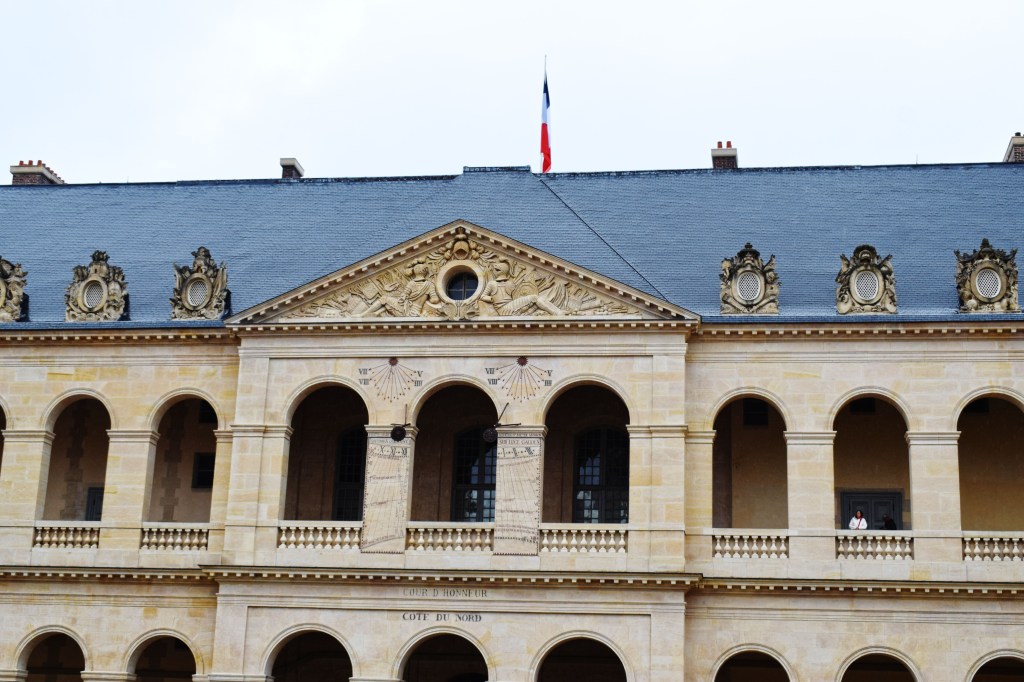
From the Royal Entrance, you enter the Court of Honor. It’s a 335 ft/102 m long, 210 feet/64 m wide, open air courtyard where an arcaded gallery set sits. The courtyard hosts military, national and civil remembrance ceremonies.
SECRET, LOOK TO THE CEILING WHEN YOU’RE THERE:
Secretary of State for War Marquis of Louvois was vexed when King Louis XIV refused to put his coat of arms on the building. Louvois, against Louis’ rebuke, carved into a dormer “le loup voit”, or the wolf sees. The bronze statue of Napoleon overlooks the courtyard, there since 1911.
Napoleon’s Tomb
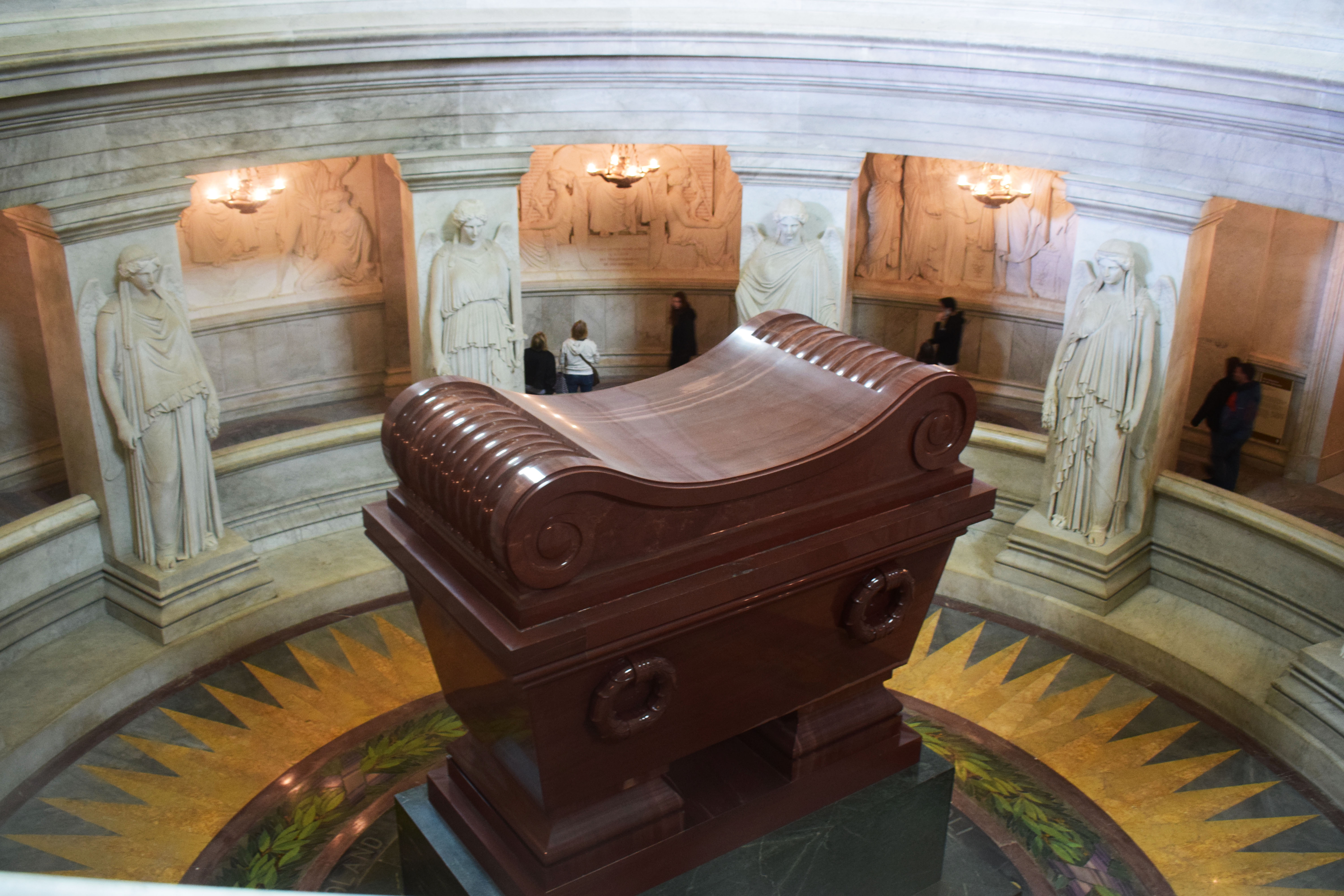
Napoleon’s repatriated remains from St. Helena were moved here. The tomb took two decades to create, and when done it subscribed to Napoleon’s wish for a Parisian burial. 10 wall reliefs memorialize Napoleon’s achievements. His victories are on 12 supporting columns. The tomb is purple Shoksha quartzite (Russia) resting on green Vosges (eastern France) granite.
Two Cathedrals-Saint Louis Cathedral
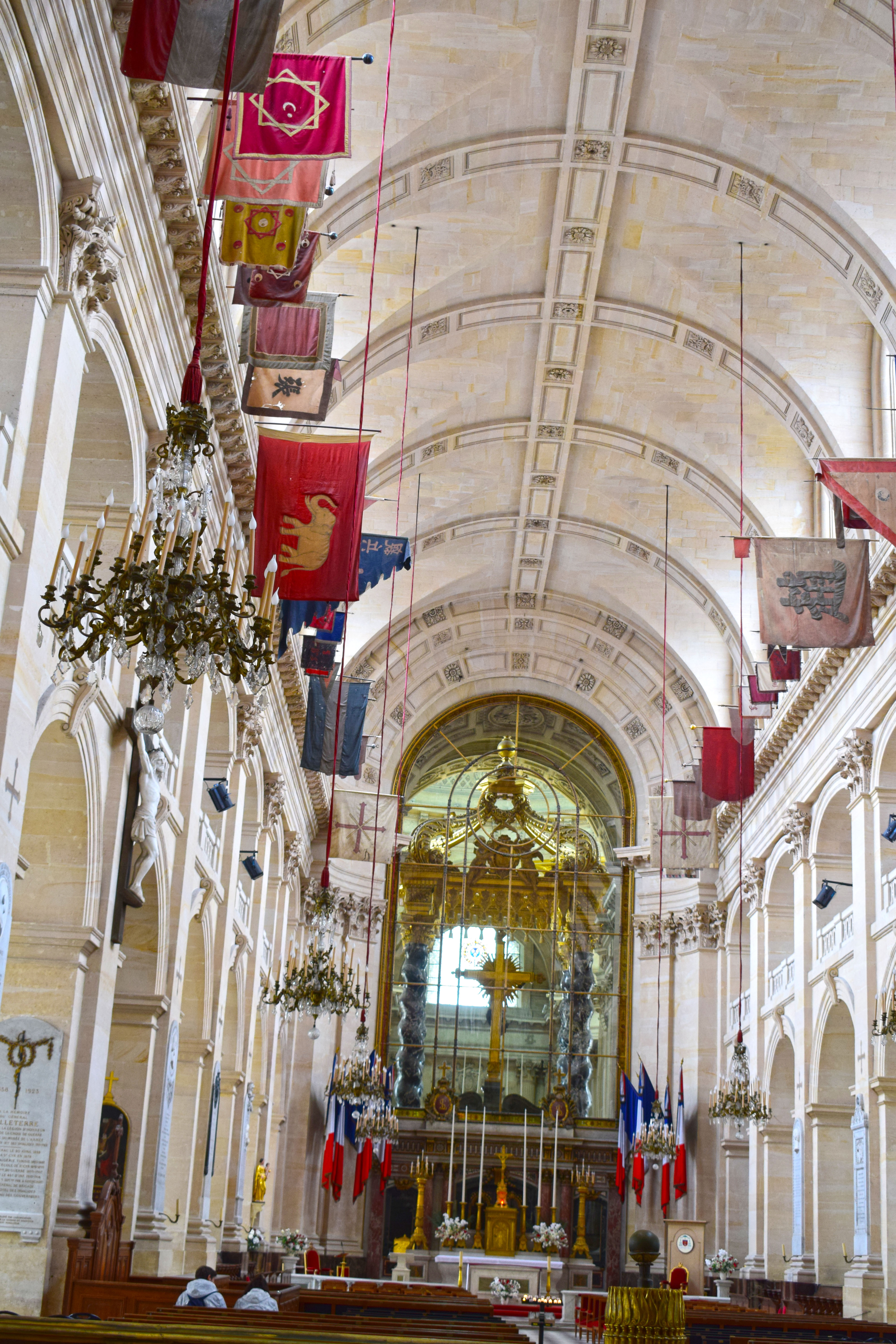
Saint-Louis Cathedral is at an extension off the Court of Honor.
In 1676, the Secretary of State for War Marquis de Louvois charged emerging architect Jules Hardouin-Mansart with the the chapel’s construction. The building combined the “Dôme des Invalides” royal chapel and a veterans’ chapel. The design allowed the King and his soldiers to attend mass simultaneously; they could enter though different spaces as required by etiquette. The separation was permanent when Napoleon I’s tomb divided space. Two separate alters and a glass wall turned a chapel into two.
Tallest Building in Paris Before Eiffel
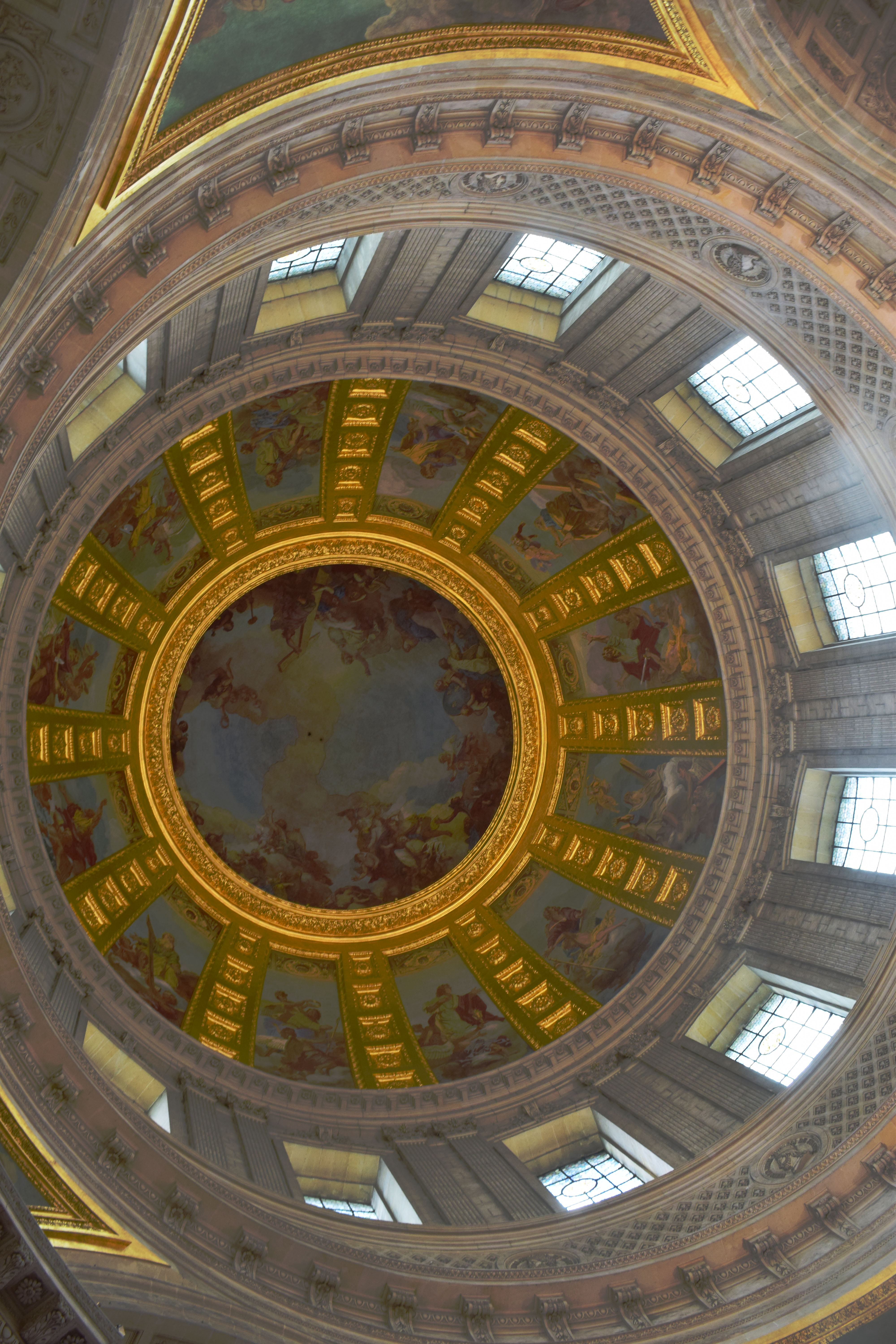
At the south side the Domed Church is visible. Before the Eiffel Tower, it was the tallest Parisian building at 351 ft or 107 m. The Dome’s plastered by 550,000 gold leaves (30 gold pounds).
The Upper Gallery
The upper galleries is accessed from staircases located at the courtyard corners. The upper gallery’s plaques pay tribute to combat units from France’s wars.
Open Air Gallery
The courtyard contains 60 cannons. Information is provided on France’s 200 year story of land artillery, equipment production, and exceptional artillerymen from Louis XIV to the Second Empire.
The Musems
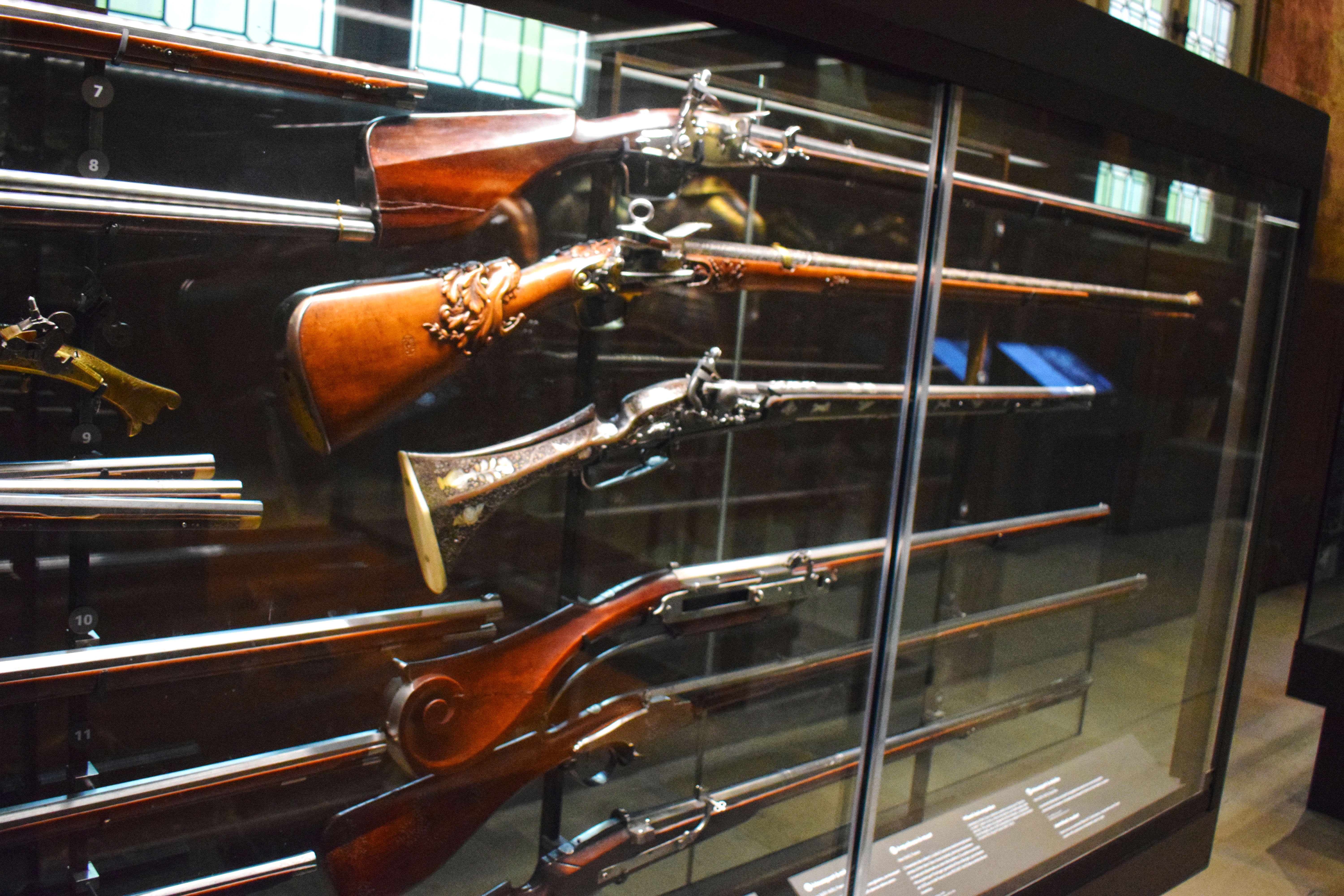
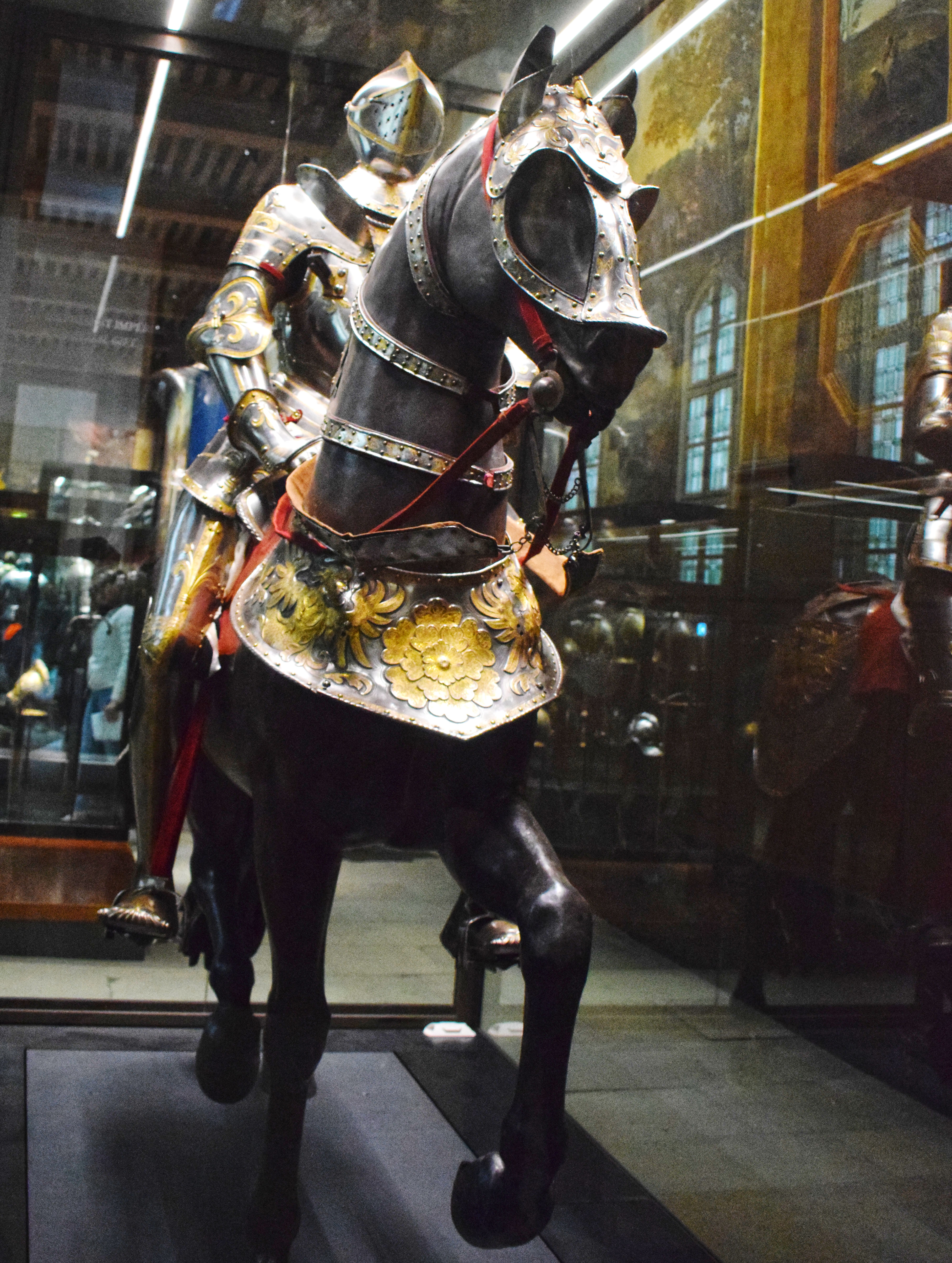
Arms and Armour: 13th to 17th century Some of these rooms are located in historic settings within Hotel des Invalides. The French royal collections, European armory workshops, hunting, jousting, tournaments, etc. covers St. Louis to Louis XIII.
Louis XIV to Napoleon: 17th to 19th century
This collection shows the numerous variations of soldiers uniforms from the basic to the most luxurious. One can also find weapons, orders, decorations, musical instruments, etc. Some of the articles featured belonged to Napoleon Bonaparte and his marshals. In this area you will find: The Old Monarchy: from the Battle of Rocroi to the Revolution-Explains the development of King Louis XIV development of the army, how armies and their entourages were used by Kings, and examines some of the famous battles.
From the Revolution to the first Restoration– showcases many of Napoleon Bonaparte’s personal effects along with those of his marshals.
From the Hundred Days to the Franco-German War of 1870– This time period saw the French army shifting according to national political and foreign policy needs. On an operational level, this period in Europe was marked by expeditions designed to give France a leading role in the concert of nations – Spain (1823), Italy (1859), etc. – and by the Franco-German War of 1870-71.
The Vauban Room, a themed area– Located on the ground floor, the Vauban Room presents a procession of 14 cavaliers from the Consulate to the Second Empire. The murals depict the Wars of Devolution (1667-1668)
World Wars -20th century– This area covers France’s military history from 1871-1945. It features: French and foreign uniforms, including some having belonged to illustrious military leaders (Foch, Joffre, de Lattre, Leclerc, etc.) objects used by soldiers in daily life, prestige pieces (marshal’s batons and ceremonial swords), etc. Emblems, paintings and elements from personal archives (letters, postcards, etc.) enrich the collections, along with documentary films, photographs, maps and architectural models, which complete this dynamic and educational itinerary.
Extraordinary Cabinets This new space is divided into two rooms. The first room showcases specific collections of ancient figurines (sets of paper, lead and tin toy soldiers), as well as scale models of artillery pieces, whilst the second room is dedicated to the history of ancient musical instruments.-
Historical figurines– The 5000 or so pieces, representing all the different types of historical figurines, reflect the diversity of the Army Museum’s collection, which is made up of around 140,000 pieces in total. This room features displays of the four main types of figurines, which are mostly arranged in parade formations. First, we have the card figurines which were made by and for adults using stiff cardboard from the beginning of the 18th century. Then there are the so-called “tinplate” figurines which were produced during the second half of the 19th century. These are followed by the lead figurines, which were originally produced as children’s toys and still to this day represent the images of “toy soldiers” found in our collective imagination. Finally, we have the plastic soldiers, which became immensely popular during the 20th century due to the fact that they were stronger and less expensive.Artillery modelsThe one thousand piece collection of scale artillery models is one of the largest in the world. The exhibition starts with royal and princely pieces and continues with models bearing private coats of arms which, for the most part, were given as honorific gifts. It also features models of weaponry designs that were never actually adopted but were developed with a view to improving the specific technical elements of artillery pieces. What’s more, some of the models are all that remain of artillery pieces that have otherwise disappeared. Finally, visitors are given an overview of French artillery in the 18th and 19th centuries by way of incredibly accurate scale models. An entire display cabinet is dedicated to the Gribeauval system, named after its inventor, which was the first artillery system adopted by the French army and contributed greatly to the victories of the Revolution and Empire.
Napoleon On The Throne- considered to be one of his most famous paintings- although not everyone’s favorite. Here he is represented as the Roman God- Jupiter. His imagery as a Roman Emperor is further emphasized with the laurel crown and his purple robe. His robe is embroidered with bees- one of his designated symbols, along with eagles.
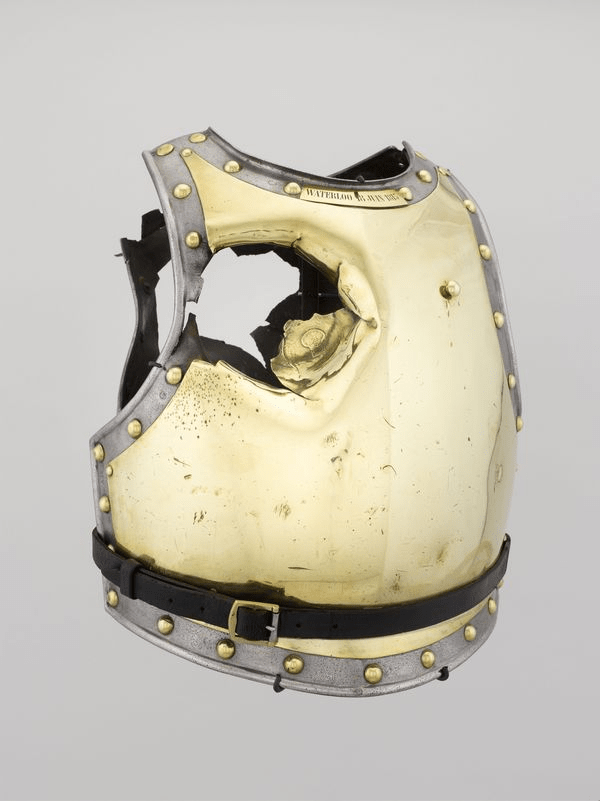
Rifleman Faveau’s Breastplate: – beaten iron covered with brass foil reminds us of the dangers of war.
Partisan of the Guards of the Channel, 1679-The Gardes de la Manche (literally “Guards of the Sleeve”) were the troops who stood closest to the king, so close that they could touch his sleeve. In 1679, they were given new tabards and weapons. The symbols of Hercules, inherited from King Henry IV, were replaced by symbols of the sun , which were adopted by Louis XIV from about 1662.
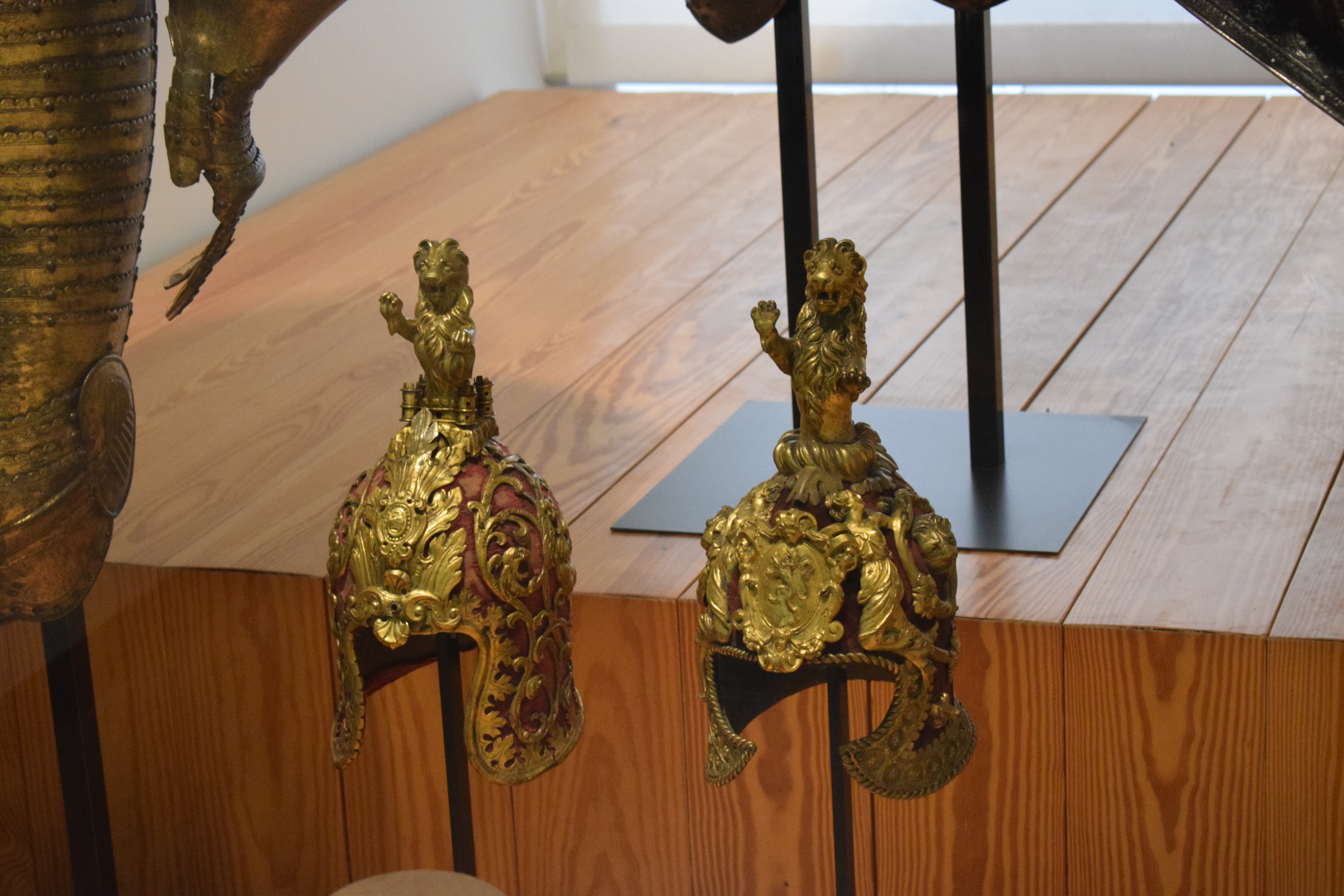
Armor with Lions- Inspired by the war equipment from classical antiquity.
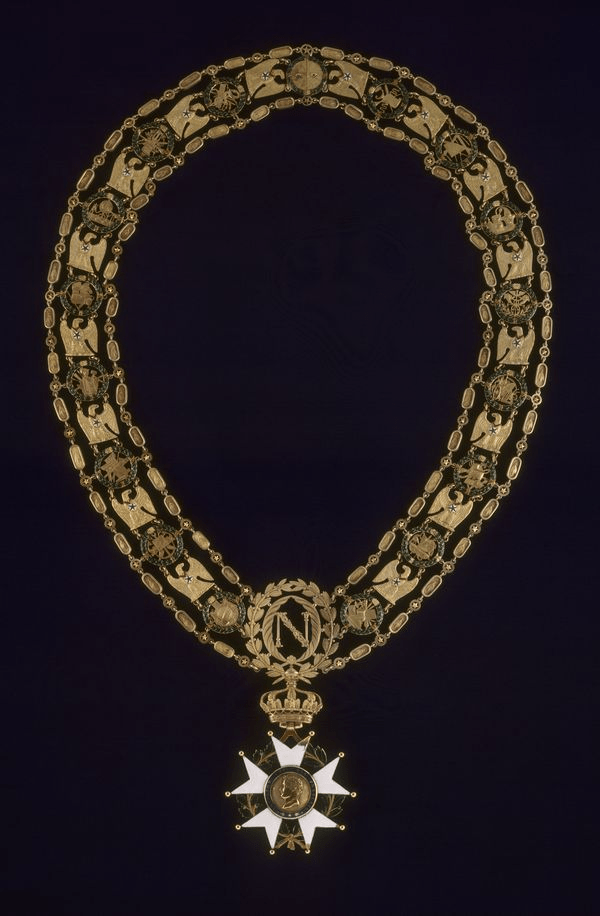
Collar of the Grand Master of the Legion of Honor- Napoleon formed the order in 1809 to reward civilian and military services to France.
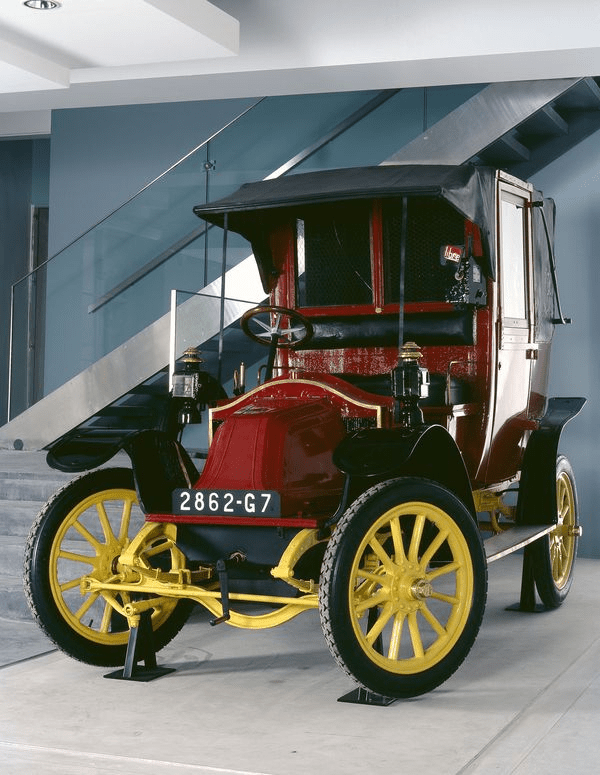
Marne Taxi- Taxis were used to reinforce France’s attempts to resist the Germans in World War I.
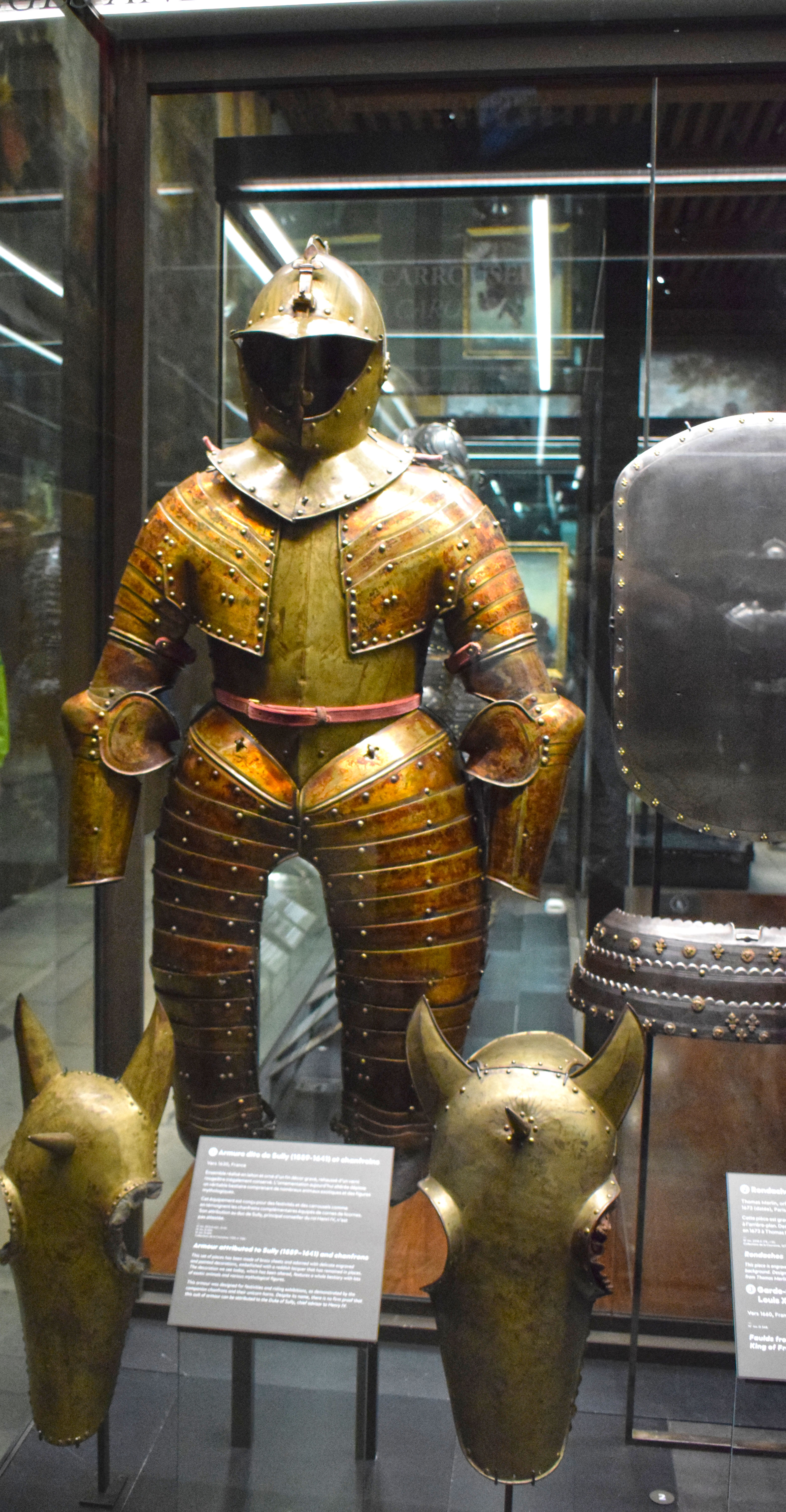
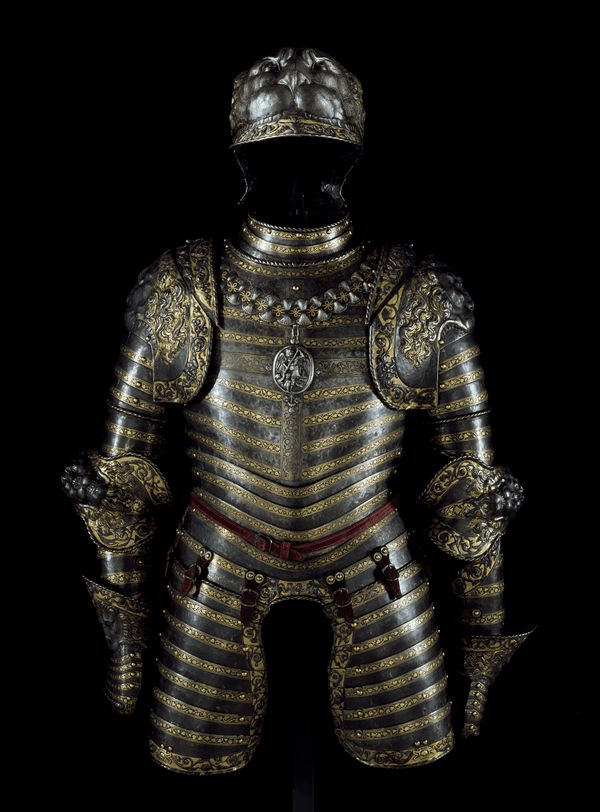
Armor of the Dauphin- the armor is decorated in dolphins, “dauphins” in French.
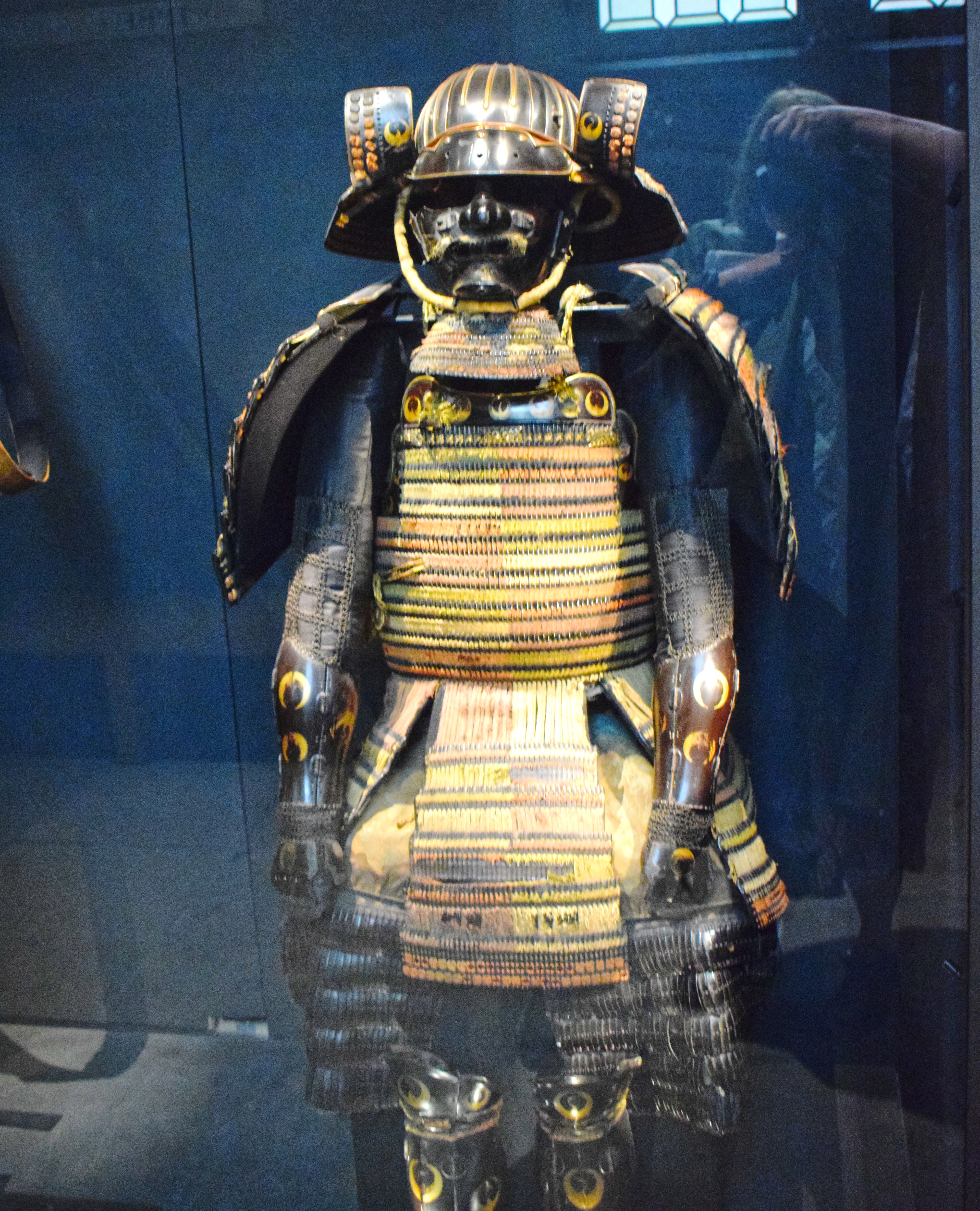
“Uchidashi Do Tosei Gusoku” armor type. The breastplate was made in 1662 by Kunimichi, 21st Master of the famous Myôchin dynasty of armorers.
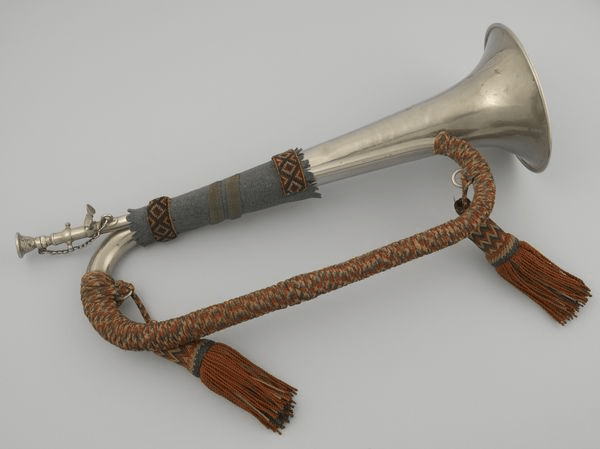
Bugle from the Armistice- November 11, 1918
Review
Les Invalides is impressive- both in grandeur and size. If you are simply interested in visiting Napoleon’s tomb (by the way- he was normal height for the time) and seeing the cathedral/dome then the amount of time needed to visit would be around 60-90 minutes. If you add on the MANY museums- you could spend a half day- even more. One decision that has to be made is to prebuy tickets or do so onsite. The pros to prebuy: no line waiting, cost is prepaid, however, the con is you are locked into a time slot. That may not seem like a big deal before your trip, but trying to juggle all the pretimed tickets (if you are on a tight schedule) gets to be very stressful. Peak season crowds also need to be considered. Regardless, keep your ticket easily accessible as you will need to show it to security as you enter various parts of the complex. The monument does not have a lot of signage explaining the events of Napoleon- so doing basic research before visiting would be a beneficial help. The museums are grouped into time periods making it easier to figure out what you would like to see. The collection is extensive, well displayed, and equipped with plaques detailing the displayed item. These collections are really designed for those with military knowledge- however, the section on World War I and II are well done if you are unable to visit the Normandy/ Somme regions. Climbing the dome does give some nice views of Paris- but if you are conserving money on dome hikes- then I would pass on this one. There really aren’t any eating/drink facilities. It is a bit off the beaten track so allow yourself enough travel time. This place is better understood and appreciated if you have or develop some background knowledge in Napoleon, French military history or general military knowledge.











 Onward Trip