

“…There is the heat of Love, the pulsing rush of Longing, the lover’s whisper, irresistible—magic to make the sanest man go mad.”
― Homer, The Iliad
- Airport:
- Travel Documents:
- Transportation:
- Parking:
- Rental Cars:
- Taxis:
- Gas-
- Where To Stay-
- Drinking Water:
- Electricity-
- Food
- Personal Impressions:
Airport:
Eleftherios Venizelos, https://www.aia.gr/en, is the international airport in Athens, Greece. If you are arriving in Greece or flying to one of the Greek Islands- this is most likely the airport you will use. It is important to know that not every plane has a direct plane access boarding gate. Many flights will park somewhere on the airfield and buses are used to transport passengers to/from the main terminal. First class passengers often have their own bus. If you need special assistance it is critical that you arrange this in advance. The walk from international arrivals to passport control is LONG. Restrooms are available along the route. Passport Control was well organized and straightforward. Watch for your lane- EU or NonEU, get in the lane and follow it to the passport officer’s kiosk where he will look at you and then stamp your passport and then you exit. This is the CURRENT procedure- the upcoming Schengen visas, and fingerprints will have an impact. Once you are clear of passport, you will walk a distance to baggage claim. Just look at the overhead monitor, locate your flight (information will be Greek, wait a few seconds and it will switch to English) and go to that baggage terminal. Once you collect your bags you enter the Arrivals Hall where a sea of people will be holding up name placards- these are for tour groups, private transfers, etc. You can find rental car services, connections to the metro station and public taxis.
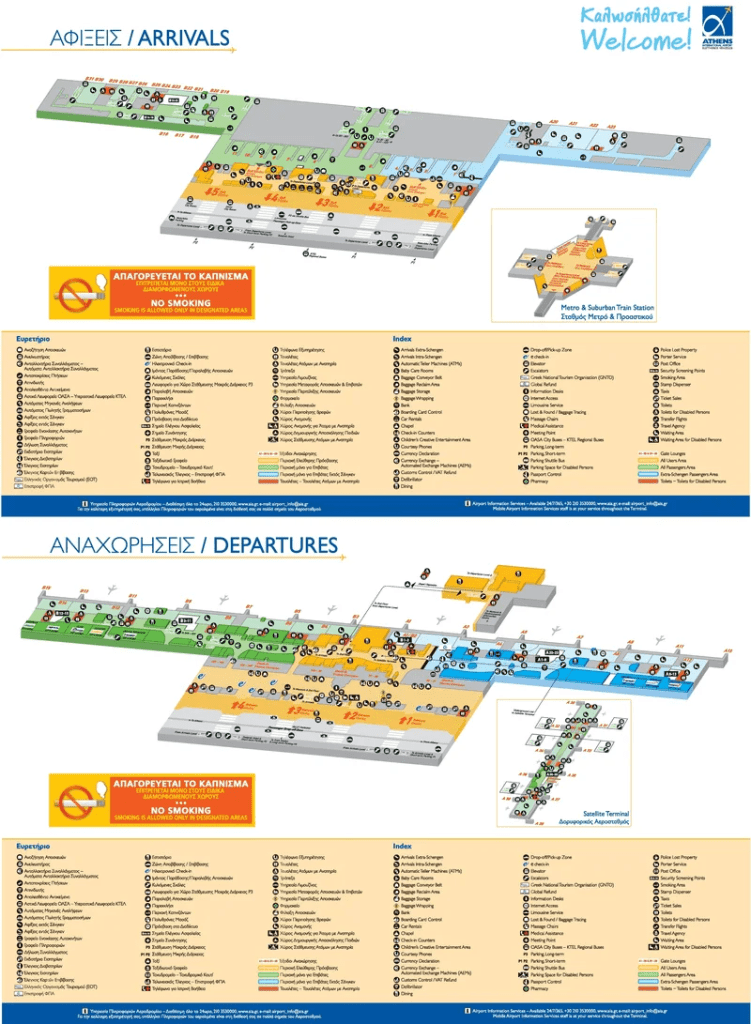
Map Courtesy of : Ontheworldmap.com
Travel Documents:
So much is changing with international travel- that it is best to check with the State Department on what documents are needed to enter. The Schengen visa is set to go into effect soon. Some countries are requiring fingerprints upon arrival- so be certain you have ALL the paperwork necessary to enter/exit countries. Do NOT assume you can drive a rental car across EU borders without clearing it with the rental company first. Border crossings may be slower as these new rules are implemented.
Passports- are your key home. What do you do if you lose it? It is always best to carry your passport in a different place than your driver’s license/ other id that way if one gets lost you still have the other. The US Embassy requires photo identification- so if you lose all your id- that could become a much larger problem. Not only do they want a photo id, but they also want 2-3 other pieces of identification to verify you- things like airline tickets, etc. Digital copies may not be sufficient. Bring a photocopy of your license, passport, print out airport confirmations in advance in case you need to provide this information. Digital passports could resolve the anxiety of lost passports.
Transportation:
Driving in Athens? Only if you are a thrill seeker willing to deal with heavy congestion, cars moving in and out of lanes without looking or signal, motorcycles crisscrossing to get to the front, and the warren of tiny (barely one car passable) streets that exist off of Athens main boulevards. Parking is pretty much nonexistent so pay lots will be necessary. Driving outside of Athens and on the various islands is totally doable. Greek drivers may have a nasty reputation for being fast, intolerant or angry, but over the 21 days we drove throughout Greece, we simply did not find this to be true. So let’s break it down:
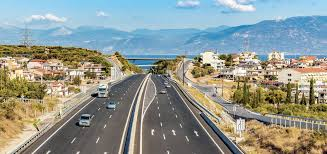
Greek Roads- you have National Roads- which are highways, in excellent condition that will transport you from A to B in the fastest time- they are marked by frequent tolls which makes them an expensive option. Rest stops, gas and food stores can also be found on these roads. Tolls can be paid by EUROS or credit card- just be sure you pick the right toll lane. A great opportunity to unload Euro coins as those can be tough to convert back to your currency.
Look for the colored signs above the booth:
- Manual lanes: Look for lanes marked with a blue icon, green arrow, or green coins, which indicate a cashier is available or a machine is ready for card or cash payments.
- Electronic lanes: If you have an electronic tag, use the yellow lanes to pay automatically

Regional Road- often are 2 or more lanes (with at least one lane for each direction), no tolls, generally well paved, may have roundabouts, traffic lights etc. Gas and food are easy to come by.
Local Roads- often are one lane for cars traveling in both directions. They are often lined by houses right on the road edge making it difficult to execute a 3 point turn or to move over to let oncoming cars pass you. It is important to pay attention- if you see a big car/truck coming-it is best to slide over and let them pass. Out of the small towns, these roads are often switchback. They are sharp, hairpin turns that you need to execute as you move up and down the Greek mountains. If you vision is blocked- beep your horn to let oncoming cars know you are present. Moving slower than people behind you- just slide over and let them pass. Watch your speed and the condition of your brakes. Be alert to animals grazing and crossing.


Parking:
Greeks parking can be interesting. Some Greeks park on the side walks. Parking on the side of the road- you need to make sure their isn’t a meter payment due at a nearby kiosk. Streets are well labeled as to handicap, bus only etc. Most towns have free public lots or pay lots (fees are generally a few Euros). Parking may or may not be present at restaurants- particularly small taverns, likewise hotels and apartment rentals may or may not have parking. There is onsite parking which means there is a dedicated spot for your car. Parking nearby- means you will have to find on street parking or the nearest free lot (which may or may not have space depending on how busy the season is).
Rental Cars:
Manual transmission continues to be popular but there is growing automatic transmission availability. If you want automatic, I suggest booking your car as soon as possible.
Discover Cars,http://www.discovercars.com, Booking.com, https://www.booking.com/ offer good rates and reliable services.
When you pick up your rental car- be prepared to have your camera in hand. The rental company will be using its iPad to take pictures of every part, every angle of your car. It is up to YOU to identify scratches, chips, dents, etc and have those identified in the picture-which is why you should take the same pictures so you have proof if necessary. When you return the car- it will be gone over extensively with picture comparisons. Make certain dust is not acting as a “scratch”. You may be flagged to repair the smallest of scratches that come from normal wear and tear on the car. It is recommended that you take additional insurance at the time of booking to cover you in accidents, etc. There is no doubt that the car rental rep will try to convince you to take on their “additional insurance”. Now is this “additional insurance” necessary? That’s up for debate. The big selling point on this insurance seems to be the dings, scratches and other bumps that come from driving a car. This insurance covers you-otherwise you have to pay up before your credit card is released. Ultimately it comes down to what you feel minimizes your risk- remember you are in a foreign country and you will have to play be their rules if something goes wrong.
Rental Cars can use Diesel gasoline- so be certain you know what type of gas to use before you leave the rental car agency.
Car size- cars, in general, are just smaller. So if you are a family of 4- you should be looking at a 5-6 passenger vehicle. This will give you elbow room and hold your luggage. Families 5+ probably want to look at van rentals. The most popular van is 9 seats (although not significantly larger than our 7-8 passenger vans). These have 3 seats in the front, 3 in the middle and 3 in the back. Note that the middle seat may have seat belts coming on the opposite side. Also- most vans do not have passenger doors on the driver side. There are 2 doors for the front seat, one sliding door on the passenger side for the middle and back seats and either a hatch door or pull out doors in the rear for luggage. So yes- middle and rear seat passengers need to be able to slide across the bench.
The most annoying thing about rental cars is the constant beeps- it beeps when a seat belt is off, it beeps when you move off the center of the road (like letting others pass by, debris avoidance etc), and it beeps when you exceed the speed limit- which is easy to do as the speed limit can go from 110 km to 30 km in 10 feet. And on that note- beware of electronic speed cameras- they are growing in Greece. These quick drop change areas are great places for speed cameras.
Taxis:
Be prepared- taxi drivers go on strike frequently so you don’t want be left without a ride. It is best to prebook any transfers you are going to need (such as the airport, ferry, etc) in advance. Uber is not particularly popular at this time- but its presence is growing. There are several reliable services: Booking. Com https://www.booking.com/for airport transfers and Welcome Pickups http://www.welcomepickups.com. In Athens- flagging a taxi is relatively easy. Like here- make sure you agree on a fee, the meter is reset to zero. In smaller towns- taxis may be non-existent. Some local cab companies wont book a transfer under 2 miles. Just be aware of the cancellation policy if your needs change so you don’t get charged unnecessarily.
Gas-
Gas is readily available- and measured by the liter. Prices are posted on large signs. Gas in Greece is pumped for you; however, you generally have to go inside to pay afterwards. Be sure you know the type of gas your vehicle takes! Many, but not all, gas stations have a small convenience store attached for snacks, drinks and restrooms.
Where To Stay-
Hotels or apartment rentals are the two basic options. Which you choose depends on what you want from your stay. Apartment rentals can be much cheaper, located in popular areas (such as the Old Plaka in Athens), may have more than one bathroom, have a refrigerator, and cooking capacity. There are some things that you should be attentive to when booking an apartment. 1) Always read the positive AND negative reviews before booking. Know what you are getting and what is required of you before you stay. 2) Know whether it is on the ground floor or will require stairs- if so- is there an elevator (and does the elevator have limitations (such as for handicap only or only 1 person at a time may use) 3) Do NOT expect super large bathrooms-some are barely functionable. 4) Do NOT expect shower doors- most water seems to drain down a central drain in the middle of the bathroom floor- so that the entire bathroom floor gets wet. So- don’t leave anything on the floor and of course, its slippery when wet. 5) Electricity- some apartments will not have functioning electricity unless the room key is put into a slot. So- it is critical to find out HOW many keys you will be getting, if your group wants to split up. 6) Manual keys- again- you are generally issued only one set- so you will need to plan on who gets them if you are splitting up.
But, without doubt, the biggest thing to be aware of in Greece- NO TOILET PAPER IN TOILETS. Yep, you must place your used paper in a small trash bin located next to the toilet. This is true in Hotels, Apartments, Restaurants, Museums,- anywhere there is a toilet- you CAN NOT put toilet paper in the toilet. Some people find this revolting- which is why I emphasize it so there is no surprise. Being prepared is always the best defense. If nothing else- you will appreciate your plumbing when you go home!
Drinking Water:
The water is largely safe to drink on mainland Greece. It is questionable on Crete and not drinkable on Santorini. You don’t have to worry about going thirsty or broke on those super hot days because the government has capped the price of water. Currently you can not pay more than 0.50 Euro for 16 oz and 1.50 Euro for a liter, etc. You will most likely be served bottled water at restaurants that will go on your bill. Mineral or no gas (plain) water is readily available. The Evian and imported water brands are not price capped- just the Greek waters- and they taste fine.
Electricity-
220v is standard. Fortunately most technology today is equipped to cover the voltage difference between 120-240, thus eliminating the need for a converter. You will however need a travel plug the can fit the electrical outlets in Greece. I recommend that you bring a power strip to accommodate your many electronics as plug availability can be scarce in hotels/apartments
Food
The notion of “family” dining is pretty hard to find. Most of the places we ate (tourist areas or just off the tourist beat) were order your own plate. Meal costs in Athens are equal to those of any major city- so paying 17 Euro for a hamburger is pretty common. A glass of fresh squeezed orange juice will run about 4-5.50 E. Bread is routinely not served unless ordered (a charge will appear- although it is generally nominal). Looking for where the locals dine, and leaving Athens for small towns often offer the best Greek meals and customary “family dining”.
Breakfast- can be difficult to find. Some restaurants serve it- know that bacon is Canadian version most of the time, pancakes/waffles are rarely served with maple syrup and eggs are generally fried. Common breakfast foods in bakeries are cheese and meat pies, donuts, muffins, yogurt, etc. Fresh squeezed orange juice (yes, it will have pulp) is a true delight.
Lunch- fast food is not very present in Greece. Yes, there are McDonald’s in a few places, but the concept is more take out rather than getting food quickly on the go. Your best bet for “fast food” is to go to the bakery/ deli shops and get premade sandwiches, meat/cheese pies, pizza etc. that can be heated up in the microwave. Otherwise- lunch becomes a sit down experience- which is fine, but it can be time consuming depending on what your day’s agenda looks like. It is highly unlikely that you will be done in an hour.
Dinner- Greeks eat later than Americans. Dinner’s allow for lingering conversation while enjoying hearty, fresh homecooked meals.
Most tavernas are seat yourself- however, you can stand at the waitress stand until someone comes to seat you. Shortly after you are seated, someone will bring a clean paper to put over the table cloth, along with glasses and silverware. Someone will come to take your drink order and return for your meal order. If you want an appetizer to come before your meal- you need to specify that otherwise all food comes out together. Once your meal is served, you are unlikely to see your server again. When ready to leave- you can try and catch his eye to bring the check. More often- you walk up to the cashier and tell them you are ready to pay. While the internet may say tipping is not a thing in Greece- I would beg to differ. Almost every Greek restaurant asked for a tip on the card of at least 10%.
It is not uncommon for a Greek restaurant to offer you a complimentary dessert at the end of the meal as a thank you for patronizing their restaurant. Sometimes this is in the form for Ouzo or Raki- popular after meal Greek alcoholic drinks, most often it is something sweet- like baklava, chocolate or ice cream. This little touch makes the meal truly memorable and reminds one that they are dining in Greece.
Personal Impressions:
Athens has changed alot since my last visit in 1994. At that time, air pollution was rampant- even your clothes became filthy. Today, the skies over Athens are clear and that is a huge improvement! Unfortunately, graffiti is everywhere-on cement walls, buildings, bridges and trash cans. It is unsightly and greatly detracts from the city’s beauty. There is a growing homeless problem-of both the human and animal kind. It is not unusual to see families huddled together on a dirty blanket, doped up, and hungry. Cats, in huge numbers, are seen lounging in ruins, on steps, or hanging out at your apartment. Most are friendly and approachable. The Greeks are working on a sterilization program to reduce numbers. They often leave water and food bowls for the cats. There are some stray dogs, but cats are plentiful. It is clear the Greeks love their pets- they are welcome at outdoor tavernas, offer leash hook ups and bowls of water. Pet shops are on almost every street. Athens is divided into 5 districts- we stayed in the Old Plaka (ancient city) and then one night before home in Monsteraki. The Old Plaka is charming with narrow winding roads, merchant shops, small community squares. It is within walking distance to many of the sites- around 15 min or less to the Acropolis, Acropolis Museum, Ancient Agora, Roman Forum, Temple of Olympia Zeus, etc. In 30 min you can walk to the National Archeology Museum. There are tons of restaurants, and a vibrant atmosphere. Monsteraki has a different feel. Here it is a longer walk or even a metro station to the Acropolis. Apartments are taller, smaller, and pushed closer together. The streets are packed with cars and people. There is an increased in homelessness. On weekends, this is where young people come to hang out in the square, and to party in the tavernas. Partying with LOUD music that can be heard 4 stories up goes on until 3;30a.m precluding any sleep. The sidewalks are often stone that has worn down over the years and can be quite slippery. Sidewalks in the Old Plaka are narrow and often involve walking on streets in competition with cars. Most of the Old Plaka gives stunning views of the Parthenon. From time to time, there is a smell that is unpleasant throughout the city. It is sad and unfortunate to see much of Athens charm being diminished. Food prices rival those of any major city. Apartments can be found in any price range. Choosing your district should be based on your interests and trip goals. To truly appreciate Athens, one must see past those imperfections. Only then can one appreciate this city as the foundation of democracy, and so much more.
 Onward Trip