a land of fairy tales, cuckoo clocks and the famous waterfall
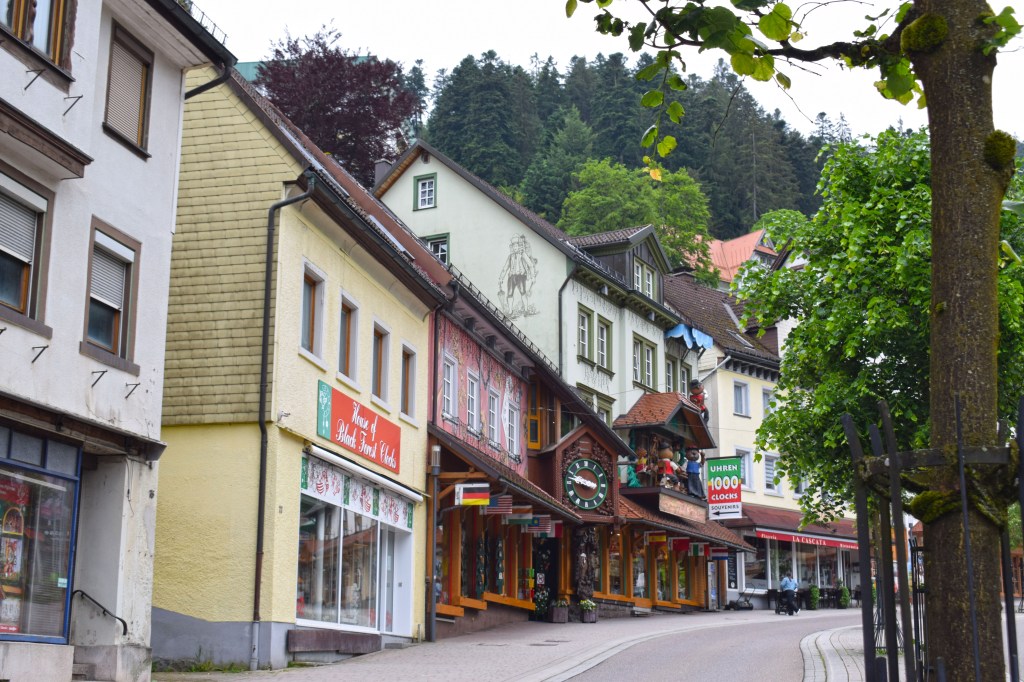
image courtesy: Kim Meehan, 2024
- History:
- Famous Sites:
- Triberg Waterfalls –
- Cuckoo Clocks:
- Largest Cuckoo Clock: chimes on the half and hour
- World’s Smallest Mechanical Cuckoo Clock
History:
Triberg is located in the Baden-Wurttemburg state of Germany, in the center of the Black Forest, rising 500-1038 meters (1,640-3,405 feet) above sea level. Little is known of the town’s history prior to 1100. The region was first opened up by Adelbert von Ellerbach, a knight hailing from the Ulm area. Ernest Hemingway noted Triberg in his short story, The Snows of Kilimanjaro. Today, approximately 4,560 people call Triberg Home.
Famous Sites:
Triberg Waterfalls –
Wallfahrtstraße
4, Triberg im Schwarzwald
For maps, geography, reviews and trails visit:
- https://www.alltrails.com/trail/germany/baden-wurttemberg/triberger-wasserfalle
- https://www.alltrails.com/germany/baden-wurttemberg/triberg-im-schwarzwald/waterfall
- https://www.komoot.com/highlight/118127
Triberg Waterfalls enjoys laying claim to Germany’s tallest waterfall, and at 163 meters (534 feet), it is impressive as it falls from the Gutach over a series of falls. Germany’s tallest waterfall, in fact, is the Röthbachfall, located in Berchtesgaden National Park in Upper Bavaria. The waterfall has a vertical drop of 470 meters (1540 feet).
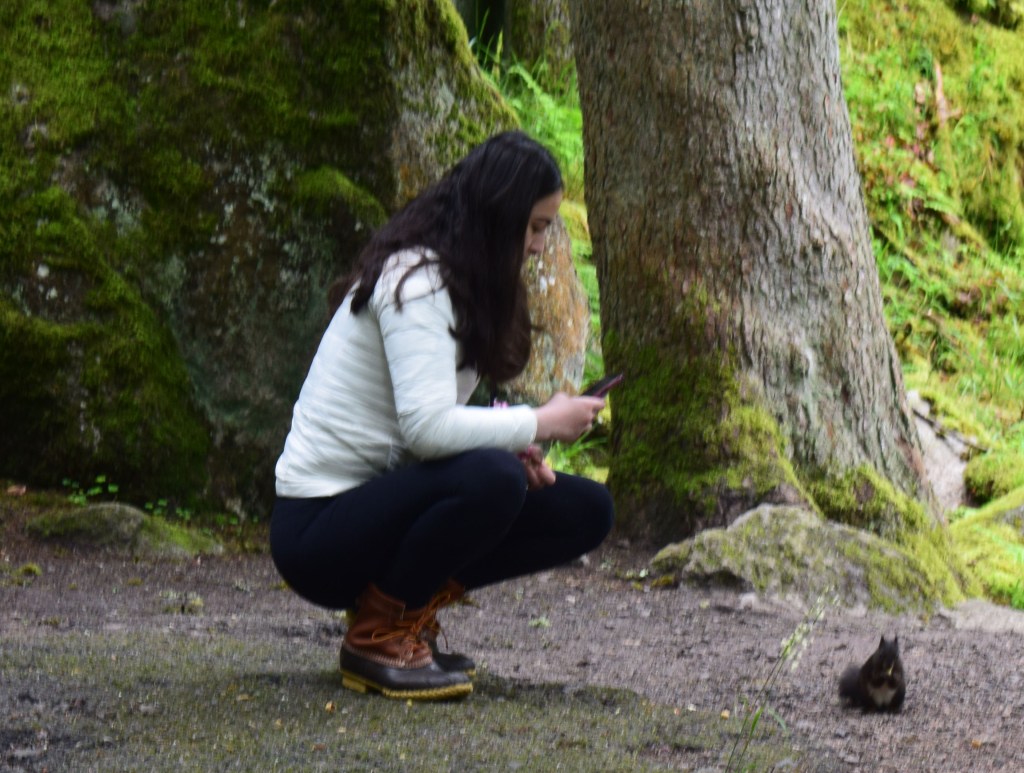
The waterfalls are easy to locate from the center of town- just follow the signs. There is parking near the falls as well as in car parks within town- most of these charge a fee. There are 3 entrances to the waterfalls- 2 descend down the waterfall to the town- and the main one- begin at the bottom of the town and goes up a gentle, well paved, incline. Information on events, hours of operation and fees can be found https://www.triberg.de/tourismus-freizeit/tourismus-freizeit/tourismus-1. While the falls are open 24 hours (illuminated seasonally), admission is charged- 8 euro as of 2024- from 9 am-to 7 pm. Be sure and pick up a bag of peanuts (1 euro) to feed the Red Squirrels.




Cuckoo Clocks:
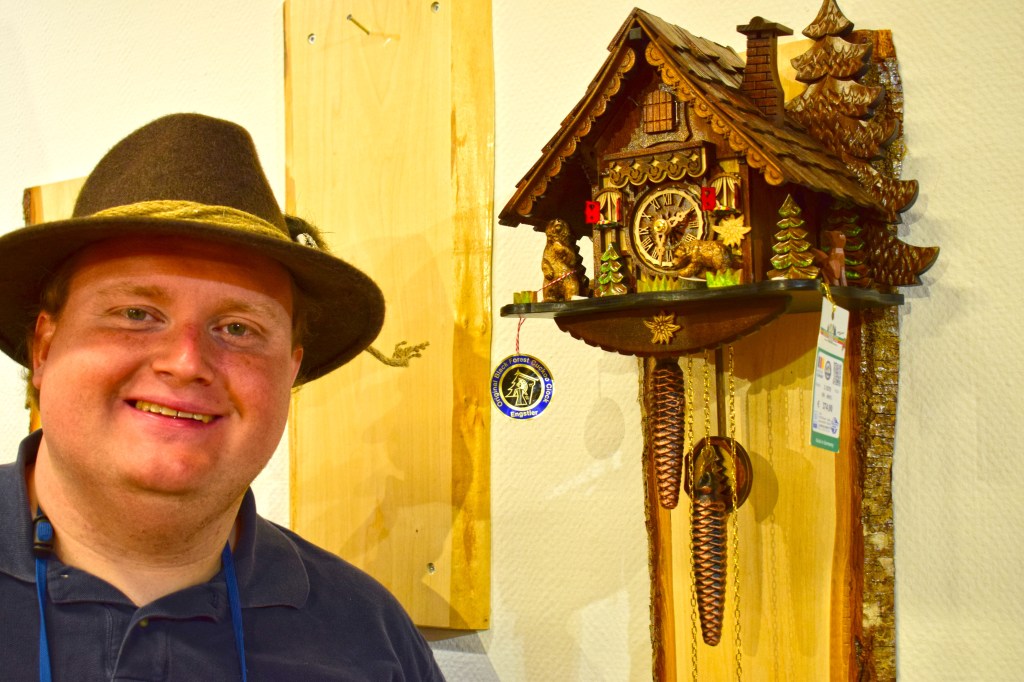
The first Black Forest cuckoo clock is attributed to Franz Anton Ketterer, a clock maker from the village of Schönwald, who, inspired by the bellows of church organs, started incorporating the cuckoo’s sound into clocks. By the mid-18th century, many clock-making shops in the region were producing cuckoo clocks with wooden gears. Today, Ketterer is known as one of the founding fathers of the Black Forest clock making industry. The Black Forest continues its long tradition of clock-making. It was the harsh, cold winters that prompted farmers in the Black Forest to handcraft clocks at home at the kitchen table. Today, the cuckoo clocks with mechanical pendulum movement from Black Forest production are world-famous. The trademark of every Black Forest clock is of course the little bird, which announces the time with its call, triggered by a striking mechanism. A railroad attendant’s house, which was typical for this region in the 19th century, as well as a clock face give the clocks their characteristic appearance. Numerous variations of these classic variants are found today, available as 1-day cuckoo clocks or 8-day cuckoo clocks. They are hand carved and equipped with elaborate details. Today, there are many cuckoo clock knockoffs- it is important to verify that the clock you are purchasing is authentic to the region. In the Black Forest, you should find a seal in green, black and gold letters that says VSD. If you are considering the purchase of a cuckcoo clock- please visit https://www.cuckoopalace.com/Information/Cuckoo-Clocks-Information-Guide/ to understand the many components that make up a cuckcoo clock.
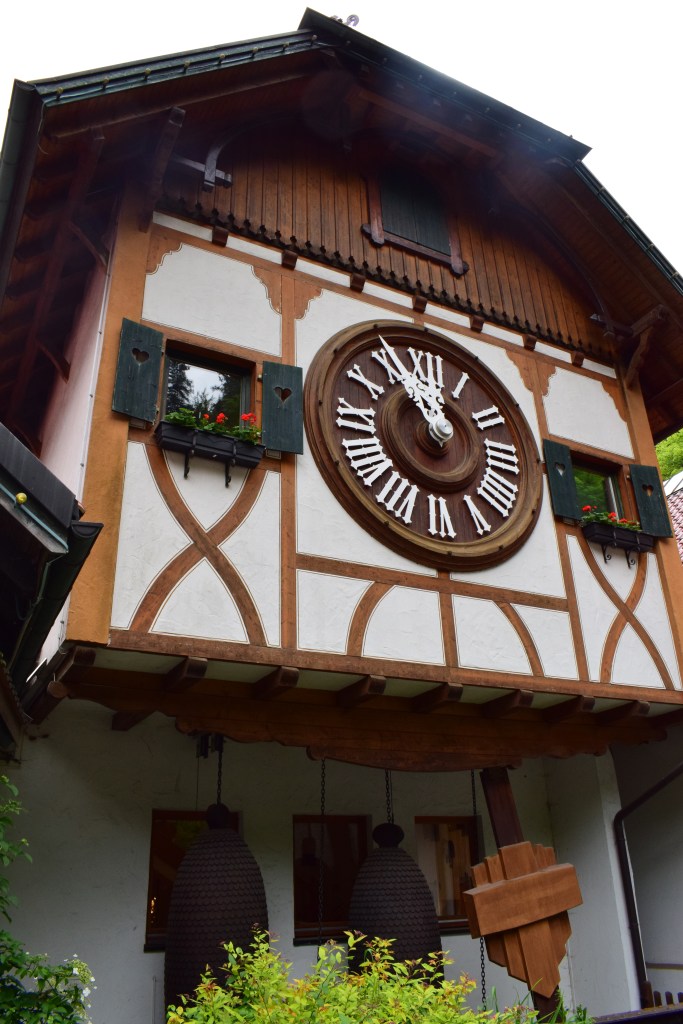
Largest Cuckoo Clock: chimes on the half and hour
Eble Uhrenpark- Schonachbach 27 in Triberg–From Easter to end of October:
Mo-Sa 9.00-18.00, Su 10.00-18.00
The clock can be toured- you will need 3 euro in coins as there is no attendant. It is recreated on a scale of 60: 1 of an original movement of a cuckoo clock and can be viewed in and outside. It took 5 years to construct the 6 ton clock, 8 meter pendulum, and the largest wheel diameter is 2.60 m.
World’s Smallest Mechanical Cuckoo Clock
Uhrenfabrik Hubert Herr
Hauptstraße 8 in Triberg
The smallest mechanical cuckoo clock with the size of 13,5cm and a cuckoo call and a gong at half and full hour has been produced in the former Clock Factory.
 Onward Trip