“He who contemplates the depths of Paris is seized with vertigo. Nothing is more fantastic. Nothing is more tragic. Nothing is more sublime.”
~ Victor Hugo

The Practicalities:
Location: Top of the Champs d’ Elysée, on the Place de l’Etoile- Pl. Charles de Gaulle, 75008 Paris, France

By public transport
Metro lines 1, 2, 6 and RER A, Charles-de-Gaulle-Étoile station.
Bus lines 22, 30, 31, 52, 73, 92 and Balabus.
Hours: From April 1st to September 30th
Wednesday to Monday 10am – 11pm, Tuesdays 11am – 11pm
From October 1st to March 31st
Wednesday to Monday 10am – 10:30pm, Tuesdays 11am – 10:30pm
Please note : last access to the monument is 45 minutes before closing.
Admission: During peak season, it is recommended to prepurchase a timed ticket to avoid standing in long lines. Tickets can be purchased here: https://tickets.monuments-nationaux.fr/fr-FR/familles?site=2032863779450400197
Free access to the Tomb of the Unknown Soldier- located on street level below the arch peak.
SAFETY TIP- DO NOT TRY TO CROSS THE ROAD– there are underground pedestrian tunnels that lead you safely to the Arc de Triomphe.
Must Know:
- Underground pedestrian tunnels (Passage du Souvenir) lead safely under the busy roads.
- There are 284 steps to the top (an elevator for those with needs is available without reservation)
- No left luggage- maximum backpack is 40x40x20 cm
To the Top or Not?
Paris isn’t without towering viewpoints. For those on a budget, there are the Eiffel Tower, Sacre Coeur, Montparnasse, Arc de Triomphe, Les Invalides, etc. All charge for a trip to the top. An author for this blog prefers like the level of view that is offered by the Arc de Triomphe- it is more personal. Package it with the Eiffel Tower to get the breath taking view that shows the scope of Paris and you pretty much have it covered. Largely, it comes down to which appeals to you, cost and how much time do you want to give towards tower climbing.

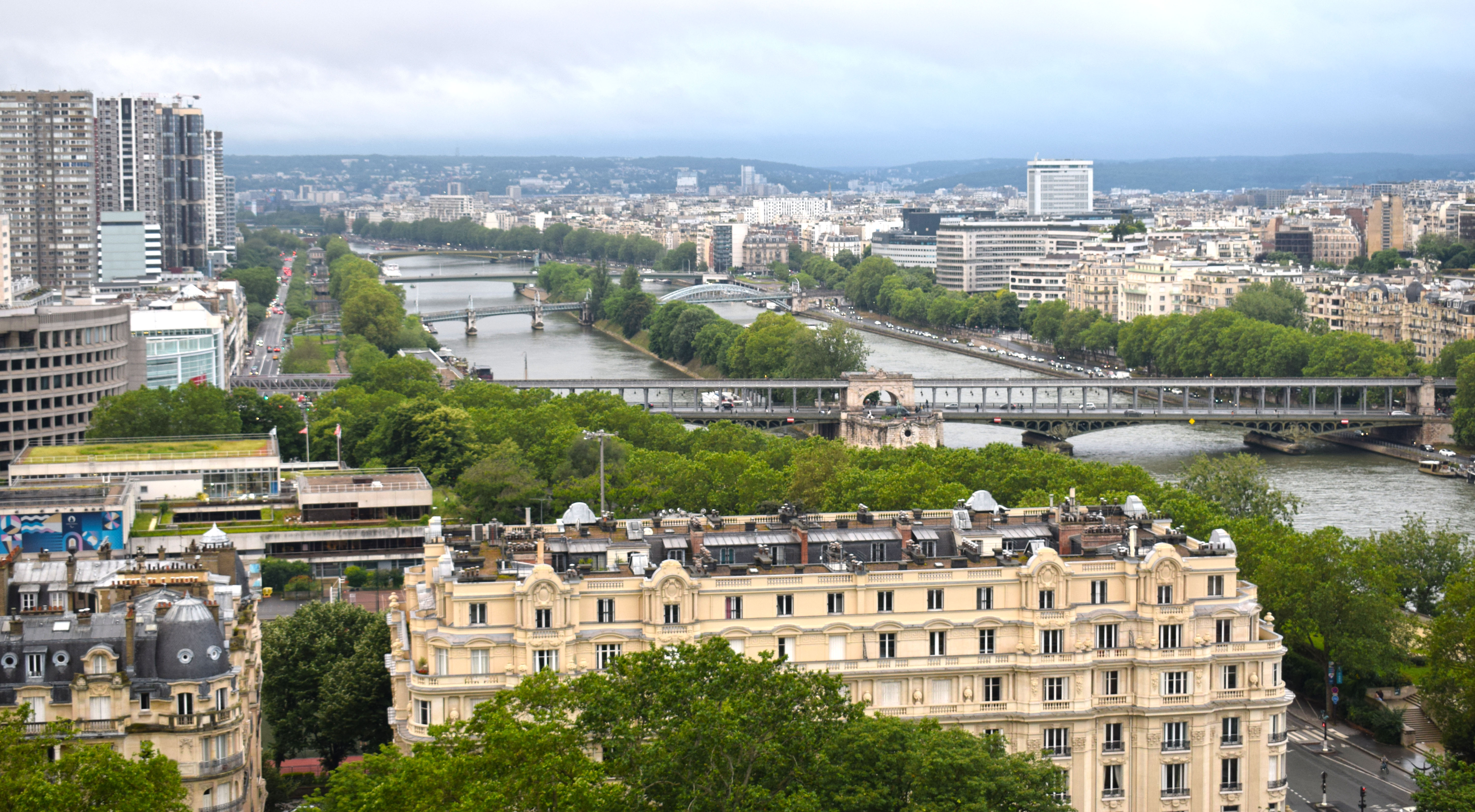
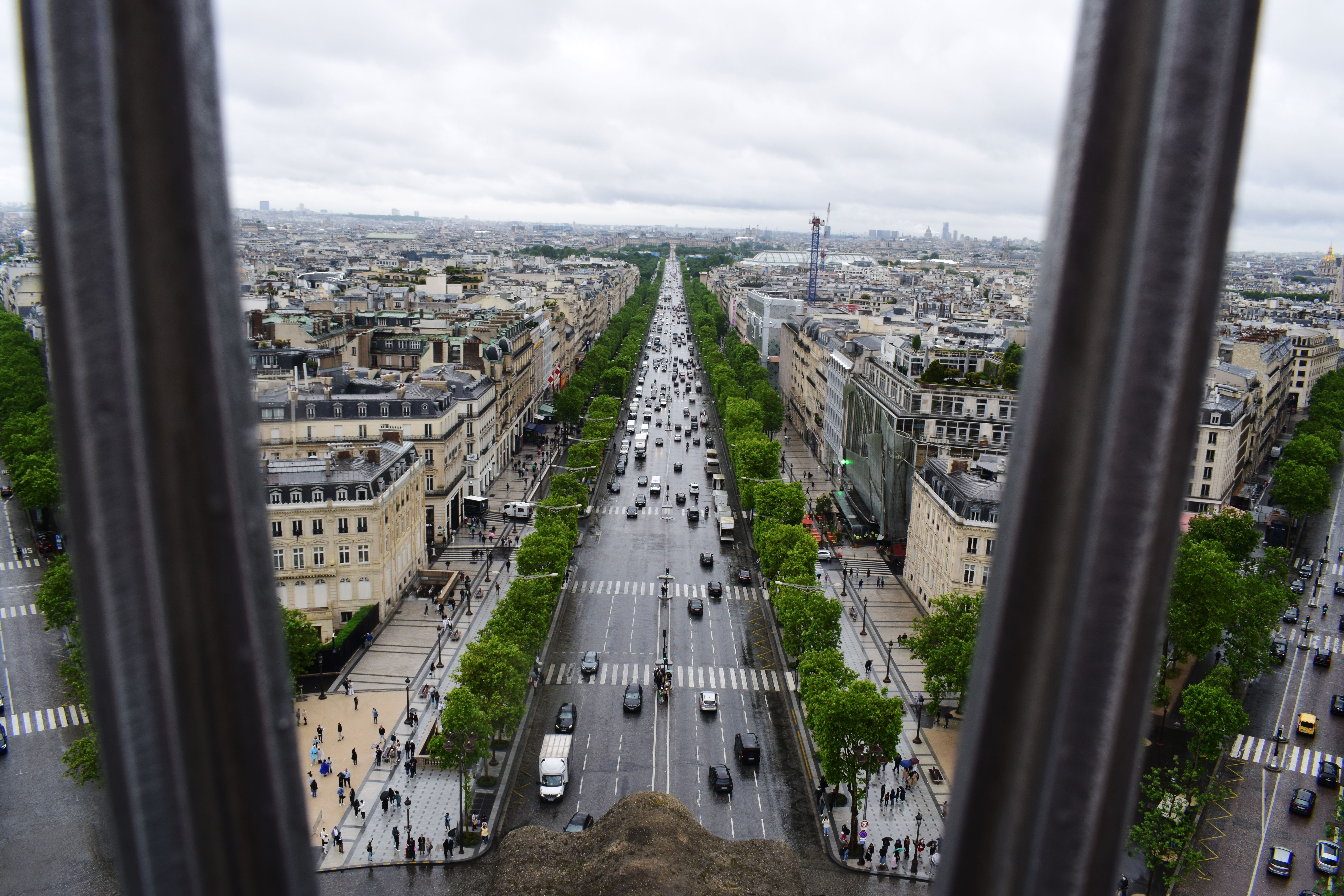

Top 2 phots from Eiffel Tower, Bottom photo and Right Middle from Arc de Triomphe
So Why Visit?
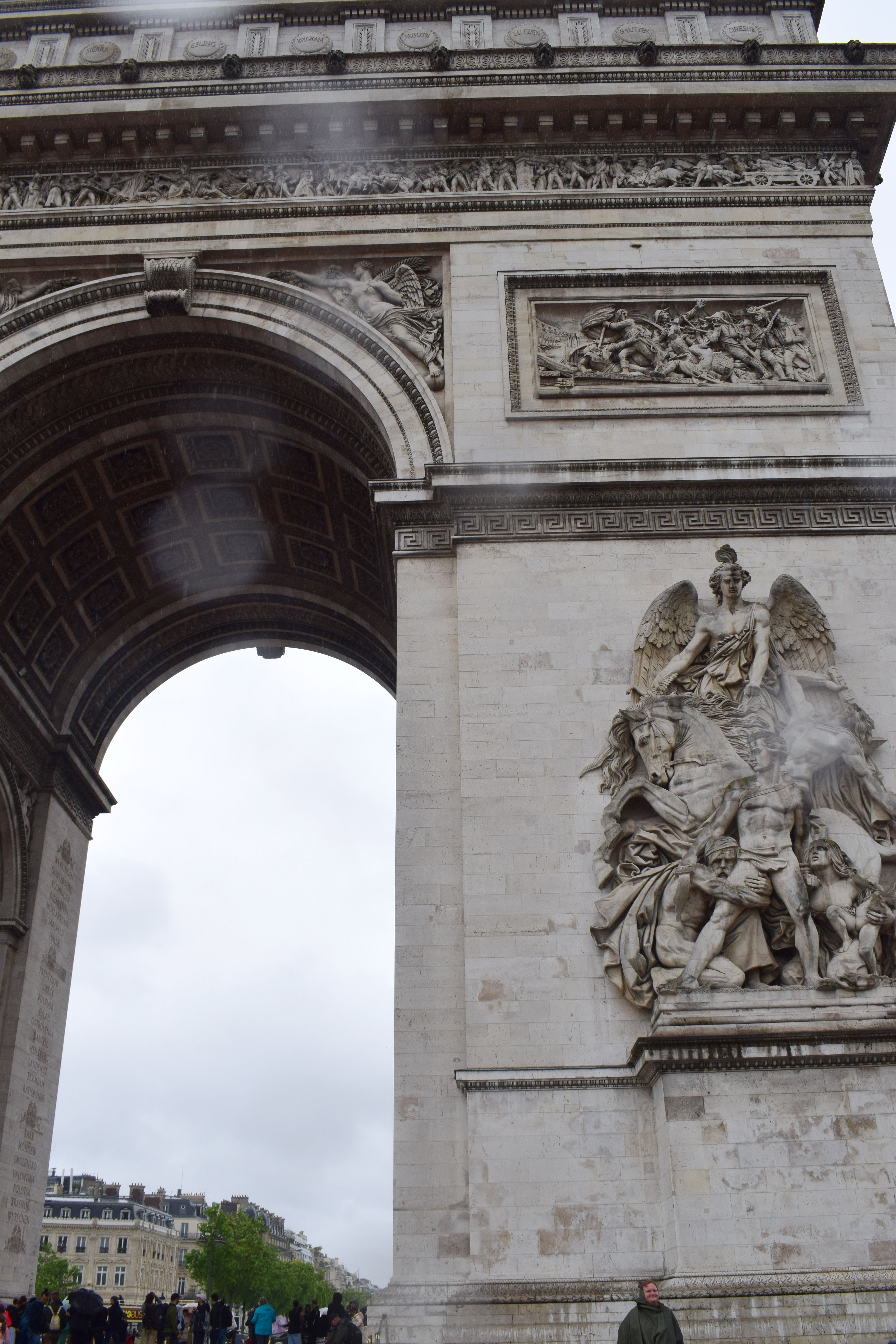
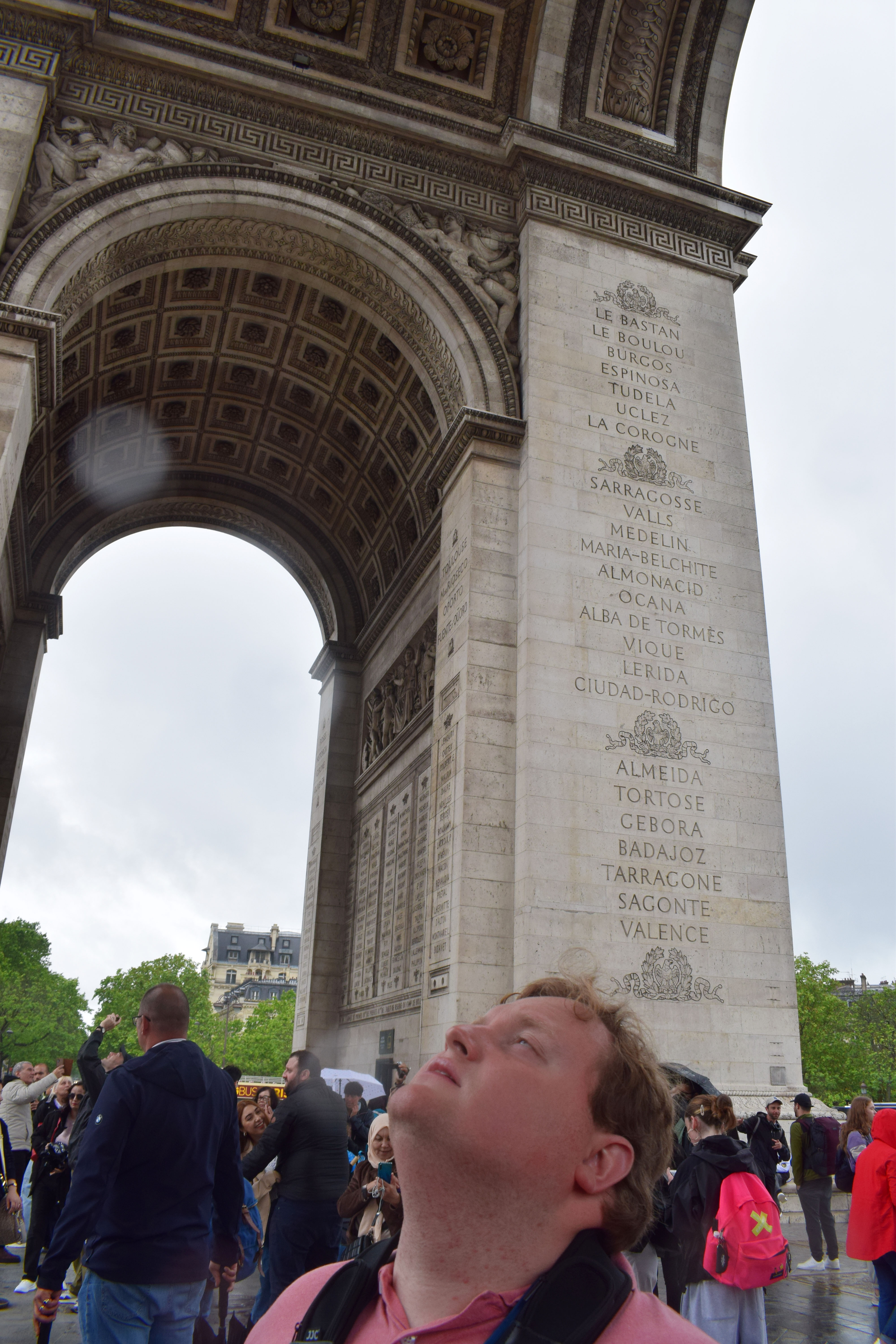
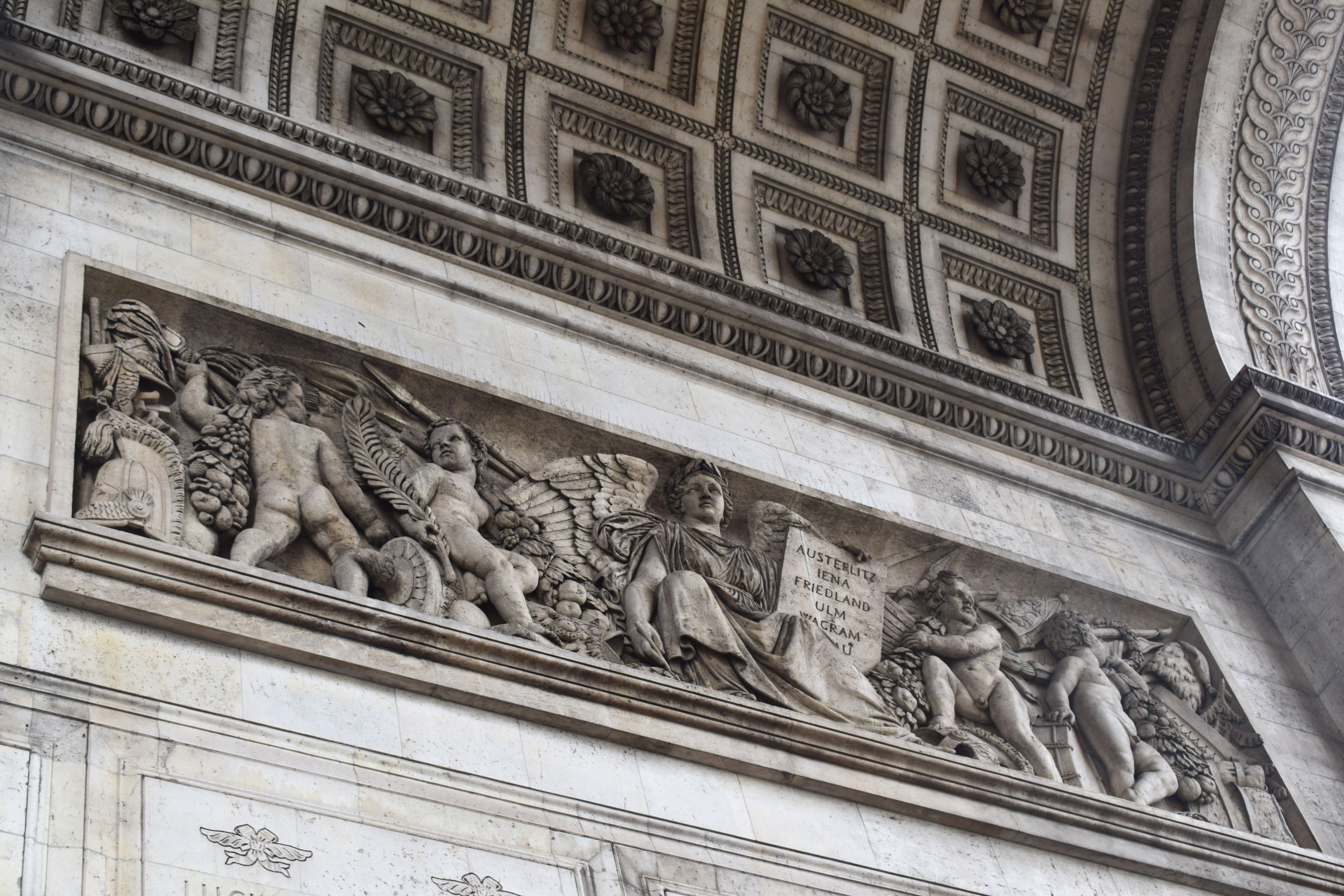
The Arc de Triomphe is located at the western end of the Champs Elysée, at the center of the Place of the Star (etoile) which is now known as the Place Charles de Gaulle. From this center- twelve streets radiate around Paris. The monument honors those who died in the French Revolution and the Napoleonic Wars. A list of all the French battles, along with their generals, is listed on the monument’s interior and exterior surfaces. Beneath the arch, lies the Tomb of the Unknown Soldier from World War I.

The Arc de Triomphe takes its inspiration from Rome’s Arch of Titus. It measures: an overall height of 50 m (164 ft), width of 45 m (148 ft) and depth of 22 m (72 ft), while its large vault is 29.19 m (95.8 ft) high and 14.62 m (48.0 ft) wide. The smaller transverse vaults are 18.68 m (61.3 ft) high and 8.44 m (27.7 ft) wide. This made it the largest memorial monumental arch until Mexico City’s 1938 Monumento de Revolucion (67 m/220 ft). The Arc was commissioned by Emperor Napoleon after his victory at Austerlitz. On December 15, 1840, Napoleon’s remains passed through the archway as they were transferred from exile in Sainte Helena to his resting place at Les Invalides. Victor Hugo, author of Les Misérables and the Hunchback of Notre Dame, etc. was displayed under the arch for 24 hours on May 22, 1885 before his burial at the Pantheon.
Several other noteworthy events:
The sword carried by the Republic in the Marseillaise relief broke off on the day, it is said, that the Battle of Verdun began in 1916. The relief was immediately hidden by tarpaulins to conceal the accident and avoid any undesired ominous interpretations

On 7 August 1919 three weeks after the Paris victory parade in 1919 (marking the end of hostilities in World War I), Charles Godefroy flew his Nieuport biplane under the arch’s primary vault, with the event captured on newsreel.
Famous victory marches around or under the Arc have included the Germans in 1871, the French in 1919, the Germans in 1940, and the French and Allies in 1944[14] and 1945. Military parades (including the aforementioned post-1919) avoid marching through the actual arch. The route taken is up to the arch and then around its side, out of respect for the tomb and its symbolism. Both Hitler in 1940 and Charles de Gaulle in 1944 observed this custom
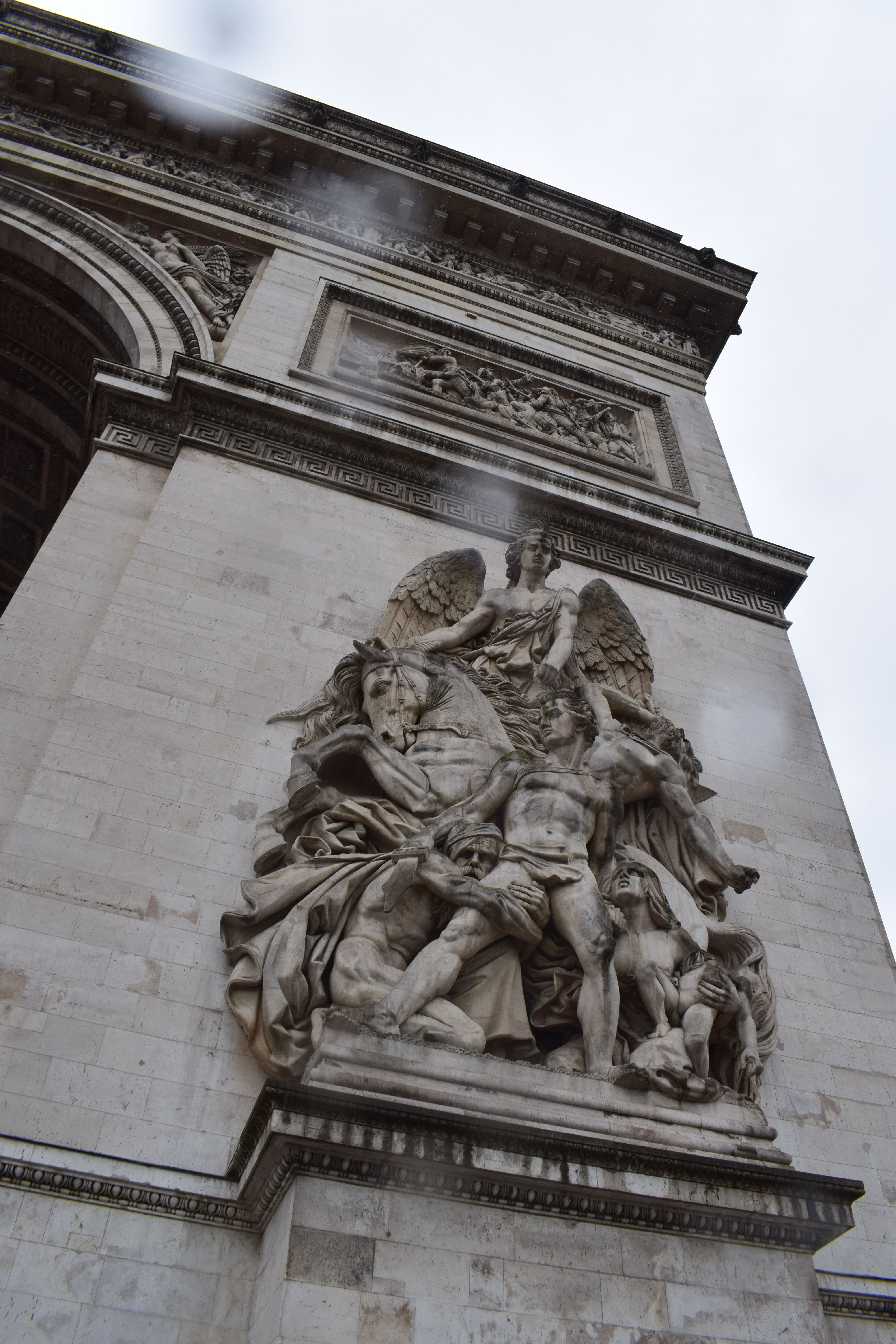
- The four main sculptural groups on each of the Arc’s pillars are:
- Le Départ de 1792 (or La Marseillaise), by François Rude. The sculptural group celebrates the cause of the French First Republic during the 10 August uprising. Above the volunteers is the winged personification of Liberty. This group served as a recruitment tool in the early months of World War I and encouraged the French to invest in war loans in 1915–1916.[30]
- Le Triomphe de 1810, by Jean-Pierre Cortot celebrates the Treaty of Schönbrunn. This group features Napoleon, crowned by the goddess of Victory.
- La Résistance de 1814, by Antoine Étex commemorates the French Resistance to the Allied Armies during the War of the Sixth Coalition.
- La Paix de 1815, by Antoine Étex commemorates the Treaty of Paris, concluded in that year.

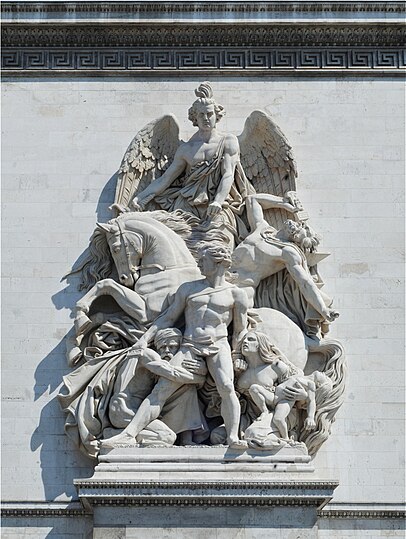


La Paix de 1815. La Résistance de 1814. Le Triomphe de 1810. Le Départ de 1792
- Six reliefs sculpted on the façades of the arch, representing important moments of the French Revolution and of the Napoleonic era include:
- Les funérailles du général Marceau (General Marceau‘s burial), by Philippe Joseph Henri Lemaire (Southern façade, right).
- La bataille d’Aboukir (The Battle of Aboukir), by Bernard Seurre (Southern façade, left).
- La bataille de Jemappes (The Battle of Jemappes), by Carlo Marochetti (Eastern façade).
- Le passage du pont d’Arcole (The Battle of Arcole), by Jean-Jacques Feuchère (Northern façade, right).
- La prise d’Alexandrie (The Fall of Alexandria), by John-Étienne Chaponnière (Northern façade, left).
- La bataille d’Austerlitz (The Battle of Austerlitz), by Jean-François-Théodore Gechter (Western façade).
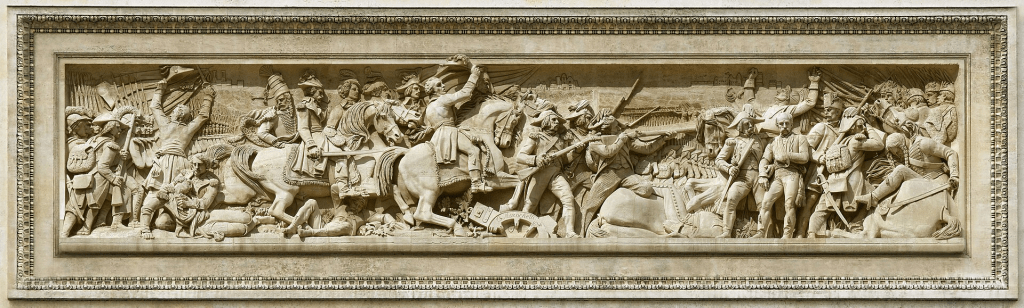
La bataille de Jemmappes, 6 November 1792.

La bataille d’Austerlitz, 2 December 1805.

Les funérailles du général Marceau, 20 September 1796.

La bataille d’Aboukir, 25 July 1799.
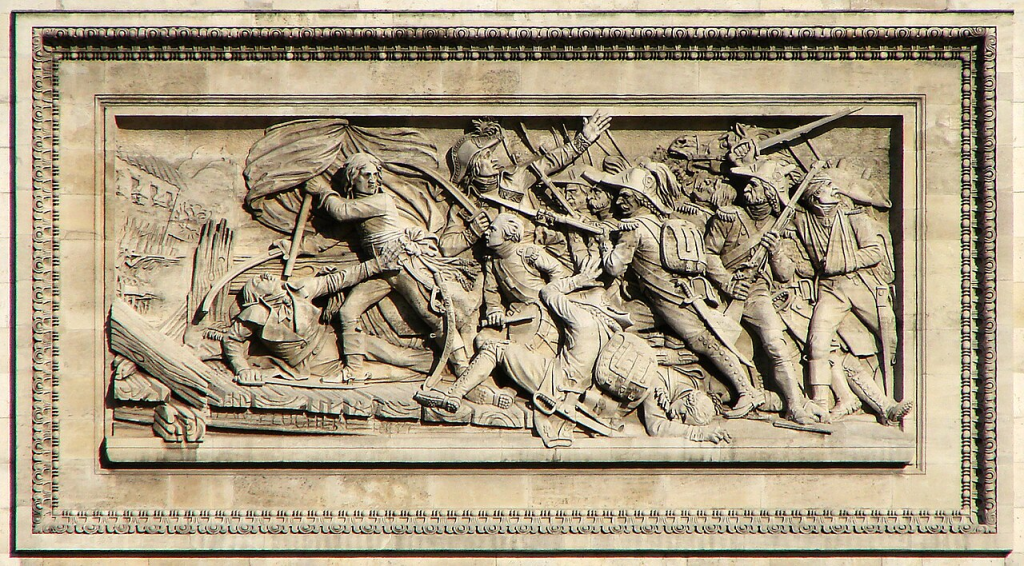
Le passage du pont d’Arcole,
15 November 1796.

La prise d’Alexandrie,
3 July 1798.

Review:
The Arc de Triomphe, like the Eiffel Tower, is classic “Paris” and to miss seeing it would be a mistake. Most of the sculpture is visible on the exterior of the building, so unless you are going to climb to the top, buying a ticket is not necessary. One of the annoying problems is the timed ticket during peak seasons- it is extremely difficult to know where you are going to be (unless it is first thing in the day or the only thing you have planned), but when you have a packed agenda- trying to figure out admission times is a pain in the rear, and, to be honest- other than those first ones of the day- we didn’t get to any of ours on time- or even within the window of time- fortunately, the attractions honored the ticket. Personally, I really enjoy the views from the top as they are “closer” and makes you feel more connected. I also like the height of the Eiffel Tower since it gives you a real understanding of the size, scope and outlay of Paris. The Arc de Triomphe is worth a visit to understand the extent of France’s military might and to commemorate events of World War 1 and World War II that occurred at this famous monument.
 Onward Trip